In the world of medical device manufacturing, the cleanroom is more than a room—it is a vital component of the product itself. Every single component, from an implantable sensor to a diagnostic cartridge, must be assembled in an environment that guarantees its sterility and functional integrity. The stakes for compliance are immense, governed by global standards like ISO 13485 and specific regulations from bodies like the FDA and EU MDR. Recently, a growing medical technology firm, facing urgent demand for a new Class II device, confronted this challenge head-on. Their existing pilot facility could not scale, and the prospect of managing a complex cleanroom build threatened to delay their market entry by over a year. This is the story of how they partnered with Suzhou Pharma for a turnkey solution, transforming a high-risk expansion into a streamlined success story and securing their pathway to production.
The Challenge: Scaling from Pilot to Production Under a Tight Timeline
The client's situation was a classic scaling dilemma. Their innovative, single-use diagnostic device had successfully navigated clinical trials in a small, manually managed pilot cleanroom. Regulatory approval was imminent, and commercial demand projections were strong. However, their existing space was insufficient for the automated assembly lines required for volume manufacturing. The internal team lacked the specialized expertise to design and manage a GMP-grade ISO 7 cleanroom build while also preparing for their FDA audit. They needed a partner who could understand the unique contamination control needs of device assembly—where non-viable particle control is as critical as microbial limits—and deliver a full production suite on an aggressive schedule, without compromising on the rigorous documentation required for their quality management system.
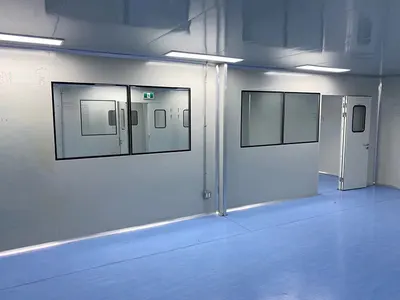
The Suzhou Pharma Solution: A Fully Integrated Turnkey Strategy
Recognizing the intertwined needs for speed, compliance, and future flexibility, Suzhou Pharma proposed a comprehensive turnkey strategy built on four pillars: modular construction for speed, integrated contamination control design, seamless utility and equipment integration, and a parallel validation pathway. We moved beyond a simple builder role to become an extension of their project team. Our process began with a deep-dive workshop to map every step of their automated assembly process, identifying critical control points for particulate generation and defining precise environmental parameters. This collaborative front-end planning ensured the final design would be a perfect fit for their operational workflow, not a generic cleanroom shell into which they would have to force their process.
Design and Build: Precision Engineering for Device Assembly
The detailed design phase focused on the specific risks of medical device manufacturing. We engineered an ISO 7 (Class 10,000) main assembly room with an integrated ISO 5 (Class 100) laminar flow workbench for the most critical sub-assemblies. The layout was optimized for a logical, unidirectional flow of components and personnel, minimizing cross-traffic and particle transfer. A key design differentiator was our focus on materials; we specified anti-static vinyl flooring and conductive work surfaces to prevent electrostatic discharge that could damage sensitive electronic components within the devices. The HVAC system was calibrated not just for particle counts, but for precise humidity control to protect hygroscopic materials. The build itself utilized our modular cleanroom system, allowing for off-site fabrication of wall and ceiling panels while site preparation occurred concurrently, compressing the overall timeline dramatically.
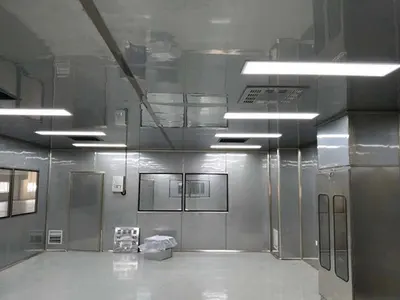
Integration and Validation: From Empty Room to Operational Line
The true test of a turnkey cleanroom solutions is the seamless integration of the client's complex automated equipment into the new cleanroom environment. Our team worked directly with the device manufacturer’s equipment vendors to plan utility drops for compressed air, electrical power, and data connections precisely where needed. Once the enclosure was built and the HVAC system commissioned, we managed the installation of the assembly line, ensuring it did not disrupt the cleanroom’s validated state. The validation process, executed by our in-house team, was comprehensive. We performed Installation Qualification (IQ) on all utilities and the room itself, Operational Qualification (OQ) to prove system stability, and finally, a rigorous Performance Qualification (PQ) with the assembly equipment running under simulated production conditions. This proved the cleanroom maintained its classified environment even under operational stress, providing undeniable evidence for regulatory submission.
The Outcome: Accelerated Market Entry and Operational Confidence
The result was a transformative success. The Suzhou Pharma turnkey approach delivered a fully validated, production-ready cleanroom in 40% less time than a traditional construction model estimated. The client’s quality team received a complete, audit-ready validation dossier, which played a crucial role in their successful FDA pre-approval inspection. Most importantly, they were able to begin commercial manufacturing within weeks of regulatory clearance, capturing crucial market share. The facility has proven to be not only compliant but also operationally efficient, with low particle counts that ensure high product yield and reliable performance. The project established a foundation of trust, and Suzhou Pharma now provides ongoing preventative maintenance and annual re-certification, ensuring this critical asset continues to support their growth as they plan for next-generation devices. This case study exemplifies how the right partnership turns a cleanroom from a construction project into a strategic business asset.