In the competitive landscape of biopharma, the ability to rapidly scale manufacturing capacity for a promising late-stage therapy can define a company's commercial success. This was precisely the challenge facing a mid-sized biotech firm we'll refer to as BioVertex Therapeutics. With a novel biologic poised for Phase III trials and anticipated market approval, BioVertex needed a new, fully validated aseptic fill-finish suite operational within an aggressive 14-month window—a timeline considered nearly impossible with conventional construction. This case study details how a Suzhou Pharma modular cleanroom turnkey project not only met this demand but established a new benchmark for speed and quality in facility deployment.
The Client Challenge: An Impossible Timeline with Zero Compromise
BioVertex's situation encapsulated the classic biotech dilemma: a groundbreaking therapy with immense potential, constrained by a lack of internal GMP manufacturing space and a market clock that wouldn't wait. Outsourcing fill-finish was considered but raised concerns about supply chain control, intellectual property security, and long-term costs. Building in-house using traditional design-bid-build methods was projected to take 22-28 months, jeopardizing their first-to-market strategy. The mandate was clear: a standalone, ISO 7/Class 10,000 suite with an ISO 5/Class 100 filling line, supported by full change rooms and support utilities, had to be ready for process validation within 14 months. The non-negotiable requirement was that no shortcuts could be taken on quality, compliance, or aseptic integrity.
The Strategic Solution: A Parallel-Stream Modular Turnkey Approach
Suzhou Pharma's proposal moved away from a linear project plan to a concurrent, multi-stream model. The solution centered on the complete, off-site fabrication of two primary cleanroom modules: the core fill-finish suite and the adjacent gowning corridor with airlocks. Crucially, while these modules were being engineered and assembled in Suzhou Pharma's controlled factory, parallel workstreams advanced simultaneously. This included finalizing detailed user requirement specifications (URS), progressing foundational site work at BioVertex's campus, and procuring long-lead items like the vial filler and lyophilizer. This parallel approach effectively condensed what would have been over two years of sequential tasks into a tightly coordinated 14-month symphony of concurrent activity.
Factory Fabrication: Where Precision Meets Pre-Qualification
The heart of the time savings occurred within Suzhou Pharma's manufacturing facility. Here, the cleanroom walls, integrated HEPA-filtered ceiling grids, process utility panels (for WFI, clean steam, and process gases), and electrical raceways were constructed. Building in a factory environment eliminated weather delays and allowed for industrial-grade precision. More importantly, it enabled comprehensive Factory Acceptance Testing (FAT). BioVertex's engineering and quality teams visited the factory to witness the fully assembled modules in operation. They observed and signed off on critical pre-qualification tests for airflow velocities, room pressurization cascades, and control system logic. This meant that the systems arrived on-site not as untested components, but as pre-qualified, validated units, turning on-site work from "construction" to "confirmation."
On-Site Acceleration: From Assembly to Commissioning in Record Time
With site preparation complete, the pre-fabricated modules were delivered to BioVertex's facility. The on-site phase was remarkably swift and clean. Instead of months of noisy, dusty trades, the primary activities involved carefully setting the modules into place, connecting them to the pre-installed site utilities, and sealing the inter-module joints. Because the mechanical and control systems were already integrated and tested, the commissioning team could power up systems almost immediately. The on-site validation focus shifted dramatically. Instead of troubleshooting fundamental design flaws, the team could concentrate on site-specific integration checks, final environmental performance under load, and supporting the client's equipment qualification. This phase was completed in weeks, not months.
Validated Outcomes and Strategic Victory
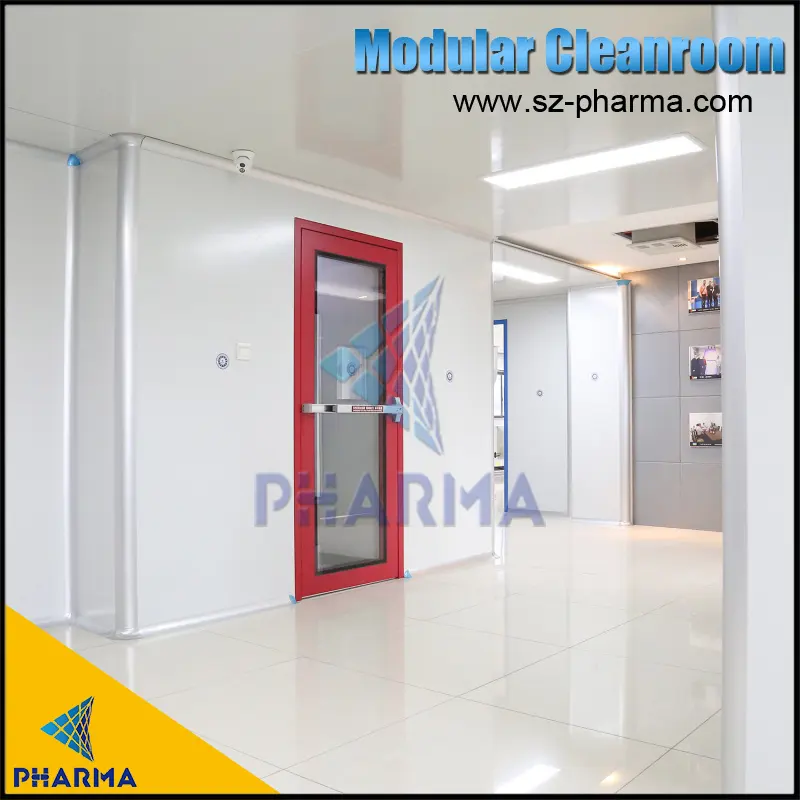
The project concluded with the successful completion of Performance Qualification (PQ), including rigorous airflow visualization studies and three consecutive successful media fill runs, all within the original 14-month window. The suite achieved and consistently maintained its classified environmental conditions, fully meeting EU GMP Annex 1 and FDA guidelines. For BioVertex, the strategic impact was profound. They secured control of their critical supply chain, protected their intellectual property, and accelerated their regulatory filing by nearly a year. The capital efficiency was also notable; the single-contract turnkey model provided exceptional cost certainty, avoiding the budget overruns typical of complex builds.
A Blueprint for Agile Biopharma Infrastructure
This case study is more than a singular success story; it serves as a compelling blueprint for the industry. It demonstrates that when facing inflexible timelines, the solution is not to rush traditional methods but to adopt a smarter methodology. Suzhou Pharma’s modular turnkey approach transformed an "impossible" deadline into a delivered asset by re-sequencing tasks, guaranteeing quality in a controlled factory, and assuming holistic accountability. For any biopharma company looking to de-risk scale-up, compress time-to-market, and build with unwavering quality, this project stands as definitive proof of concept for the future of agile facility deployment.