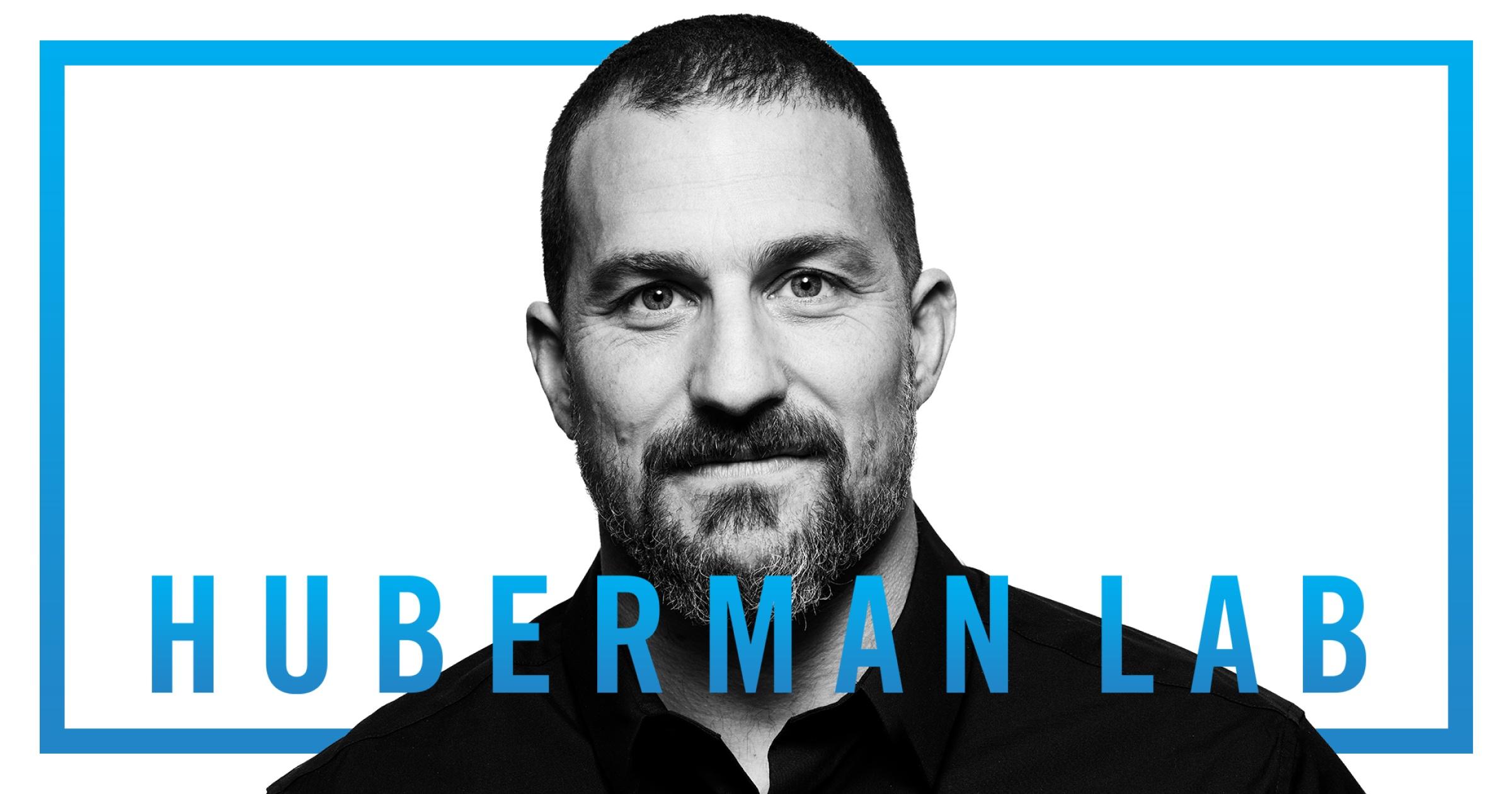
If you have ever sat down to work on something important only to find yourself reaching for your phone, opening a new browser tab, or suddenly remembering that you absolutely need to reorganize your sock drawer, you have experienced the central struggle of modern life. Dr. Andrew Huberman, a professor of neurobiology at Stanford School of Medicine, has made focus one of the central pillars of his podcast, offering listeners a science-backed toolkit for reclaiming attention in an environment deliberately designed to steal it. What I appreciate most about Huberman’s approach is that he does not pretend focus is simply a matter of willpower. He acknowledges that we are swimming against a current of algorithms, notifications, and platforms engineered to fragment our attention. The good news is that focus operates according to predictable neural mechanisms, and once you understand those mechanisms, you can work with them rather than fighting your own brain.
The Neuroscience of Focus and Its Limits
To improve focus, Huberman explains, you first need to understand what focus actually is and why it feels so difficult to sustain. Focus relies on a network of brain regions collectively called the attention system, with the prefrontal cortex acting as the executive that directs your mental spotlight onto a specific task while filtering out irrelevant information. This system operates on a finite resource. You have roughly ninety to one hundred twenty minutes of genuine, high-quality focus available per day before cognitive fatigue sets in, and trying to push beyond that limit leads to diminishing returns. Huberman emphasizes that this is not a personal failing; it is a biological constraint. The goal is not to force yourself to focus for endless hours but to protect and strategically deploy the focused time you have. Recognizing that your attention is a limited resource changes how you structure your day—you stop treating focus as something you can summon at will and start treating it as something you need to safeguard.
Visual Focus as a Gateway to Mental Focus
One of the most practical and surprising strategies Huberman offers involves the relationship between where you look and how well you think. There is a direct neural connection between the muscles that control your eyes and the brain networks responsible for concentration. When your eyes are darting around—scanning your environment, checking your phone, glancing at notifications—your brain remains in a state of broad, diffuse attention, constantly scanning for threats or opportunities. Conversely, when you narrow your visual focus to a small, specific point for a sustained period, you engage the brain circuits associated with deep concentration. Huberman suggests using this deliberately: before you begin a task requiring focus, spend sixty to ninety seconds fixating your gaze on a single point—a spot on the wall, a small object on your desk, the center of your screen. This simple practice shifts your nervous system into a state more conducive to focused work, making it significantly easier to transition into the task itself and maintain that focus once you begin.
Leveraging Ultradian Rhythms for Peak Performance
Another cornerstone of Huberman’s focus toolkit involves working with your body’s natural ultradian rhythms rather than against them. Throughout the day, your brain operates in cycles of approximately ninety minutes, during which your ability to focus rises, peaks, and then declines. Trying to maintain intense focus beyond that window without a break is like trying to sprint a marathon—it is not sustainable, and it leads to frustration and burnout. Huberman recommends structuring your work in ninety-minute blocks, followed by deliberate rest periods of ten to twenty minutes. During these rest periods, he emphasizes the importance of true disengagement: looking at a distant point, going for a short walk, closing your eyes, or doing something that does not require sustained cognitive effort. Crucially, he advises against using your phone during these breaks, because the rapid shifts in attention that scrolling requires keep your brain in a state of shallow focus, preventing the deeper recovery your attention system needs to reset.
Managing Dopamine and Distraction
Understanding dopamine is essential, Huberman explains, for understanding why distraction feels so compelling. Dopamine is not just about pleasure; it is about motivation, anticipation, and the pursuit of reward. Every time you check your phone and see a new notification, your brain receives a small dopamine hit. The platforms you use are deliberately designed to deliver these hits on an unpredictable schedule—the same mechanism that makes slot machines addictive. Over time, your brain becomes conditioned to seek these small, frequent rewards, making sustained focus on a single task feel boring or even uncomfortable by comparison. Huberman suggests several strategies for recalibrating your dopamine system. One is to impose friction on distractions: put your phone in another room, use website blockers, or create physical distance between yourself and the devices that fragment your attention. Another is to practice what he calls “dopamine fasting” in a targeted way—deliberately abstaining from high-dopamine activities like social media or video games for periods of time to reset your baseline sensitivity so that focused work becomes more intrinsically rewarding.

The Role of Auditory Tools in Focus
Huberman also explores how sound can be used to modulate your ability to focus. He explains that certain types of auditory stimulation can enhance concentration by engaging the brain’s attention networks. Binaural beats, particularly those in the gamma frequency range around forty hertz, have been shown in some studies to increase focus and cognitive performance. More simply, listening to music without lyrics—such as ambient music, lo-fi beats, or classical compositions—can provide a consistent auditory backdrop that masks distracting environmental sounds without competing for your brain’s language-processing resources. Huberman notes that silence is also a powerful tool, and for tasks requiring deep cognitive work, complete quiet may be optimal. The key is to experiment with what works for you, recognizing that the goal is not to stimulate your brain into focus but to reduce the noise—literal and metaphorical—that pulls you away from the task at hand.
Building Focus as a Long-Term Skill
Finally, Huberman emphasizes that focus is not just a state you enter but a skill you build over time, much like a muscle that strengthens with consistent use. The ability to concentrate improves when you regularly practice sustained attention, and it atrophies when you constantly switch between tasks. He recommends setting aside specific times of day for deep work—ideally during the hours when your natural alertness is highest, which for most people falls in the late morning—and protecting those times as non-negotiable appointments with yourself. Equally important is what you do outside those focused blocks. Quality sleep is essential for the restoration of the attention system, and regular physical activity, particularly Zone 2 cardio, has been shown to improve executive function and concentration. The toolkit Huberman offers is not about finding a single magic bullet; it is about layering multiple practices—visual focus, rhythmic timing, dopamine management, auditory tools, and long-term consistency—into a lifestyle that supports sustained attention. In a world engineered for distraction, protecting your focus becomes an act of deliberate, ongoing practice, and the rewards extend far beyond productivity into the very quality of your mental life.