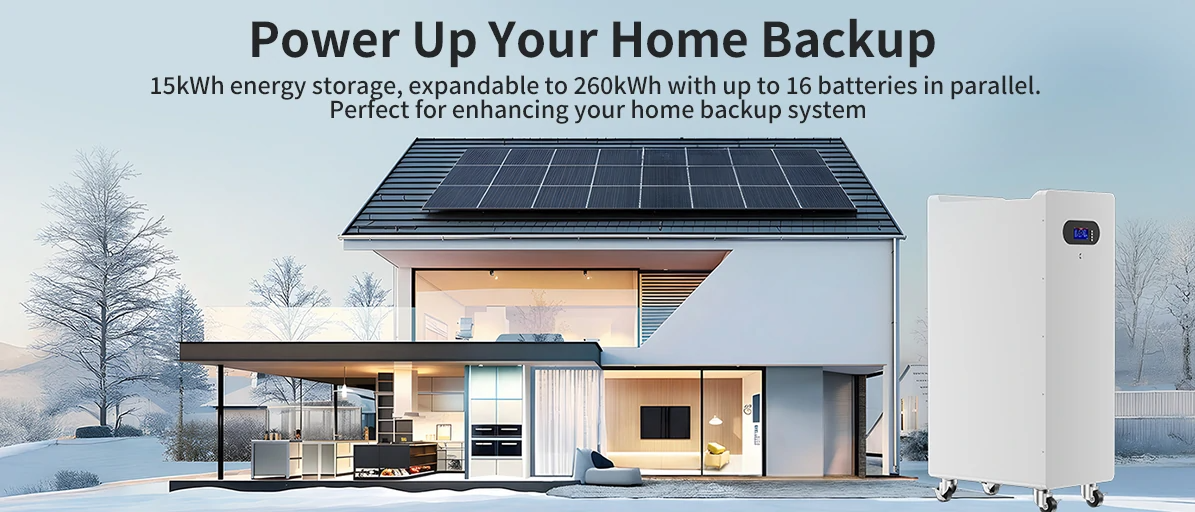
Living off the grid sounds romantic until your lights flicker and die on a cloudy Tuesday because your battery pack wasn’t up to the task. That’s where efficiency becomes everything. For anyone relying entirely on their own power—whether in a remote cabin, a tiny home, or a converted van that’s more house than vehicle—a 16kWh battery pack isn’t just a backup. It’s the heart of your entire electrical existence. Efficiency in this world means something very specific: how much of the energy you generate actually makes it into usable storage, and how little gets wasted as heat or lost to internal resistance. A highly efficient 16kWh pack might give you 15.5 usable kilowatt-hours from a full charge, while an inefficient one might deliver only 13. That difference of 2.5kWh could run your refrigerator for an extra day or keep your laptop charged for a week. Let’s explore what makes an off-grid battery truly efficient and why it matters when the nearest power pole is miles away.
Why Efficiency Matters More Off Grid
On the grid, if your battery wastes some energy, you barely notice. The utility just sends a little more power your way. But off grid, every watt you lose is a watt you had to generate yourself, usually from solar panels that only produce during certain daylight hours. That means inefficiency directly translates to needing more solar panels, a larger generator, or simply accepting more dark hours. A 16kWh battery with 95% round-trip efficiency—meaning you get back 95% of the energy you put in—loses only 0.8kWh per full cycle. The same battery at 85% efficiency loses 2.4kWh per cycle. Over a year of daily cycling, that’s nearly 600kWh of extra energy you’d need to produce. In off-grid terms, that’s roughly four extra solar panels and a bigger charge controller. So when you’re comparing battery packs, don’t just look at the capacity number. Look at the efficiency rating. The best LiFePO4 packs now achieve 96% to 98% round-trip efficiency, and for off-grid living, that difference is genuinely life changing.
Low Self Discharge for Remote Locations
Here’s a scenario every off-gridder knows well. You leave your cabin for a two-week trip. The weather is gloomy the whole time, so your solar panels barely trickle. When you return, you need your battery to still have enough juice to start the water pump and power up the lights. That’s where self discharge rate becomes critical. Efficient 16kwh battery packs lose very little energy just sitting there. Quality lithium models typically self discharge at about 1% to 3% per month. That means leaving for two weeks costs you maybe 0.3kWh—barely noticeable. Older lead acid batteries, by comparison, could lose 5% to 10% per month, meaning a two-week absence might drain 1.6kWh from your 16kWh pack. Multiply that by winter months with poor solar production, and you’ve got a real problem. Low self discharge also means you don’t need to run equalization charges or maintenance cycles, which waste energy and wear out the battery. For seasonal cabins or weekend retreats, this characteristic is almost as important as the capacity itself.
Depth of Discharge and Usable Capacity
An efficient off-grid battery isn’t just about how much energy it holds, but how much of that energy you can actually use without damaging the pack. Here’s where lithium chemistry demolishes the old alternatives. A quality 16kWh LiFePO4 battery allows 90% to 95% depth of discharge, meaning you can safely use 14.4 to 15.2kWh every single day. Compare that to a lead acid battery where exceeding 50% depth of discharge dramatically shortens lifespan, giving you only 8 usable kWh from that same 16kWh rating. That means a lithium pack gives you nearly double the real-world capacity from the same nominal size. For off-grid homeowners, this changes everything. You might think you need a 30kWh lead acid bank, but a 16kWh lithium pack delivers the same usable energy in a fraction of the space and weight. The best efficient packs also maintain this high depth of discharge for thousands of cycles, unlike some budget lithium batteries that reduce recommended DoD after a few years. Always check the manufacturer’s cycle life chart at your intended DoD before buying.
Charge and Discharge Efficiency in Real Conditions
Spec sheets love to quote efficiency numbers at perfect room temperature with gentle charge rates. Real off-grid life is messier. An efficient 16kWh battery pack maintains high efficiency even when you’re charging quickly from a generator or discharging heavily to run a well pump. This comes down to internal resistance—measured in milliohms. Premium packs use low-resistance cell tabbing and thick busbars to keep resistance below 5 milliohms for the entire 16kWh assembly. Low resistance means less energy wasted as heat during both charging and discharging. It also means the battery runs cooler, which further improves efficiency and longevity. Some of the most efficient packs on the market for off-grid use come from manufacturers like KiloVault and Battle Born, which design specifically for the high-current demands of off-grid living. Their 16kWh configurations can handle continuous discharge rates of 100 amps or more without significant voltage sag, meaning your inverter gets clean, stable power right down to the last kilowatt-hour.
Temperature Resilience for Harsh Environments
Off grid often means off the beaten path, and off the beaten path often means extreme temperatures. An efficient battery pack that shuts down or loses capacity in the cold isn’t efficient at all when you need it most. Top quality 16kWh packs for off-grid use include integrated heating pads that activate automatically when internal temperatures drop near freezing. These heaters draw a small amount of power—typically 50 to 100 watts—but only run until the cells reach safe operating temperature. Some advanced packs use the charging current itself to warm the cells gradually, a technique called pulse heating that wastes almost no energy. On the hot side, efficient packs use phase change materials or passive aluminum heatsinks to wick away heat without power-hungry fans. The goal is to keep the battery in its happy zone of 50°F to 85°F without wasting stored energy on thermal management. For off-gridders in Montana winters or Arizona summers, this thermal efficiency can be the difference between a system that works reliably and one that leaves you frustrated.
Matching Battery Efficiency to Your Inverter
You can buy the most efficient 16kWh battery pack on the market, but if your inverter is inefficient, you’re throwing away energy at the final step. The best off-grid systems use what’s called a low-frequency inverter, which handles motor startups better, but many modern high-frequency inverters actually offer better efficiency at steady loads. For a 16kWh system, you want an inverter with at least 90% efficiency at typical loads, and ideally 94% or higher. The pairing matters because of voltage. Most efficient 16kWh packs operate at 48 volts nominal. Your inverter must accept that voltage and convert it to 120V or 240V AC with minimal loss. Some high-end off-grid inverters from Victron and Outback feature “smart” charging algorithms that communicate directly with the battery’s BMS, optimizing charge rates for maximum efficiency based on temperature and state of charge. This closed-loop communication can improve overall system efficiency by 3% to 5% compared to open-loop systems. When you’re living off grid, those small percentages add up to real days of backup power over the course of a year. It’s worth getting the pairing right.