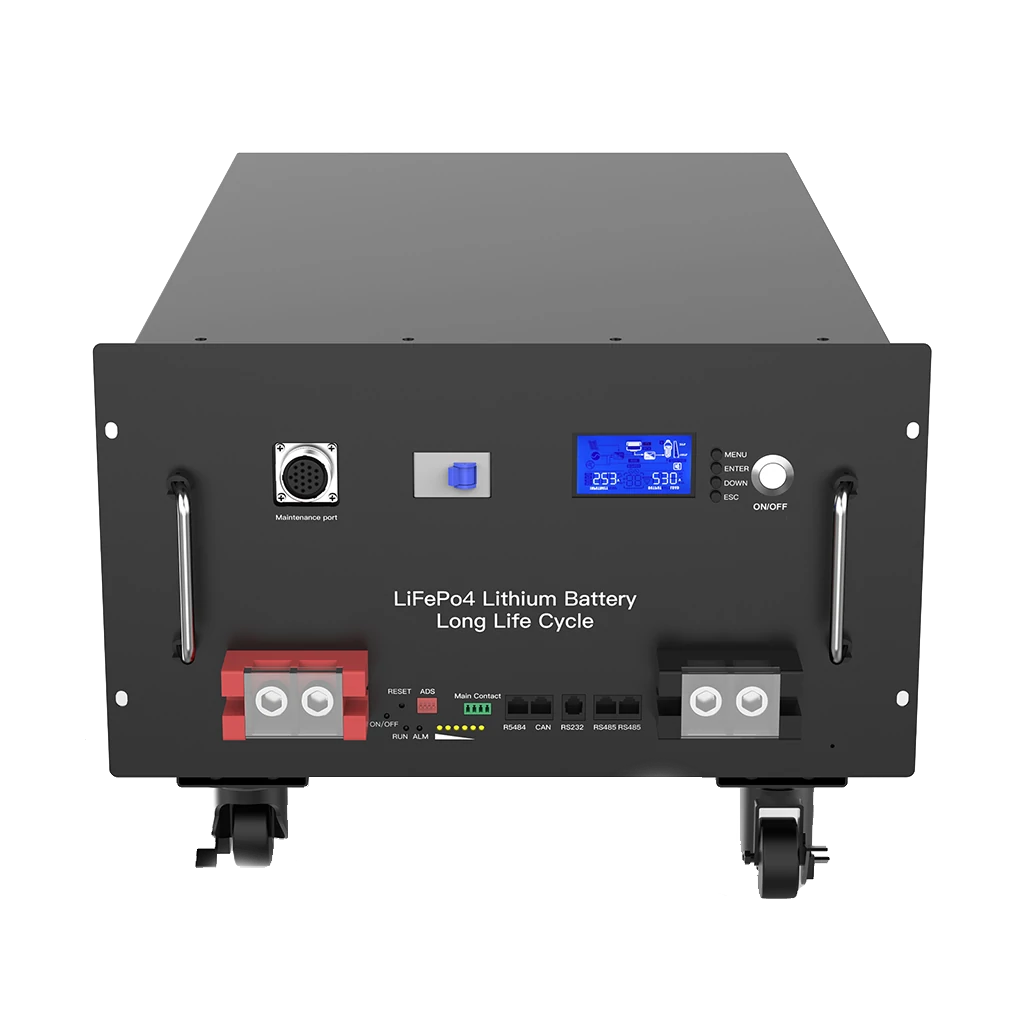
Step onto the loading dock of a busy warehouse or into the back office of a bustling retail store, and the electrical demands are nothing like a quiet suburban home. Commercial applications need batteries that can handle heavy daily cycling, higher power draws, integration with existing building systems, and compliance with commercial electrical codes. Professional rack mounted battery systems are purpose built for this environment. They use heavier duty contactors, more robust cooling, and industrial grade communication protocols that residential batteries simply do not offer. For facility managers tired of demand charges, business owners facing frequent outages, or anyone running equipment that cannot tolerate power interruptions, professional systems deliver the kind of backbone that keeps commerce moving. These are not homeowner grade solutions dressed up in fancy enclosures, they are genuine commercial tools designed for the long haul.
Higher Power Ratings for Demanding Loads
A residential battery might comfortably power a refrigerator and a few lights. A commercial battery must start a refrigeration compressor, run a bank of computers, or keep a commercial freezer from thawing. Professional rack mounted systems offer continuous power ratings that match these demands, often fifty kilowatts or more from a single rack. More importantly, they provide substantial surge capacity, typically one hundred fifty to two hundred percent of continuous rating for up to thirty seconds. This surge capability handles the inrush current of motors, compressors, and other inductive loads that would trip smaller batteries. When evaluating commercial racks, look for separate continuous and surge power specifications. A battery that delivers fifty kilowatts continuous and seventy five kilowatts for ten seconds will start most commercial equipment. For heavy industrial applications with multiple large motors, parallel racks share the surge load, each contributing its peak capacity without exceeding individual ratings.
Three Phase Integration and Power Quality
Commercial buildings run on three phase power, and your battery system must integrate seamlessly with that architecture. Professional rack batteries are available in three phase configurations, typically 208, 240, or 480 volts, matching the service entering your building. These systems monitor all three phases independently, compensating if one phase sags while others remain stable. This phase balancing capability improves power quality for sensitive equipment like CNC machines, medical imaging devices, or server racks. Some professional batteries also provide active harmonic filtering, cleaning up distortion caused by variable frequency drives, LED lighting, or other non linear loads. For businesses paying for power factor penalties on their utility bill, certain rack systems include power factor correction, automatically adjusting to keep your facility operating near unity. These power quality features often provide a faster payback than the energy savings alone.
Compliance with Commercial Electrical Codes
Installing a battery in a commercial building triggers a different set of code requirements than residential installation. Professional rack mounted systems come with the certifications that commercial inspectors demand. UL 9540 for the complete system, UL 1973 for the battery modules, and UL 1741 for grid interconnection are baseline requirements. Additionally, commercial installations often need compliance with NFPA 70, the National Electrical Code, which includes specific requirements for energy storage systems based on capacity and location. NFPA 855 limits total stored energy in buildings without automatic fire suppression, typically to 600 kilowatt hours for sprinklered buildings and lower amounts for unsprinklered spaces. Professional systems include documentation that helps your electrical engineer design a code compliant installation. Some racks integrate with building fire alarm systems, providing a dry contact that signals when the battery has detected an internal fault. This integration allows the fire alarm panel to shut down the battery system automatically during a fire event, protecting first responders.
Remote Monitoring and Fleet Management
A commercial facility manager responsible for multiple locations cannot drive to each site every time a battery sends an alert. Professional rack systems include cloud based fleet management platforms that aggregate data from every battery in your portfolio from a single dashboard. You see which sites have full batteries, which are discharging, and which show developing issues. The platform generates automated reports for warranty claims, performance verification, and utility incentive programs. For businesses participating in demand response, the platform handles automated dispatch, discharging batteries when the utility calls an event. Some systems integrate with building management platforms from Siemens, Johnson Controls, or Honeywell, allowing your facilities team to manage batteries alongside HVAC, lighting, and security from familiar tools. This remote visibility transforms battery maintenance from reactive firefighting into proactive management. You know which rack needs attention before your on site staff report a problem.
Scalability from Small Retail to Large Industrial
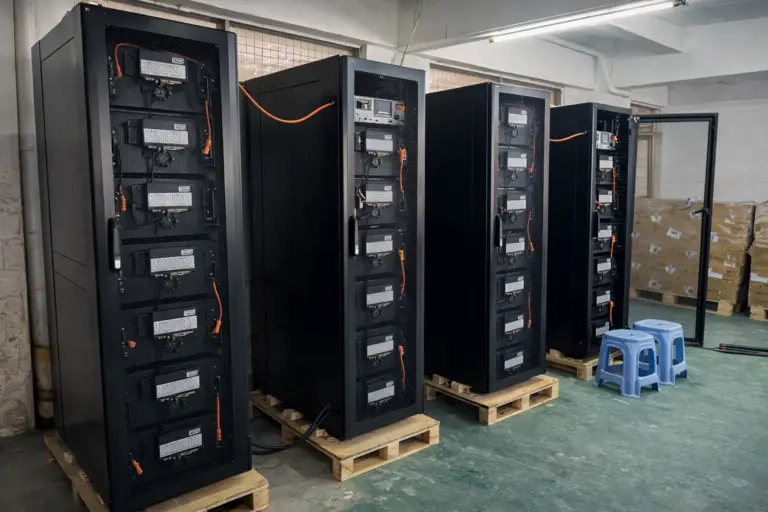
Professional rack systems scale across an enormous range. A small retail store might need a single rack offering thirty kilowatt hours and fifteen kilowatts of continuous power, enough to keep point of sale systems and security cameras running through a four hour outage. A regional distribution center might deploy twenty racks in parallel, offering six hundred kilowatt hours and three hundred kilowatts of continuous power, enough to shift most of the facility's load to battery during expensive peak demand periods. The scalability comes from standardized communication protocols, CAN bus or Modbus TCP, that allow rack mounted battery to coordinate seamlessly regardless of how many are connected. The battery management system designates one rack as the master, collecting data from all others and presenting a single interface to your inverter or building management system. Adding a rack means connecting power cables and a communication cable, then telling the system to rediscover its new configuration. No complex reprogramming or hardware changes required.
Financial Modeling for Commercial Returns
Commercial battery systems rarely pencil out based on backup value alone. The financial case typically combines demand charge reduction, energy arbitrage, and grid service participation. Professional rack systems include software that models these revenue streams using your actual utility interval data. The software imports twelve months of fifteen minute usage data, applies your utility tariff, and calculates the optimal charge discharge schedule. It then projects annual savings, payback period, and internal rate of return. Many commercial systems pay for themselves in three to five years when all value streams are captured. The modeling software also helps right size the system. Too little capacity and you leave savings on the table. Too much and the payback period stretches unnecessarily. Some professional manufacturers offer performance guarantees, promising that the system will achieve a specified annual savings or they will write a check for the difference. These guarantees are only possible because the manufacturers have deployed thousands of commercial systems and trust their modeling algorithms.
Maintenance Plans and Service Level Agreements
Commercial operations cannot afford days of downtime while waiting for replacement parts. Professional rack systems come with service plans that match your uptime requirements. A standard plan might include next business day replacement of any failed module, with you performing the swap using on site spares. A premium plan includes four hour response, a technician dispatched within four hours of your call with replacement modules in hand. Some manufacturers offer remote diagnostic services, accessing your battery management system over the internet to identify faults before dispatching a technician. For critical applications like data centers or healthcare facilities, redundant systems with N+1 configuration combined with premium service agreements provide the highest uptime. When evaluating service plans, ask about module availability for older systems. Professional manufacturers commit to stocking replacement modules for ten years after a model is discontinued, protecting your investment against premature obsolescence. That commitment separates genuine professional equipment from batteries that will be impossible to repair in a few years.