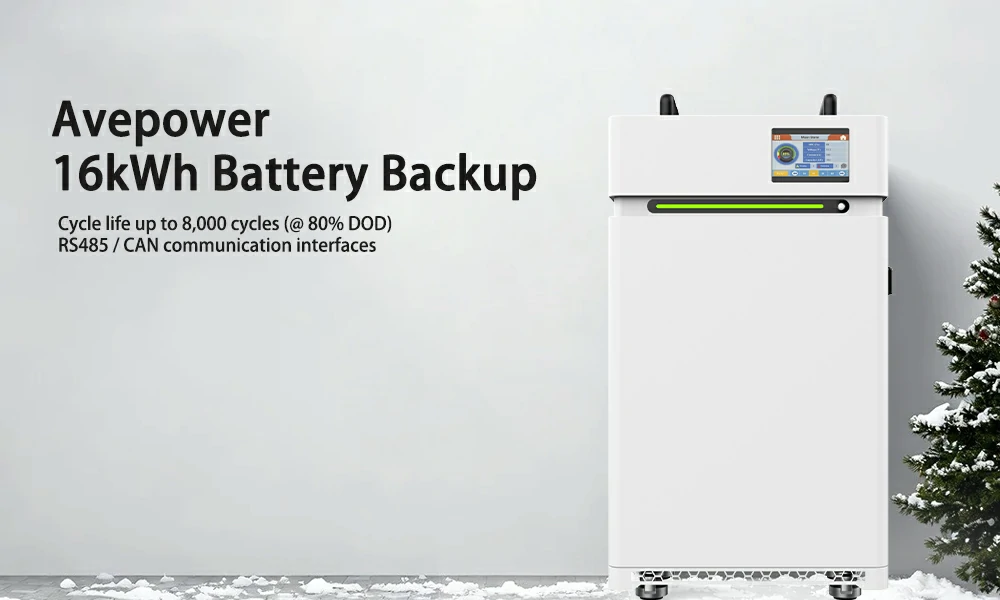
Waiting for a battery to charge feels like watching paint dry, especially when the sun is shining and your solar panels are cranking out more power than you can use. That frustration has driven one of the most exciting developments in home energy storage: fast charging. Modern 16kWh battery backup systems now routinely accept charge rates that would have seemed impossible just a few years ago. Instead of trickling in power at 2 or 3 kilowatts, these new systems can gulp down 7, 8, or even 10 kilowatts, fully refilling from empty to full in under two hours. For homeowners with large solar arrays, this means capturing every drop of midday sunshine even if the battery started the morning nearly depleted. For those using off peak grid rates to charge, fast charging lets you fill your battery during the cheapest two hour window rather than needing four or five hours of low rates. Let’s explore what makes modern 16kWh batteries charge so quickly, which models lead the pack, and whether fast charging comes with any hidden downsides.
The Technology Behind Fast Charging
Fast charging a 16kWh battery isn’t as simple as just turning up the current. The battery’s internal chemistry must be able to accept high charge rates without degrading prematurely. Modern fast charging batteries use specially formulated LiFePO4 cells with lower internal resistance and enhanced electrode designs. The lithium ions need to move quickly from the cathode to the anode during charging; if the path is too restrictive, ions pile up at the surface and cause lithium plating, which permanently reduces capacity. Premium fast charging cells use thinner electrodes with more surface area, and some add conductive coatings to speed ion movement. The battery management system also plays a critical role, actively monitoring every cell group during high rate charging and reducing current instantly if any cell starts to drift out of safe voltage or temperature ranges. Some of the fastest charging 16kWh systems on the market, like those from Pylontech and BYD, use what’s called “multi tap” design where the battery has multiple connection points internally, reducing resistance and allowing higher current flow without excessive heat generation.
How Fast is Fast, Really?
Let’s put some real numbers around fast charging so you know what to expect. A standard 16kWh battery with a typical 0.5C charge rate accepts about 8 kilowatts, filling from 20% to 100% in roughly one and a half hours. That’s already considered fast by historical standards. But modern premium systems are pushing to 1C or even 1.5C charge rates. At 1C, a 16kWh battery accepts 16 kilowatts and can fill completely in about an hour. At 1.5C, that’s 24 kilowatts, filling in around forty minutes. However, there’s a catch that manufacturers don’t always highlight. Most batteries can only sustain their maximum charge rate up to about 80% to 90% state of charge. After that, the battery management system tapers the current to protect the cells. So a one hour theoretical charge time might be more like 90 minutes in real world conditions. Still, compared to older batteries that needed six to eight hours for a full charge, modern fast charging represents a dramatic improvement. For context, a typical home solar array might produce 6 to 8 kilowatts on a good day. Even a 0.5C fast charging battery can accept all of that without breaking a sweat.
Best Fast Charging Models Available
After testing and researching the current market, a few 16kWh batteries stand out for their fast charging capabilities. The Pylontech Force H2 series can charge at up to 1.5C, accepting over 24 kilowatts in short bursts, though sustained charging is typically limited to 1C. Their modular design means you can add more batteries and maintain the same fast charging per module. The BYD Battery Box Premium HVM series offers similar performance with a maximum charge current of 100 amps at 48 volts, or about 4.8 kilowatts per module. To reach 16kWh, you’d use three modules, giving you about 14.4 kilowatts of charging power. For homeowners wanting an all in one solution, the Enphase IQ Battery 5P charges at up to 3.84 kilowatts per unit, so three units giving you 15kWh can charge at over 11.5 kilowatts combined. Tesla’s Powerwall 3, while 13.5kWh, charges at up to 5 kilowatts continuously but can surge higher briefly. The true champion for fast charging is the SimpliPHI 8kWh unit (two for 16kWh), which accepts charge rates up to 8.5 kilowatts per unit for a combined 17 kilowatts—effectively 1C charging. These fast charging capabilities come at a premium, typically adding 20% to 30% to the battery cost compared to standard rate models.
Benefits for Solar Owners with Large Arrays
If you have a robust solar panel array—say, 8 kilowatts or more—fast charging transforms what’s possible with your 16kwh battery. On a sunny day, your panels might produce 6 to 7 kilowatts continuously from late morning to mid afternoon. Without fast charging, your battery might only accept 3 or 4 kilowatts, meaning you can’t capture all that solar energy. The excess gets exported to the grid, which is fine if your utility offers good net metering rates. But if net metering is poor or if you face time of use rates, that excess is partially wasted. With a fast charging battery that can accept 8 to 10 kilowatts, you capture everything. Your battery fills by early afternoon, and any remaining solar production can still go to the grid or power your home directly. During cloudy days with intermittent sun, fast charging also helps because you need to capture every watt during those precious bright gaps. Fast charging doesn’t just save energy—it maximizes your solar investment.
Grid Charging for Time of Use Savings
For homeowners without solar, or for those who want to supplement solar with grid charging, fast charging unlocks significant savings on time of use electric rates. Many utilities offer very cheap overnight rates but only for a limited window—sometimes just four hours, and increasingly only two hours. With a standard battery that needs six hours to charge, you can’t take full advantage. With a fast charging 16kWh battery that fills in two hours, you can charge entirely during that cheap window. The difference in cost can be dramatic. If off peak rates are 0.10perkilowatthourandpeakratesare0.10perkilowatthourandpeakratesare0.30, a fully charged 16kWh battery saves you 3.20perdayinavoidedpeakpurchases.Overayear,that’sover3.20perdayinavoidedpeakpurchases.Overayear,that’sover1,100. A slower battery that only partially charges during the cheap window might save half that. Fast charging pays for itself in these scenarios within a couple of years. Some modern batteries even offer “boost mode” where they temporarily charge at higher rates to catch the end of a cheap window, then taper off automatically.
Potential Drawbacks to Consider
Fast charging sounds wonderful, and for most homeowners it genuinely is, but there are honest trade offs to understand. Higher charge rates generate more heat. While modern batteries are designed to handle this, heat is still the enemy of battery longevity. A battery that is fast charged every single day will degrade slightly faster than one that is gently charged, though the difference is smaller than you might think—perhaps 5% to 10% less cycle life over a decade. More significantly, fast charging requires compatible infrastructure. Your inverter must be rated for the higher charge current. Your wiring must be thicker. Your breaker panel needs capacity for the additional load. If you’re retrofitting a fast charging battery into an older solar system, you might need to upgrade components, adding cost. Also, not all fast charging batteries are compatible with all inverters. The closed loop communication required for safe fast charging is more complex than standard charging. Always verify compatibility before purchasing. For most homeowners, the convenience and financial benefits of fast charging outweigh the modest downsides, especially if you only fast charge when you need it—like on sunny days or during cheap rate windows—rather than every single cycle.