Schools are unique environments. They are filled with children of different ages, staff members with varying responsibilities, and visitors who come and go throughout the day. Accidents in a school setting can range from a scraped knee in the playground to a serious allergic reaction in the canteen or a seizure in the middle of a classroom. The staff responsible for these children need first aid training that goes beyond generic workplace courses. Irish First Aid has developed specific programs tailored to the realities of Irish primary and secondary schools. These courses take into account the common injuries seen in school settings, the legal responsibilities of teachers and special needs assistants, and the emotional challenge of caring for a child in distress. If you work in a school, whether as a teacher, an SNA, or a principal, understanding what Irish First Aid offers can help you create a safer environment for everyone under your care.
Why Schools Need Specialised First Aid Training
A standard workplace first aid course teaches you how to respond to an adult who has had a heart attack or fallen from a height. That is useful knowledge, but it does not fully prepare you for the reality of a school. Children are not small adults. Their anatomy is different, their common medical conditions are different, and their emotional responses to pain and fear are different. A child having an asthma attack presents differently than an adult. A child with a febrile seizure can be terrifying if you have never seen one before. A teenager with a suspected concussion from a sports injury needs careful monitoring and specific action steps. Irish First Aid’s school programs are designed with these differences in mind. They cover paediatric CPR, which uses a different compression technique than adult CPR. They address common school incidents like head injuries from falls, allergic reactions to unknown foods, and the management of chronic conditions like epilepsy and diabetes. Teachers leave the course feeling equipped for the emergencies that actually happen in a school corridor or a playing field, not just hypothetical workplace scenarios.
Key Courses Offered for School Staff
Irish First Aid offers several training options depending on the needs of your school. The most popular is the Paediatric First Aid course, a one day program that covers emergency response for infants and children up to adolescence. This course includes child and infant CPR, choking management for small airways, febrile seizure recognition and care, anaphylaxis and epinephrine auto injector use, head injuries and concussion awareness, and playground injury management. For schools that require a more comprehensive qualification, Irish First Aid also offers the QQI Level 5 Occupational First Aid course with a paediatric module added. This is a three day program that meets HSA requirements for workplace first aiders while also addressing the specific needs of children. Many secondary schools choose this option because they have both adult staff and adolescent students to consider. For special schools or schools with dedicated special educational needs units, Irish First Aid can customise training to cover conditions like gastrostomy tube emergencies, seizure management plans, and behavioural crisis response. The team works closely with each school to understand their specific population before designing the training.
Certification and Recognition for School Compliance
School principals and boards of management have legal responsibilities when it comes to health and safety. The Department of Education expects schools to have adequate first aid provision, and during inspections, the quality of first aid training can be reviewed. Irish First Aid’s school programs carry recognised certification. The Paediatric First Aid course results in an Irish First Aid certificate that is widely accepted by schools and childcare regulators. The Occupational First Aid with paediatric module leads to a full QQI Level 5 certificate, which is the same qualification expected in any Irish workplace. This means your school is not only meeting Department of Education expectations but also HSA standards. The certificates are valid for two years, after which refresher training is recommended. Irish First Aid provides digital copies of all certificates to the school administrator, making it easy to maintain records for inspection purposes. They also send automated reminders when staff certificates are approaching expiry, which is a huge help for busy school offices that might otherwise let renewals slip through the cracks.
How Training Is Delivered to Minimise School Disruption
Irish First Aid understands that closing a school for a day of training is not always feasible. That is why they offer flexible delivery options specifically designed for schools. The most popular model is onsite training during staff development days. Irish First Aid sends an instructor to your school, and staff complete the training in your staff room or a spare classroom. This eliminates travel time and keeps staff on the premises in case of an emergency. For schools that cannot spare a full day, Irish First Aid offers blended learning. Staff complete the theoretical portion online at their own pace, over evenings or weekends, then attend a half day practical session. This reduces time away from students to just a few hours. Irish First Aid also runs open courses at their Dublin, Cork, and Galway venues during school holidays, such as Easter break and summer holidays. Many teachers and SNAs choose this option to get their training done without any impact on their classroom time. The team is also happy to work around exam schedules, parent teacher meeting dates, and other school events. They know that flexibility is not a luxury for schools. It is a necessity.
What School Staff Learn in a Typical Session
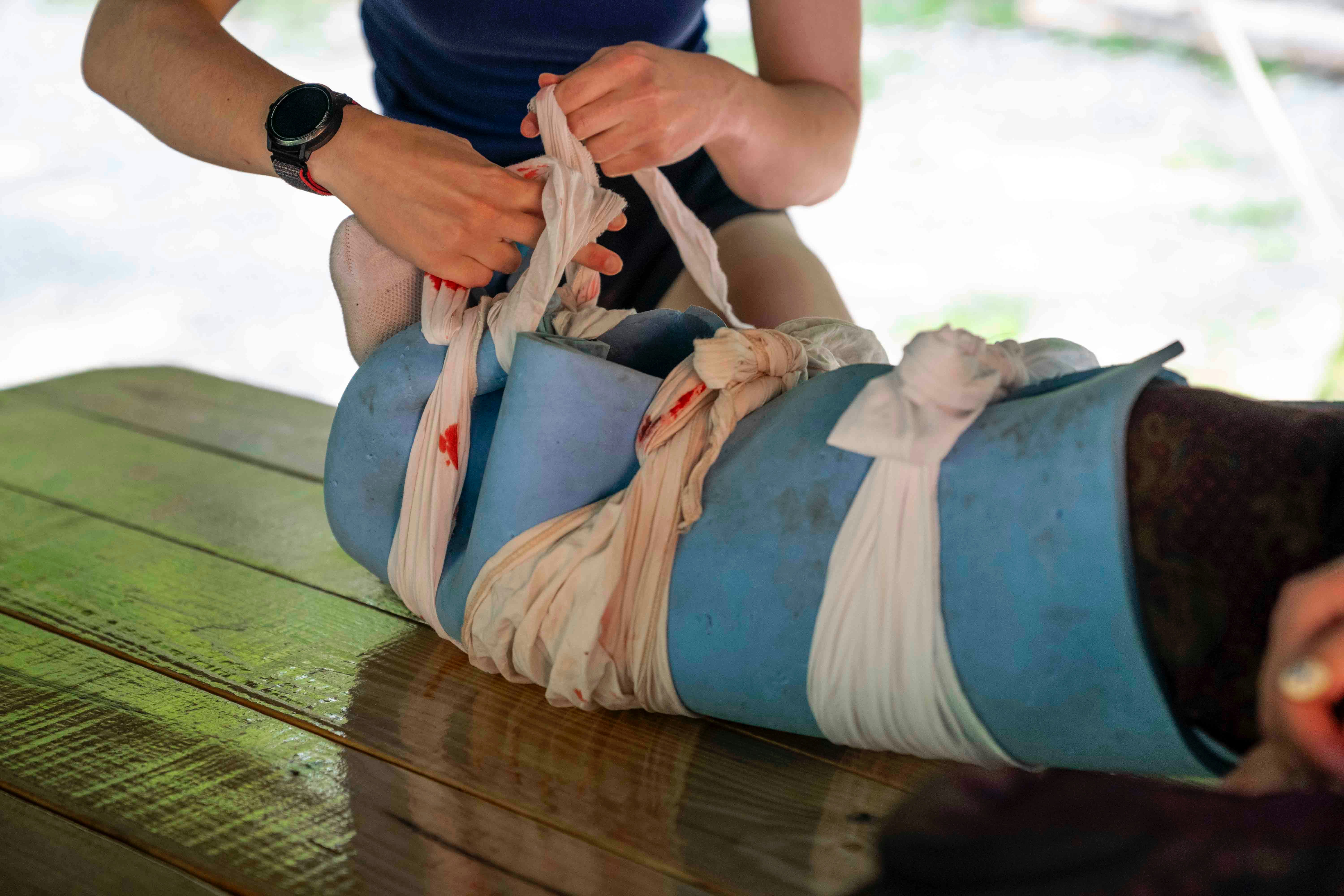
Walking into an Irish First Aid school program, you might be nervous, but the instructors are skilled at putting everyone at ease. The day begins with the most critical skill: paediatric CPR. You kneel beside a child sized manikin and practice one handed compressions at the correct depth. For infant CPR, you learn to use two fingers instead of your whole hand. The instructor watches closely and corrects your technique. Next, you practice the recovery position for a child, which is similar to an adult but with gentler handling. Choking is a major focus. You learn back blows and abdominal thrusts for older children, and chest thrusts for infants. The instructor runs through scenarios where a child is silently choking, unable to cough or speak, and you practice the rapid response. Allergic reactions are covered in detail, including how to recognise anaphylaxis and how to use an epinephrine auto injector. You practice removing the safety cap and injecting into a training device. Seizure management is another key module. You learn to time the seizure, protect the child from injury, place them in the recovery position afterwards, and recognise when an ambulance is needed. By the end of the day, school staff consistently report feeling far more confident than when they walked in.
Creating a Whole School Safety Culture
The goal of Irish First Aid’s school programs is not just to certify a few staff members. It is to create a culture of safety throughout the entire school. Many schools choose to train a critical mass of staff, typically at least one first aider per classroom or per floor, rather than just meeting the minimum requirement. This means that no matter where an emergency happens, there is someone nearby who knows what to do. Irish First Aid encourages schools to display first aid posters in key locations, keep an accessible first aid kit in every classroom, and run regular drills for scenarios like anaphylaxis or seizure response. They also offer train the trainer programs for larger schools, where a designated staff member learns to deliver basic first aid awareness sessions to other employees. This spreads the knowledge even further. Ultimately, the best first aid program is one where everyone feels responsible, not just the person holding the certificate. Irish First Aid helps schools build that culture from the ground up, with training that is practical, compassionate, and tailored to the wonderful chaos of Irish school life.