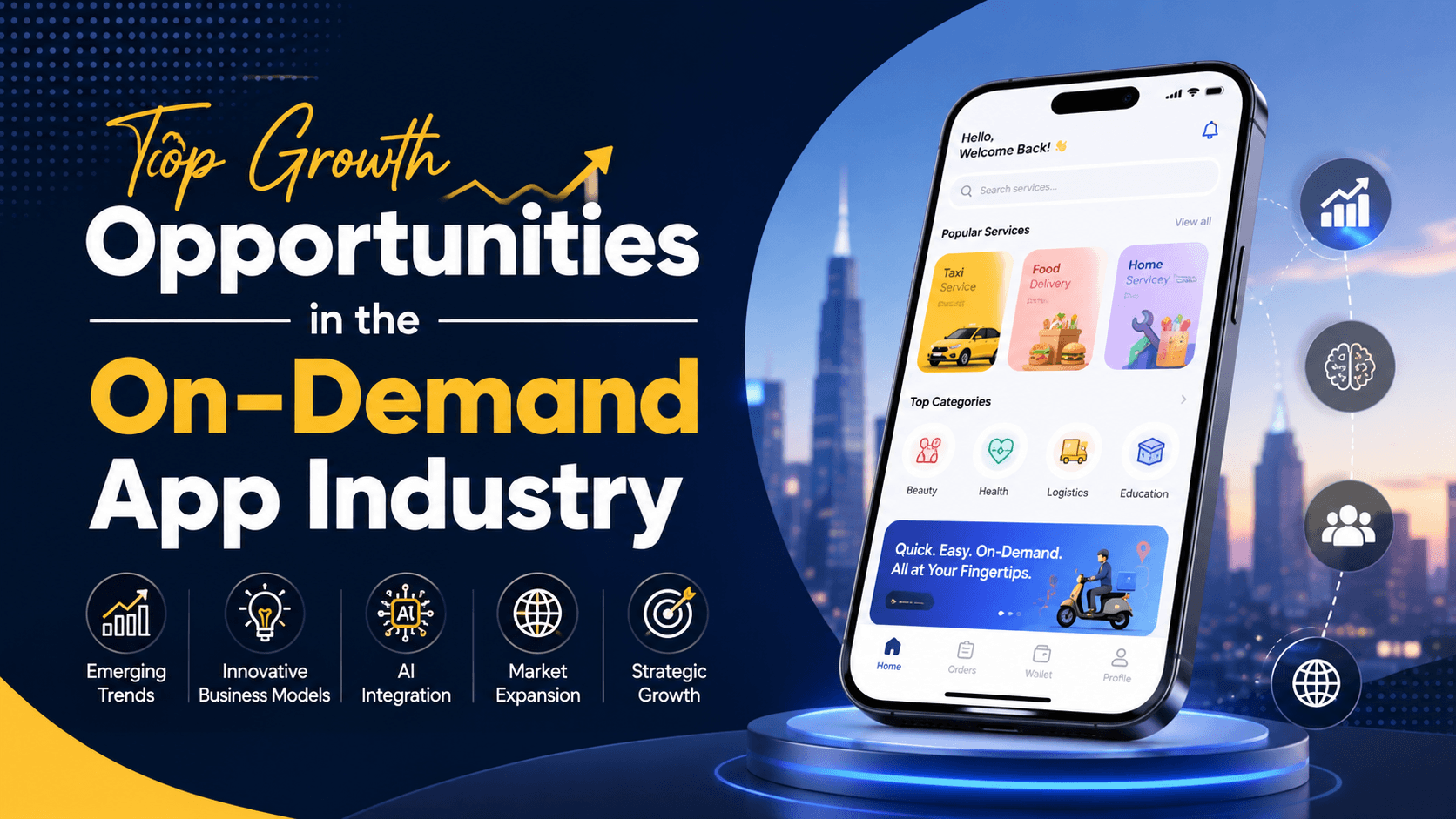
The on-demand app industry has revolutionized the way consumers access goods and services, offering unparalleled convenience and efficiency at the tap of a button. As technology continues to advance and consumer preferences evolve, numerous growth opportunities are emerging within this dynamic sector.
From innovative startups to established enterprises, businesses are increasingly recognizing the potential for profitable ventures in various niches such as healthcare, food delivery, and transportation. This article explores the top growth opportunities within the on-demand app industry, highlighting key market trends, emerging technologies, and strategic approaches for success in this rapidly expanding landscape.
Overview of the On-Demand App Industry
Definition and Scope
The on-demand app industry is like a genie in a bottle—just rub your phone and voila! It encompasses mobile applications that offer services or products instantly or within a short timeframe. Whether it’s ordering food, hailing rides, or booking appointments, these apps cater to our insatiable desire for immediacy. Their scope is vast, covering various sectors like transportation, hospitality, healthcare, and entertainment. It’s all about connecting users with providers through a seamless digital platform, making life just a little bit easier (and a lot more convenient).
Historical Context and Evolution
Once upon a time, in a world before smartphones, if you wanted a pizza, you had to hope your phone number didn’t have too many digits! Fast-forward to the early 2010s, when technology slapped us in the face with apps like Uber and Airbnb. This era marked the transition from traditional services to the on-demand model, where users could summon goods and services with a few taps. Fast evolution followed, with advancements in mobile technology and a growing appetite for convenience, pushing the on-demand wave to swell into a billion-dollar industry.
Key Market Trends Driving Growth
Increased Mobile Device Penetration
With smartphones now as common as socks, the explosion in mobile device usage is a primary catalyst for the on-demand app industry. People are glued to their screens, and as they become increasingly comfortable with mobile transactions, the demand for on-demand services skyrockets. This means more users, more downloads, and ultimately, more opportunities for entrepreneurs to grab their slice of the pie (or pizza)!
Shift Towards Subscription Models
The subscription model is the new black! With users seeking value and convenience, many on-demand platforms are pivoting to subscription-based offerings. Think about it: paying a monthly fee for unlimited deliveries or services saves users from the mental gymnastics of per-transaction charges. This not only secures a steady revenue stream for companies but also adds a sprinkle of loyalty from satisfied customers—everyone wins!
Personalization and User Experience
Today’s users are like Goldilocks: they want everything “just right.” Personalization has become crucial in the on-demand app industry, with algorithms working overtime to tailor experiences to individual preferences. From customized recommendations to targeted promotions, apps that deliver a delightful user experience are seeing higher retention rates. After all, who wouldn’t want to feel like a VIP while ordering their favorite latte?
Emerging Technologies Shaping On-Demand Apps
Artificial Intelligence and Machine Learning
AI and machine learning are the wizards behind the curtain in the on-demand app realm. These technologies analyze user data to predict behavior, optimize delivery routes, and enhance service efficiency. For instance, AI can make recommendations based on past orders, making the user’s next choice as easy as pie (or should we say pizza?). With constant learning and adaptation, these technologies are paving the way for even smarter apps!
Blockchain for Security and Transparency
Security is the name of the game, and blockchain technology is the bodyguard every on-demand app needs. By ensuring secure transactions and transparent processes, blockchain builds trust between users and service providers. Imagine ordering a ride and knowing that the payment process is tamper-proof—sounds pretty appealing, right? As this technology continues to evolve, we can expect a more secure and transparent on-demand landscape.
Internet of Things (IoT) Integration
IoT is basically the cool kid on the block, connecting devices and making them smarter. In the on-demand app industry, IoT integration means more efficient services and enhanced user experiences. Picture smart fridges ordering groceries when you’re running low or wearables alerting you when it’s time for your next delivery. The potential is limitless, as connected devices work together to satisfy our on-demand desires!
Consumer Preferences and Behavioral Shifts
Demand for Convenience and Speed
In a world where patience is as rare as a unicorn, the demand for convenience and speed drives the on-demand app industry. Users want services to be quick and hassle-free—no one has time to waste! Whether it’s getting food delivered in under 30 minutes or finding a last-minute appointment, consumers are all about that instant gratification. The quicker they can get what they want, the happier they are!
Rise of Remote Work and Lifestyle Changes
The rise of remote work has changed the game, reshaping consumer preferences like never before. With more folks working from home, the demand for on-demand services has surged. Craving lunch during a midday Zoom meeting? There's an app for that! This shift has led to new opportunities and trends within the industry, as businesses strive to cater to an evolving workforce that values flexibility and convenience over traditional norms.
Social Influence and Peer Recommendations
In the age of social media, peer recommendations carry more weight than your favorite influencer’s latest sponsorship deal. Users trust the opinions of friends and family, making word-of-mouth marketing a powerful tool in the on-demand app industry. Apps featuring review systems and social sharing options help build a community of satisfied users, driving growth and loyalty. So, if your friend swears by that ride-hailing service, chances are you’ll be hopping on board too!
Promising Niches and Sectors for Investment
Healthcare and Telemedicine
In a world where washing your hands and social distancing became the new normal, the healthcare sector has seen a surge in demand for on-demand apps. Telemedicine is leading the charge, offering patients virtual consultations faster than you can say “Please hold for your medical advice.” With the ability to book appointments, access medical records, and even receive prescriptions from the comfort of your couch (pajamas optional), investing in healthcare apps is like putting your money on the winning horse—except this horse wears scrubs and has a 24/7 hotline.
Food Delivery and Meal Kits
If quarantine taught us anything, it’s that nobody wants to cook every night. Enter the booming realm of food delivery and meal kits, where convenience meets culinary. From gourmet meals prepped by top chefs to DIY kits that bring out your inner Gordon Ramsay (minus the yelling), this sector is ripe for investment. The demand for “dinner delivered” continues to skyrocket, making it a no-brainer for investors looking to capitalize on the growing appetite for convenience and variety.
Transportation and Mobility Services
The streets are calling, and on-demand transportation services are answering—whether it's a quick ride to the grocery store or a lift to the airport. With the rise of electric scooters, bike-sharing programs, and ride-hailing apps, mobility solutions are transforming how we navigate urban landscapes. As cities become more congested and environmentally conscious, investing in this sector could put your financial journey on the fast track, minus the traffic jams.
Challenges and Risks in the On-Demand Space
Regulatory and Compliance Issues
Navigating the labyrinth of regulations in the on-demand app world can feel like trying to find your way out of a corn maze—blindfolded. Different regions have varying laws, and failing to comply can lead to hefty fines or shutdowns faster than you can say “app store.” Investors must stay informed about the legal landscape, or risk getting lost on the path to success.
Market Saturation and Competition
With every great idea comes a flood of imitators. The on-demand app space is no stranger to this phenomenon, as new entrants pop up like weeds in a garden. If you're not careful, you could find yourself lost in a sea of similar services, struggling to stand out. The challenge lies in carving out a unique niche and ensuring your app provides a solution that resonates with users—because let’s face it, nobody needs another Uber clone.
Customer Retention and Loyalty
Attracting customers is only half the battle; keeping them is where the real challenge lies. With so many options at their fingertips, users can be fickle—like a kid in a candy store who can’t decide between chocolate and gummy bears. Building customer loyalty in the on-demand app industry requires offering exceptional experiences, personalized engagement, and incentives that keep users coming back for more (cue the loyalty points).
Strategies for Success in the On-Demand App Market
Effective Marketing and Branding
In the noisy world of app stores, your app needs to shout (or at least whisper loudly enough) to grab attention. Effective marketing and branding are crucial for standing out from the competition. Think beyond the usual social media ads. Creative storytelling, influencer partnerships, and even good ol’ fashioned word-of-mouth can work wonders. Make sure your messaging resonates with your target audience and reflects your unique value proposition—after all, nobody wants to be just another face in the crowd.
User-Centric Design and Development
When it comes to app development, putting users at the center of your design isn’t just a nice-to-have; it’s a must-have. A user-friendly interface kills frustrations faster than a cat meme on a bad day. Prioritize simplicity, accessibility, and an enjoyable experience that makes users feel like they just found a unicorn in the app store. Conduct user testing, gather feedback, and iterate relentlessly to ensure your app exceeds expectations—because a happy user is a loyal user.
Building Strategic Partnerships
No app is an island, and building strategic partnerships can elevate your on-demand business from good to great. Whether it’s teaming up with local restaurants, transportation companies, or even influencers, collaboration can expand reach and provide added value. Think of it as a friendship bracelet—when you connect with the right partners, everyone wins. Together, you can tap into each other’s audience and resources, creating a powerhouse of on-demand solutions.
Future Outlook: Predictions for the Industry
Anticipated Technological Advancements
The on-demand app industry is poised for a tech renaissance. We’re not talking about flying cars (yet), but rather smarter AI, augmented reality experiences, and advanced data analytics that can predict consumer behavior with eerie accuracy. As technology evolves, so too will the capabilities of on-demand apps, making them more efficient, engaging, and indispensable in our daily lives. Buckle up, because the future is looking high-tech!
Shifts in Consumer Behavior
Consumer preferences are as fickle as a reality TV show voting poll. In the coming years, we can expect shifts driven by sustainability, personalization, and the demand for seamless experiences. Users will increasingly gravitate toward services that reflect their values—like eco-friendly options or apps that cater to specific dietary needs. Keeping a finger on the pulse of these changing preferences will be key for companies looking to thrive in an evolving landscape.
Long-Term Industry Trends and Projections
The on-demand app industry is not just a passing trend; it’s here to stay. As we look to the horizon, we’ll see continued growth in niche markets, enhanced technological integration, and increased consumer reliance on app-based services. Projections indicate a robust future for businesses that adapt swiftly to changes and innovate continuously. So, if you’re considering diving into this lucrative space, grab your floaties and get ready for a wild ride!
The on-demand app industry presents a wealth of growth opportunities fueled by technological advancements and shifting consumer behaviors. By understanding the key trends and challenges outlined in this article, businesses can strategically position themselves to capitalize on the evolving landscape. As the market continues to expand, those who embrace innovation and prioritize user experience will likely thrive in this competitive arena. Moving forward, staying adaptable and responsive to consumer needs will be essential for success in the ever-changing on-demand app market.
Frequently Asked Questions
What are on-demand apps?
On-demand apps are mobile applications that allow users to access goods and services instantly, often through a simple interface. They connect consumers with providers in real-time, enabling services like food delivery, transportation, and home services at the touch of a button.
What are the biggest trends in the on-demand app industry?
Key trends in the on-demand app industry include increased mobile device penetration, the rise of subscription models, and a greater emphasis on personalized user experiences. Additionally, technologies such as artificial intelligence and IoT are shaping how these apps operate and interact with users.
What challenges do businesses face in the on-demand app market?
Businesses in the on-demand app market face challenges such as intense competition, regulatory compliance issues, maintaining customer loyalty, and navigating market saturation. Understanding these challenges is crucial for developing effective strategies and ensuring long-term success.
How can businesses succeed in the on-demand app industry?
To succeed in the on-demand app industry, businesses should focus on effective marketing and branding, user-centric design, and building strategic partnerships. Staying adaptable and responsive to consumer feedback is also essential for long-term growth and success.