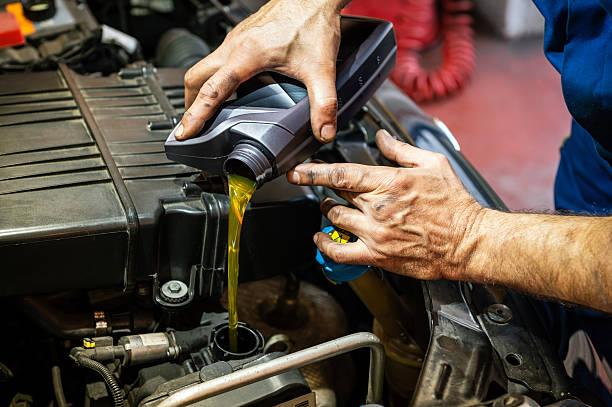
Most drivers know they're supposed to get their oil changed. But plenty of them push it off for weeks, sometimes months, telling themselves it probably won't matter that much. It does matter. A lot. The damage that builds up inside an engine from skipped or delayed oil changes is gradual at first, then suddenly very expensive. If you've been putting it off, or you're just not sure how serious the consequences really are, this breaks it down plainly. Getting Oil Change Services in Iowa City IA on a regular schedule is one of the cheapest things you can do to keep an engine alive for the long run.
How Engine Oil Actually Works (And Why It Doesn't Last Forever)
Fresh oil does a few jobs at once. It lubricates metal parts that would otherwise grind against each other at high speed, carries heat away from the engine, and suspends tiny particles of dirt and metal so they don't just sit on engine surfaces. That's a lot of work. And oil wears out doing it.
Over time, heat breaks down the oil's chemical structure. The additives that help it do its job get used up. What's left is thicker, darker, and full of contaminants. It can't coat moving parts the way fresh oil can. So instead of a thin protective film between metal surfaces, you start getting friction. Direct metal-on-metal contact. That's where the real damage starts.
The oil filter helps, but only up to a point. Once it's saturated with particles, it can't catch any more. Dirty oil keeps circulating. The engine keeps running. And things start wearing down faster than they should.
The Progressive Damage: It Starts With Sludge
Sludge is what happens when old oil breaks down completely and turns into a thick, gel-like deposit. It's nasty stuff. It collects in oil passages, on valve covers, and around the crankcase. Once sludge builds up, it blocks oil from reaching parts that need it, which basically turns your engine into a machine that's slowly starving itself.
Early-stage sludge is annoying but fixable. A flush and a fresh oil change can sometimes clear it out. But if you keep ignoring it, the sludge hardens and the passages stay blocked. At that point, you're looking at a partial or full engine teardown to clean things out properly. That's not a $60 oil change anymore. That's a repair bill in the hundreds or even thousands.
Understanding how motor oil degrades over time helps explain why intervals exist in the first place. It's not just a number a manufacturer picked out of thin air.
What Happens to Specific Engine Parts
Skipping oil changes doesn't damage everything at once. It's more like a slow failure that hits different components at different stages.
Pistons and Cylinder Walls
Pistons move fast. Really fast. Without proper lubrication, the rings that seal the piston to the cylinder wall start to score the metal. You get scratches, then grooves, then a cylinder that can't hold compression properly. That leads to oil burning, power loss, and eventually a misfire that won't go away no matter what else you do.
Camshafts and Valvetrain
The camshaft sits at the top of the engine in most modern cars, which means it's the last place fresh oil reaches and the first place to suffer when oil pressure drops. Worn cam lobes change how your valves open and close. You lose performance. Then you lose reliability. Camshaft replacement isn't cheap, usually running anywhere from $1,500 to $3,000 depending on the vehicle.
Bearings
Rod bearings and main bearings are thin metal shells that let the crankshaft spin smoothly. They depend entirely on a constant film of oil. Without it, they wear fast. A spun bearing is often the end of an engine. The repair cost for that kind of damage can hit $4,000 or more, sometimes making the car not worth fixing at all.
Warning Signs You've Waited Too Long
Your car will usually try to tell you something's wrong before things get catastrophic. The question is whether you're paying attention.
- Dark, gritty oil on the dipstick. Fresh oil is amber-colored and clear. Black, grainy oil is way overdue.
- Engine noise, especially ticking or knocking. A ticking sound at startup usually means the valvetrain isn't getting oil fast enough. Knocking is worse. That's often a bearing problem already in progress.
- The oil pressure warning light. Don't ignore this one. Ever. If it comes on while you're driving, pull over soon as it's safe to do so.
- Burning smell from under the hood. Old oil that's leaking onto hot engine parts smells burnt and acrid. Not a smell you can miss.
- Rough idle or reduced power. When oil can't do its job, the engine works harder to compensate. You feel it.
If you're seeing two or more of these at the same time, don't just book an oil change. Get the car inspected so you know what else might already be damaged.
How Often Do You Actually Need a Change?
The old "every 3,000 miles" rule is outdated for most modern vehicles. Most cars using full synthetic oil can go 5,000 to 7,500 miles, and some are rated for up to 10,000. But that depends on your specific engine, how you drive, and what oil you use. Short trips, lots of stop-and-go traffic, and extreme temperatures all make oil break down faster.
The best place to look is your owner's manual. Seriously. It'll tell you the interval your manufacturer recommends based on actual engineering, not guesswork. If you've been ignoring that schedule, now's the time to get back on track. Harris Boyz Auto Repair Shop is one option for Auto Oil Change Services in Iowa City IA if you want someone local who knows what they're doing and won't upsell you on things you don't need.
The second time Oil Change Services in Iowa City IA comes up in conversation, it's usually after someone's already had an expensive repair. Don't be that person. Staying on schedule with Auto Oil Change Services in Iowa City IA is genuinely one of the lowest-cost ways to protect something you've spent a lot of money on.
Frequently Asked Questions
Can I go a few extra months without an oil change if the mileage is low?
Not really. Oil breaks down from heat and time, not just mileage. If you've had the same oil in for six months or more, it's probably due for a change even if you haven't put many miles on the car. Short-trip driving is especially hard on oil because the engine never fully warms up.
Will one skipped oil change seriously damage my engine?
One missed change probably won't destroy anything, but it does accelerate wear. The real damage comes from a pattern of skipping or pushing intervals way past what's recommended. Do it a few times and the effects stack up fast.
What's the difference between conventional and synthetic oil for change intervals?
Synthetic oil is more stable under heat and lasts longer between changes. Most modern vehicles are designed to run on full synthetic, and the longer intervals that come with it are part of why manufacturers recommend it. Conventional oil breaks down faster and usually needs changing more often.
Is it bad to change oil too frequently?
Not really bad, just wasteful. Changing it more often than needed doesn't hurt anything, it just costs you money you didn't have to spend. Following your owner's manual interval is the practical middle ground.
How much does engine damage from skipped oil changes actually cost to fix?
It ranges a lot. Sludge cleaning might run a few hundred dollars. Camshaft or bearing repairs are usually $1,500 to $4,000 or more. A full engine replacement on a mid-size car can easily hit $5,000 to $8,000. Compare that to oil changes at $60 to $100 each, and the math is pretty clear.
Taking care of your engine doesn't require much. A scheduled oil change a few times a year, some attention to warning signs, and a shop you actually trust. That's really all it takes to avoid the kind of repair bills that make people want to just sell the car and start over.