Foam products are flexible, lightweight, and highly resilient, but their large volume can make storage and transportation difficult. Compression roll packing provides a practical way to turn bulky foam products into compact cylindrical packages that are easier to store, handle, and ship.
But how does foam compression roll packing actually work? The process is more than simply pressing foam flat. A complete system combines controlled compression, heat sealing, and roll packing to keep the product compact while preparing it for transportation.
What Is Foam Compression Roll Packing?
Foam compression roll packing is a packaging process designed to reduce the volume of foam products before transportation. The foam is placed inside a suitable PE or PVC bag, compressed under controlled pressure, heat-sealed to limit rebound, and then rolled into a cylindrical package.
Depending on the foam material and product dimensions, a suitable foam compression machine can achieve substantial volume reduction. KIMKOO equipment is designed for applications involving foam blocks, foam layers, mattresses, and sofas.
Step 1: Preparing the Foam and Packaging Bag
The first step is to select a packaging bag that matches the dimensions of the foam product. PE or PVC bags are commonly used because they can withstand the compression process and provide an effective barrier against dust and moisture.
The foam product is manually inserted into the bag before being positioned on the machine's working area. Correct bag sizing is important. A bag that is too small can interfere with compression, while excessive unused film can make the final package unnecessarily large.
Step 2: Hydraulic Foam Compression
Once the bagged product is correctly positioned, the compression plate moves downward and applies controlled hydraulic pressure. The objective is to reduce the foam's height and overall volume without unnecessarily damaging the material.
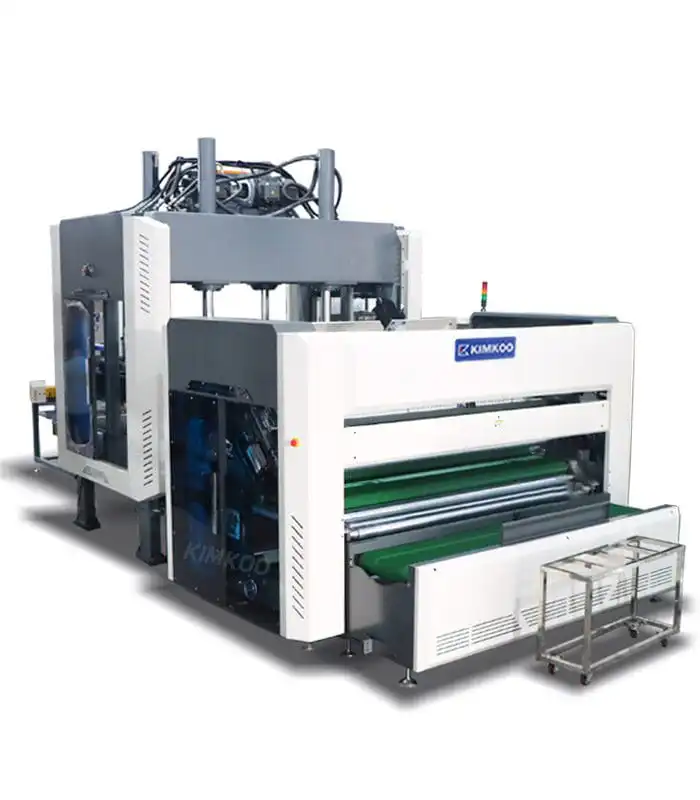
For larger and denser products, sufficient compression force is essential. The JK-C3R, for example, uses four hydraulic cylinders and provides up to 120 tons of hydraulic pressure. Its compression plate measures 2100 × 2300 mm and supports products with heights from 50 to 1000 mm.
A foam block compression machine should therefore be selected according to the foam density, product dimensions, required compression ratio, and production volume rather than pressure alone.
Step 3: Heat Sealing the Compressed Product
After the foam has been compressed, the packaging film needs to be sealed. This step is critical because foam naturally attempts to return to its original shape after external pressure is removed.
A strong heat seal closes the bag and helps retain the compressed condition during subsequent handling, storage, and transportation. It also provides protection against dust and moisture.
Step 4: Rolling the Compressed Foam
After sealing, the machine rolls the compressed foam into a cylindrical package. Instead of transporting a large flat foam block, manufacturers receive a compact roll that is easier to handle and can be inserted into a carton when required.
The roll diameter can be adjusted according to the product and packaging requirements. An intelligent roll-pack system can also use PLC-controlled parameters to provide consistent package dimensions across repeated production cycles.
What Determines the Final Compression Result?
Not every foam product can be compressed by the same amount. Several factors affect the final package size and recovery performance:
- Foam density and material composition
- Original product thickness and dimensions
- Applied compression force
- Compression time
- Packaging film characteristics
- Required roll diameter
- Storage and transportation conditions
Manufacturers should test their specific foam products before setting production parameters. A suitable compression ratio should reduce shipping volume while maintaining the required product quality and recovery characteristics.
Why Combine Compression and Roll Packing?
Using compression and rolling in one process reduces the amount of manual handling required between packaging stages. The result is a compact package that can improve warehouse utilization, increase transportation efficiency, and reduce the space required per unit.
For high-volume foam manufacturers, the benefit becomes especially significant because small reductions in package volume can translate into more products per truck or container.
About KIMKOO Mattress Machinery
KIMKOO Mattress Machinery is an experienced mattress machine manufacturer with more than 18 years of experience in machinery design and manufacturing. The company develops machinery for mattress production as well as foam, sofa, and compression roll-packing applications.
The JK-C3R combines hydraulic compression, heat sealing, and automatic roll packing in one system. It provides up to 120 tons of hydraulic pressure and can complete the compression, sealing, and rolling cycle in approximately 45–55 seconds per unit, depending on the product and operating conditions.
Is Foam Compression Roll Packing Suitable for Your Products?
If your factory handles bulky foam blocks, foam sheets, foam layers, mattresses, or foam sofas, compression roll packing can be an effective way to reduce packaging volume and improve logistics efficiency.
The best machine configuration depends on your actual product dimensions, foam characteristics, required package size, and production capacity. Testing these factors before equipment selection helps ensure reliable compression, consistent roll packing, and satisfactory product recovery after unpacking.