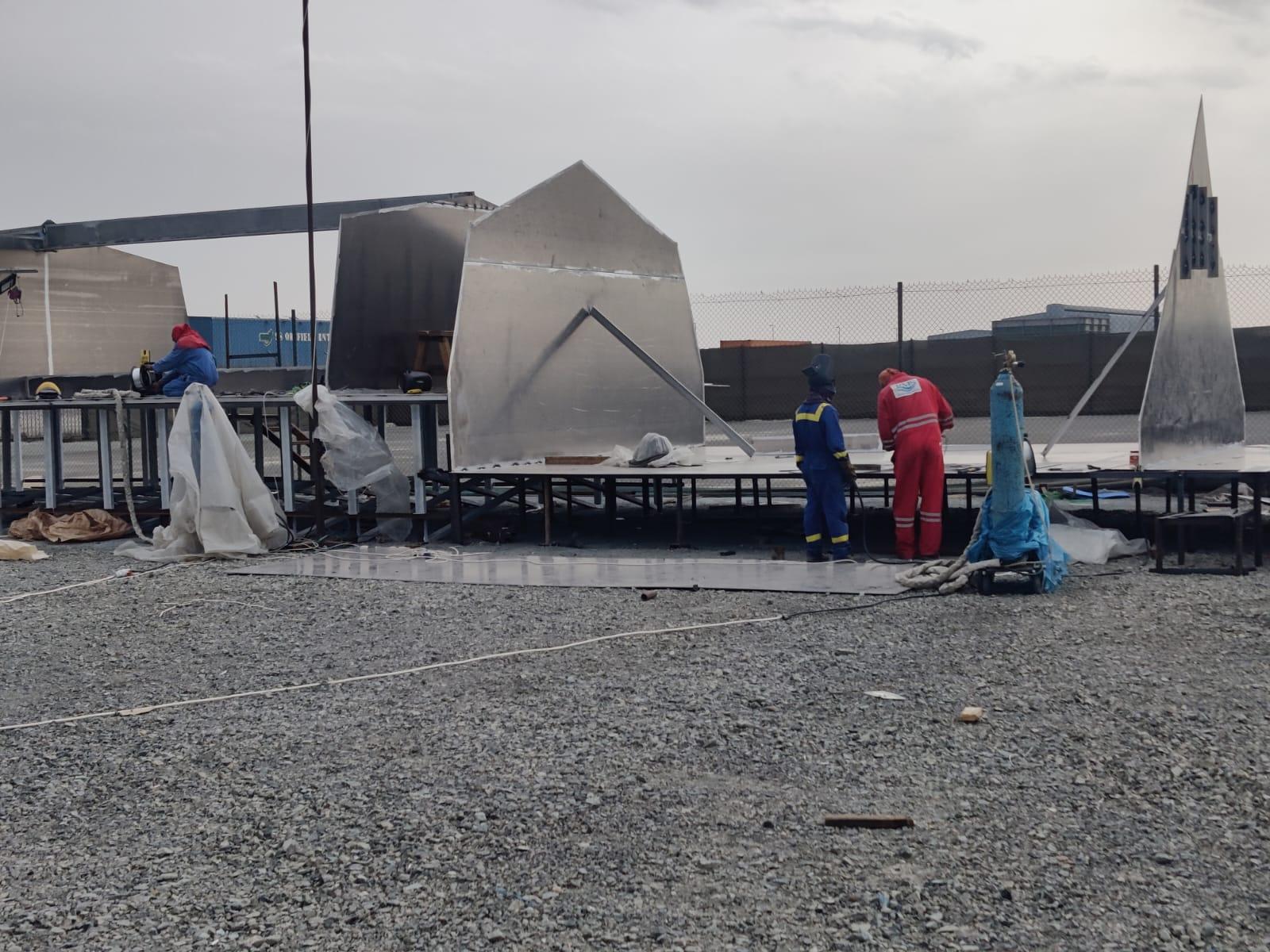
Barges are among the most practical vessels used in the marine industry. They help transport heavy cargo, construction equipment, machinery, containers, and other materials across ports, coastal waters, rivers, and offshore locations. Their design may appear straightforward, but building a dependable barge requires much more than assembling a strong hull. Careful planning, accurate calculations, quality materials, and skilled fabrication all play an important role in the final performance of the vessel.
For barge builders in UAE, precision is especially important because many vessels operate in demanding marine environments. High temperatures, saltwater exposure, heavy cargo operations, and offshore activities can place considerable pressure on a vessel. A properly engineered barge is better prepared to handle these conditions while providing reliable service for years.
Why Accurate Engineering Matters
Every barge has a specific purpose. Some are designed to carry cargo, while others support cranes, construction equipment, dredging systems, or offshore projects. Because of these differences, there is no single design that works perfectly for every application.
The engineering process begins by understanding the vessel's intended use. Designers consider its dimensions, cargo capacity, draft, deck loading, stability, operating area, and structural requirements. These details help determine how the hull and internal structure should be arranged.
Accurate calculations at the beginning can prevent many problems later. When the design is properly developed, the fabrication team has clear information to follow, reducing the possibility of costly modifications during construction.
Building a Structure That Can Handle Heavy Loads
One of the biggest challenges in barge construction is managing heavy loads. Barges are often used to transport machinery, steel products, construction materials, containers, and other large items.
The weight placed on the deck creates forces that are transferred throughout the vessel. These forces affect deck plates, frames, girders, bulkheads, and the bottom structure.
If the structure is not properly designed, some areas may experience excessive stress. Over time, this can result in deformation, cracking, fatigue, or other structural issues.
This is why modern marine engineering uses detailed structural calculations and analysis. Engineers can identify areas that require additional reinforcement and make sure the vessel has the required strength without adding unnecessary weight.
For aluminium barge manufacturers, this process requires particular attention because aluminium behaves differently from steel. Its lower weight can provide useful advantages, but the design still needs to account for structural strength, welding, material thickness, and operating conditions.
Stability Is Essential for Safe Operations
A barge needs to remain stable while carrying its intended cargo. Stability can become a concern when heavy equipment is loaded unevenly or placed too high above the deck.
Engineers study how cargo placement affects the vessel's center of gravity and overall balance. They also consider buoyancy, displacement, freeboard, trim, and different loading conditions.
For example, a barge carrying a large crane may experience different stability requirements compared with a simple cargo platform. Similarly, offshore operations may require additional consideration because environmental forces can affect vessel movement.
Proper stability analysis helps ensure that the vessel behaves predictably during normal operations.
Fabrication Accuracy Makes a Real Difference
Once the design is complete, it needs to be converted into a physical vessel. This is where fabrication accuracy becomes extremely important.
Incorrect measurements, poor alignment, or inconsistent welding can create problems during assembly. An error in one structural section may affect the positioning of other components later in the construction process.
Modern tools can help improve fabrication accuracy. Digital drawings, computer-aided design, CNC cutting, precision measurement systems, and controlled welding procedures allow construction teams to work more consistently.
For aluminum barge builders, careful fabrication is particularly important because aluminium requires suitable welding procedures and handling techniques. Maintaining dimensional accuracy helps ensure that the finished structure matches the engineering design.
Accurate fabrication can also reduce material waste and the amount of rework required.
Choosing the Right Construction Material
The material used for a barge has a direct effect on its strength, weight, durability, and maintenance requirements.
Steel is widely used for heavy-duty marine applications because of its strength and structural capabilities. Aluminium can be useful when reducing vessel weight is an important objective. The decision depends on the barge's intended use, operating conditions, cargo requirements, and overall project goals.
Regardless of the material selected, proper construction practices remain essential. Good welding, surface preparation, corrosion protection, inspection, and maintenance all contribute to long-term performance.
Marine vessels are constantly exposed to moisture and saltwater, so protecting vulnerable areas from corrosion should be considered during the design and construction stages.
Technology Is Making Construction More Precise
Technology has changed many aspects of modern marine construction. Three-dimensional modeling allows engineers to create detailed digital representations of vessels before physical work begins.
This can help identify possible conflicts between structural components, equipment, piping, tanks, and other systems. Engineering software can also assist with structural analysis and stability studies.
During fabrication, automated cutting and digital measurement systems can improve consistency. Modern inspection technologies can further help identify defects that may not be visible during a basic visual inspection.
Technology is valuable, but it works best when combined with practical experience. Skilled engineers and fabrication teams are still needed to make the right decisions throughout a project.
Quality Control Should Be Continuous
Quality control should not be treated as the final step of construction. It needs to continue throughout the entire project.
Dimensions should be checked during fabrication and assembly. Welds should be inspected, and additional testing may be carried out where required. Structural alignment, plate thickness, tank arrangements, and other important components should also be verified.
Regular inspections make it easier to identify problems while construction is still underway. Correcting an issue at this stage is generally easier than dealing with the same problem after the vessel enters service.
A strong quality-control process therefore supports both safety and long-term reliability.
How Precision Helps Reduce Long-Term Costs
Investing in accurate engineering can provide benefits beyond construction quality. A properly designed barge can make efficient use of its available deck area and cargo capacity.
Good structural planning can also help avoid unnecessary weight while maintaining the required strength. This can contribute to better operational efficiency depending on the vessel's design.
Construction accuracy may also reduce future maintenance problems. Strong welds, suitable materials, proper corrosion protection, and correct assembly can help minimize premature structural repairs.
For operators, fewer unexpected repairs can mean less downtime and more predictable operating expenses.
VU Marine's Approach to Marine Construction
Successful barge construction requires engineering knowledge, fabrication skills, quality control, and an understanding of real-world marine operations. VU Marine provides marine construction and engineering solutions, including barge building and other specialized marine projects.
Each project can have different requirements depending on cargo, dimensions, deck arrangement, operating location, structural loads, and customer specifications.
A project-specific approach allows the vessel to be designed around its actual purpose rather than relying entirely on a standard configuration. This can result in a more practical and dependable marine asset.
The Growing Importance of Better Engineering
The marine industry is becoming increasingly focused on safety, efficiency, sustainability, and longer service life. As technology continues to develop, barge construction is likely to benefit from improved digital design, advanced fabrication methods, better inspection systems, and more efficient materials.
According to UN Trade and Development, approximately 80% of international trade by volume is transported by sea. This demonstrates the continuing importance of marine transportation and the vessels that support it.
As demand for marine infrastructure and heavy cargo transportation grows, reliable barges will continue to have an important role in ports, construction, offshore development, and logistics.
Conclusion
Precision engineering is one of the foundations of successful barge construction. It influences everything from structural strength and stability to material selection, fabrication accuracy, corrosion protection, and maintenance.
A well-built barge is not simply a vessel that can float. It needs to withstand its expected loads, remain stable, operate safely, and provide dependable performance in its intended environment.
By combining accurate engineering, modern technology, skilled workmanship, and continuous quality control, the marine industry can build barges that offer better safety, efficiency, durability, and long-term value. In the end, precision is what turns a basic floating platform into a reliable working vessel.