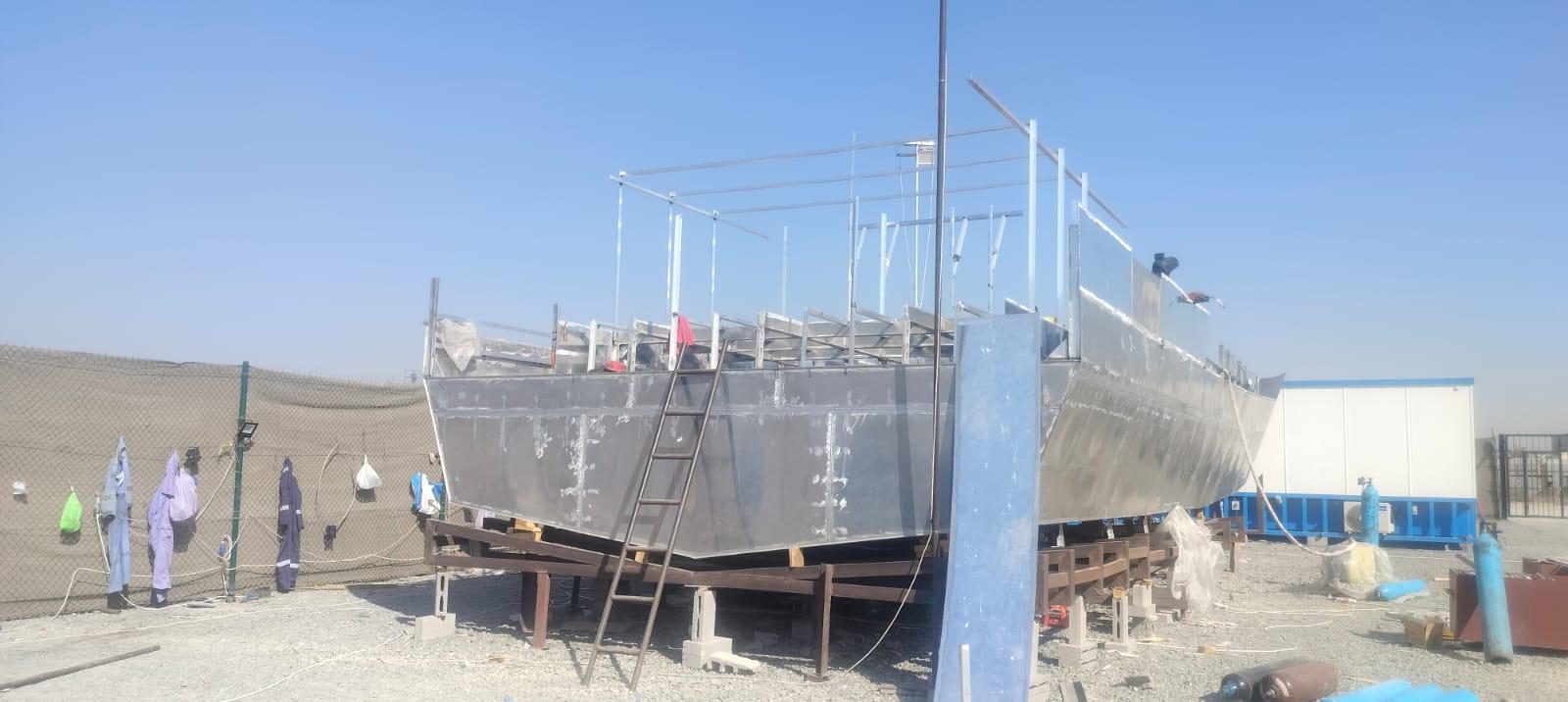
When people think about ships, they usually imagine huge container vessels, tankers, or cruise ships. Tugboats are much smaller, but their role in the maritime world is just as important. They help large vessels move safely in and out of ports, assist during docking, tow barges, and support offshore operations. As marine activity continues to grow in the UAE, the demand for stronger, smarter, and more efficient tugboats is also increasing.
A tug builder in UAE now has to look at much more than simply constructing a strong vessel. Modern tugboats need to be powerful, easy to control, fuel-efficient, safe for the crew, and capable of working in demanding marine conditions. This is why technology and thoughtful engineering are becoming such important parts of tugboat construction.
Why Tugboats Matter So Much
A large ship has enormous size and weight, which can make maneuvering difficult, particularly inside a busy port. Even with modern engines and steering systems, there are situations where additional assistance is necessary. This is where tugboats come in.
Tugs provide the extra pushing or pulling force required to guide vessels safely. They can assist ships while entering or leaving a harbour, help them turn in restricted spaces, and support vessels during berthing and unberthing.
Their work is not limited to ports. Tugboats can also be used for towing, offshore support, salvage operations, emergency assistance, and moving floating equipment.
The UAE is an important maritime center, with its ports receiving more than 33,000 vessels each year. With this level of activity, dependable marine support vessels are essential for keeping operations running smoothly.
Tugboat Construction Is Becoming More Specialized
The way tugboats are designed has changed considerably over the years. Earlier designs often focused mainly on engine power and basic towing capability. Today, builders look at the complete operating requirement before deciding how a vessel should be constructed.
For example, a harbour tug may need excellent maneuverability because it works in crowded and restricted areas. An offshore tug, on the other hand, may require greater fuel capacity, endurance, deck space, and equipment.
The design can also depend on factors such as bollard pull, vessel size, draft, crew requirements, operating speed, and the type of work the tug will perform.
This customized approach helps operators get a vessel that actually matches their daily requirements instead of relying on a one-size-fits-all design.
Lightweight Materials Can Improve Performance
The choice of construction material can have a noticeable effect on a tugboat's performance. Steel remains a popular option for large and heavy-duty vessels because it offers excellent strength and durability. However, aluminium is also being considered for certain types of marine vessels.
Aluminum tug builders work with lightweight construction where reducing vessel weight can provide practical benefits. A lighter vessel may offer better acceleration and maneuverability and can potentially use less energy, depending on its overall design.
Aluminium also has good corrosion resistance, which is useful in a marine environment where vessels are constantly exposed to saltwater and moisture.
Of course, aluminium is not automatically the right choice for every tugboat. The material needs to be selected after considering structural loads, vessel size, operating conditions, and the type of service expected from the boat.
Modern Propulsion Makes Tugs More Capable
Propulsion is one of the most important systems on a tugboat. A tug needs to react quickly and provide accurate thrust because it often works very close to much larger vessels.
Modern propulsion systems can provide better maneuverability and allow operators to control the direction of thrust more effectively. This can make difficult operations, such as assisting a large ship in a confined harbour, much easier.
Fuel efficiency is also becoming more important. Builders are looking at the complete propulsion system, including engines, propellers, hull design, and power management, to achieve better performance without wasting fuel.
Hybrid and battery-assisted propulsion systems are also gaining interest. While these technologies may not be suitable for every operation, they offer potential ways to reduce fuel consumption and emissions in vessels with suitable working profiles.
Safety Cannot Be Overlooked
Tugboats often work in challenging situations, sometimes alongside ships many times their own size. This makes safety a major consideration during construction.
A modern tug may include advanced navigation equipment, reliable communication systems, firefighting equipment, emergency systems, strong structural protection, and carefully designed crew areas.
Reliability is equally important. A tug that develops a major mechanical problem while assisting another vessel can create serious operational difficulties. For this reason, proper fabrication, equipment installation, inspection, testing, and commissioning are essential.
A good tugboat should not only perform well on its first day at sea. It should continue to deliver dependable performance throughout its working life.
Technology Is Changing Everyday Operations
Technology is also changing the way tugboats are monitored and maintained. Modern systems can collect information about engine temperatures, fuel consumption, pressures, propulsion performance, and other important operating conditions.
This information can help crews recognize unusual behavior before it develops into a larger problem. It can also support preventive maintenance and help operators understand how efficiently their vessel is being used.
Digital monitoring is therefore becoming a practical tool rather than simply an advanced feature. Over time, better data can help operators reduce downtime and make maintenance planning easier.
Sustainability Is Becoming Part of Tug Design
Environmental concerns are influencing almost every area of modern shipping, and tugboats are no exception.
Marine operators are looking for ways to reduce fuel consumption and emissions while maintaining the power needed for demanding operations. More efficient engines, improved hull designs, hybrid systems, and better energy management are some of the solutions being explored.
For aluminium tug manufacturers, lightweight construction can also contribute to the wider goal of improving vessel efficiency. However, sustainability is most effective when several design improvements work together rather than depending on one technology alone.
UAE's Growing Maritime Activity
The future of tugboat construction is closely connected with the UAE's expanding maritime and logistics sectors. The country's real GDP grew by 6.2% in 2025, while the transport and storage sector grew by 7.8% during the same year.
The scale of port activity is also significant. According to UNCTAD data, the UAE recorded around 21.1 million TEUs of container port throughput in 2024.
More ships and greater port activity naturally increase the need for marine support vessels. Tugboats are an essential part of this infrastructure because they help maintain safe and efficient vessel movements.
The Role of VU Marine
VU Marine is involved in shipbuilding and marine services, including tugboat and barge construction, aluminium boat building, ship repair, retrofitting, maintenance, marine consultancy, painting, and commissioning.
Modern vessel construction requires coordination between design, engineering, fabrication, equipment installation, testing, and final commissioning. Bringing these areas together can help create vessels that are practical, reliable, and suitable for their intended working conditions.
What the Future May Bring
The next generation of tugboats is likely to be more efficient, connected, and environmentally responsible. Owners will continue looking for vessels that can deliver strong pulling power while keeping operating costs under control.
Automation, digital monitoring, advanced propulsion, lightweight materials, and hybrid technology will likely influence future designs. At the same time, basic qualities such as strength, stability, reliability, and crew safety will remain just as important as they are today.
A tugs building company therefore needs to find the right balance between modern technology and proven marine engineering. Adding technology simply for the sake of innovation is not enough. Every system should provide a practical benefit to the vessel and its crew.
Conclusion
The future of tugboat construction in the UAE looks encouraging. Growing port activity, offshore development, and changing environmental expectations are creating demand for vessels that are stronger, smarter, and more efficient.
Global demand also remains healthy. Around 177 tugboats, inland pusher tugs, and towboats were delivered during the first half of 2026, while the global orderbook reached approximately 421 vessels by the end of June.
As the maritime industry continues to evolve, tugboats will remain an essential part of safe marine transportation. With better engineering, modern propulsion, suitable materials, digital technology, and a strong focus on safety, the next generation of tugboats can help the UAE's maritime sector operate more efficiently and prepare for the changing needs of the future.