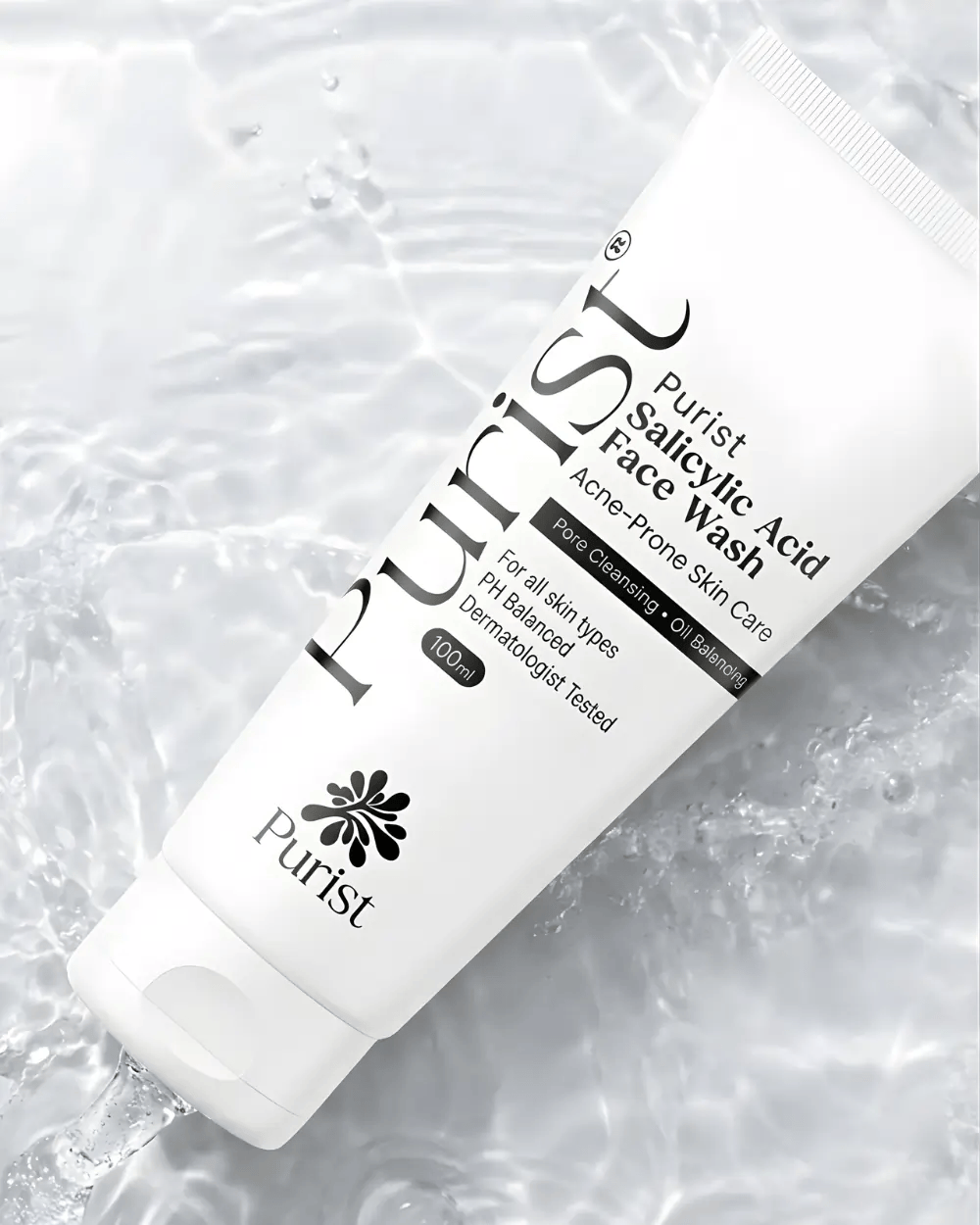
If your skin gets oily by midday, your pores look congested, or blackheads keep coming back even after cleansing, the problem may not be that your face is “dirty.” Excess sebum, dead skin cells and buildup inside the pores can contribute to congestion and breakouts.
This is where a salicylic acid face wash in Pakistan can be useful.
Salicylic acid is a beta hydroxy acid (BHA) that is particularly suited to oily and acne-prone skin because it can work with the oil inside clogged pores. In a cleanser, it combines that exfoliating action with everyday cleansing, making it a practical option for people who want to manage excess oil and congestion without adding another leave-on product to their routine.
But using salicylic acid effectively isn't simply about choosing the strongest formula or washing your face more often. The concentration, formulation, frequency of use and your skin type all matter.
What Is Salicylic Acid?
Salicylic acid is a beta hydroxy acid commonly used in skincare products designed for oily, blemish-prone and congested skin.
Unlike water-soluble alpha hydroxy acids such as glycolic acid, salicylic acid is oil-soluble. This property allows it to interact with sebum and work within the pore environment.
That makes it particularly useful for concerns such as:
- Blackheads
- Whiteheads
- Excess oil
- Congested pores
- Rough skin texture
- Mild acne breakouts
It is important to understand that salicylic acid does not “clean” a pore like a tiny brush. Rather, it helps loosen and exfoliate the buildup of dead skin cells and oil that can contribute to clogged pores.
How Does a Salicylic Acid Face Wash Work?
A salicylic acid cleanser works through two main actions: cleansing and chemical exfoliation.
The cleansing agents remove sweat, sunscreen, excess oil and everyday impurities from the surface of your skin. Salicylic acid adds an exfoliating function that can help reduce the buildup associated with clogged pores.
Because a face wash is rinsed away, the skin has less contact time with the active ingredient than it would with a leave-on salicylic acid treatment.
That can make a cleanser a useful starting point for someone who wants to introduce salicylic acid gradually.
1. It Helps Clear Pore Buildup
Your pores naturally contain sebum. When oil mixes with dead skin cells and other debris, the mixture can contribute to clogged pores.
Salicylic acid is attracted to oily environments, allowing it to work within the pore and help loosen this buildup.
With consistent use, this can help improve the appearance of blackheads and congestion.
2. It Exfoliates Dead Skin Cells
Salicylic acid helps loosen the connections between dead skin cells, encouraging them to shed rather than accumulate on the skin.
This type of exfoliation can make rough or uneven skin feel smoother.
Unlike a physical scrub, it doesn't depend on abrasive particles rubbing against the skin. That doesn't mean it is automatically irritation-free, though. Overusing any exfoliating active can leave the skin feeling dry, tight or uncomfortable.
3. It Helps Manage Excess Oil
Salicylic acid is especially popular among people with oily skin because of the way it interacts with sebum and pore buildup.
It does not mean that your skin suddenly stops producing oil. Instead, regular cleansing can help remove excess surface oil while salicylic acid helps address congestion associated with oily pores.
The goal should be cleaner, more balanced skin, not completely oil-free skin.
Some natural oil is important for maintaining the skin barrier.
4. It Can Improve the Look of Congested Skin
When dead skin cells and oil accumulate, skin can appear rough, dull or uneven.
By helping remove excess buildup, salicylic acid can gradually improve the appearance and feel of congested skin.
This is one reason BHA products are commonly included in routines for blackheads and blemish-prone skin.
Salicylic Acid Face Wash vs Leave-On Salicylic Acid
Not all salicylic acid products work in exactly the same way.
A face wash is designed to be applied and rinsed off. A serum, toner or treatment remains on the skin for considerably longer.
That difference matters.
A salicylic acid cleanser may be a sensible option if you:
- Are new to chemical exfoliation
- Have oily or combination skin
- Mainly struggle with congestion
- Prefer a simple skincare routine
- Don't want to add another leave-on active
Someone dealing with persistent or more significant acne may need a different approach. A cleanser alone should not be treated as a complete acne treatment for every person.
Who Can Benefit From a Salicylic Acid Face Wash?
Salicylic acid is generally most relevant for people with oily, combination or acne-prone skin.
It may be particularly helpful if you regularly notice:
- Blackheads around the nose or chin
- Whiteheads
- Excess shine
- Clogged-looking pores
- Mild breakouts
- Uneven or rough texture
For combination skin, you may find that some areas tolerate salicylic acid better than others. Your forehead, nose and chin may need more attention than your cheeks.
What About Dry or Sensitive Skin?
Having dry or sensitive skin doesn't automatically mean you can never use salicylic acid.
However, the risk of dryness or irritation may be higher, particularly if you already use other exfoliating acids, retinoids or acne treatments.
If your skin is sensitive, start slowly and pay attention to how it responds. A gentle cleanser and a good moisturizer may be more important than trying to maximize exfoliation.
How Often Should You Use Salicylic Acid Face Wash?
There is no single frequency that works for everyone.
Some oily skin types may tolerate a salicylic acid cleanser once daily, while others may do better using it a few times per week.
If you're introducing it for the first time, starting gradually is usually more sensible than immediately using it twice a day.
Watch for signs that you've gone too far:
- Persistent dryness
- Burning or stinging
- Excessive tightness
- Peeling
- Increased sensitivity
- Red or irritated skin
If these appear, reduce the frequency or stop using the product until your skin settles.
More exfoliation does not automatically mean better skin.
How to Use Salicylic Acid Face Wash
Using a salicylic acid cleanser doesn't require a complicated routine.
Step 1: Wet Your Face
Use lukewarm water rather than very hot water. Hot water can make already-dry or sensitive skin feel more uncomfortable.
Step 2: Apply the Cleanser
Use a reasonable amount and gently massage it across your face.
You don't need to scrub aggressively. The active ingredient does not become more effective because you rub harder.
Step 3: Rinse Thoroughly
Rinse the cleanser away and gently pat your face dry.
Avoid rubbing your skin with a rough towel.
Step 4: Moisturize
Follow with a suitable moisturizer.
This step is particularly important when you're using an exfoliating active because maintaining a healthy skin barrier helps reduce unnecessary dryness and irritation.
Step 5: Use Sunscreen During the Day
If you're using exfoliating skincare, daily sunscreen remains an important part of your routine.
Choose a broad-spectrum sunscreen and apply it as the final step of your morning skincare routine.
What Ingredients Work Well With Salicylic Acid?
Salicylic acid doesn't need to work alone.
For oily or acne-prone skin, a balanced routine can include ingredients that support hydration and the skin barrier.
Niacinamide
Niacinamide can complement a routine focused on oily or blemish-prone skin. It is commonly used to support the skin barrier and improve the appearance of uneven skin tone and excess oil.
Hyaluronic Acid
Hyaluronic acid is a humectant that helps attract and retain water, making it useful when your routine includes potentially drying products.
Ceramides
Ceramides are naturally occurring lipids that help support the skin barrier. A moisturizer containing ceramides can be useful if exfoliating products leave your skin feeling dry.
Sunscreen
Sunscreen isn't an optional extra when you're serious about maintaining healthy-looking skin. Use broad-spectrum SPF during the day, especially when your routine contains exfoliating ingredients.
Can You Use Salicylic Acid With Retinol?
You can find both ingredients in acne and anti-aging routines, but using them together requires some care.
For someone new to active skincare, applying salicylic acid and retinol at the same time may be unnecessarily irritating.
A simpler approach is to introduce one active at a time and see how your skin responds. If both are eventually part of your routine, alternating them can be a more comfortable option for some people.
Your skin does not get bonus points for using every active in the bathroom cabinet at once.
Can Salicylic Acid Cause Dryness?
Yes.
Although salicylic acid is useful for oily and congested skin, excessive use can cause dryness and irritation.
This is especially likely when you combine several exfoliating products or acne treatments without giving your skin enough time to adjust.
If your face starts feeling tight after cleansing, becomes unusually flaky or stings when you apply normally gentle products, take that as a sign to simplify your routine.
Healthy skin isn't supposed to feel stripped after every wash.
What About “Purging”?
You may hear that breakouts after starting salicylic acid are always a sign that the product is “purging” your skin.
That isn't necessarily true.
Some people can experience temporary worsening when introducing certain exfoliating ingredients, but not every breakout should be dismissed as purging.
If you develop persistent irritation, significant redness, burning or breakouts in areas where you don't normally experience them, the product may simply not be agreeing with your skin.
Don't force your skin through a reaction because someone online called it a detox.
How Long Does Salicylic Acid Take to Work?
Skincare results rarely happen overnight.
You may notice that your skin feels cleaner or less oily relatively quickly, but improvements in congestion and breakouts generally require consistent use over time.
The exact timeline depends on your skin, the product formulation, how frequently you use it and what other products are part of your routine.
Instead of judging a salicylic acid cleanser after two or three washes, give your routine enough time to show whether it suits your skin.
Choosing the Right Salicylic Acid Face Wash
The percentage of salicylic acid matters, but it isn't the only thing you should look at.
A good cleanser should also suit your skin type and be comfortable enough to use consistently.
When choosing a product, consider:
Salicylic acid concentration: More isn't automatically better.
Cleansing base: A harsh cleansing formula can leave oily skin feeling stripped.
Additional ingredients: Hydrating and barrier-supporting ingredients can make an active cleanser more comfortable.
Your skin type: Oily acne-prone skin and dry sensitive skin have different needs.
Your existing routine: Consider the other exfoliants and acne treatments you already use.
A well-formulated product that you can tolerate consistently is often more useful than an unnecessarily aggressive one.
Salicylic Acid Face Wash for Pakistani Skin
Pakistan's climate can make skincare feel a little more complicated.
Heat, humidity, sweating and increased oil production can contribute to a feeling of greasy or congested skin, while air conditioning and harsh cleansing can leave the skin dehydrated.
That is why your routine needs balance.
If you have oily or combination skin, a salicylic acid cleanser can be useful for managing excess oil and pore congestion. But stripping every trace of oil from your face isn't the goal.
The better approach is to remove excess buildup while keeping the skin comfortable and supported.
Common Mistakes When Using Salicylic Acid
A good ingredient can still cause problems when it's used incorrectly.
Avoid these common mistakes:
Using it too frequently: Start with a frequency your skin can tolerate.
Scrubbing harder: Salicylic acid doesn't need aggressive rubbing.
Using several exfoliants together: Combining multiple acids can increase irritation.
Skipping moisturizer: Oily skin still needs hydration.
Ignoring sunscreen: Keep broad-spectrum SPF in your daytime routine.
Changing products too quickly: Give your routine enough time before deciding whether it works.
Treating severe acne yourself: Persistent, painful or severe acne may require professional assessment.
Is Salicylic Acid Face Wash Right for You?
If oily skin, blackheads and clogged pores are your main concerns, a salicylic acid face wash can be a useful addition to your routine.
Its main advantage is straightforward: it combines cleansing with BHA exfoliation in a product that is rinsed away.
But the best results don't come from using the strongest product as often as possible.
Start according to your skin's tolerance, moisturize regularly and avoid overwhelming your routine with multiple strong actives.
And remember that skincare is personal. What works beautifully for oily skin may be too much for someone with a dry or sensitive skin barrier.
Final Thoughts
Salicylic acid has earned its place in skincare for a reason. Its oil-soluble nature makes it particularly useful for addressing the buildup associated with clogged pores, blackheads and oily skin.
A salicylic acid face wash can be a convenient way to introduce this BHA into a routine while keeping your skincare simple.
The key is balance. Cleanse away excess oil and buildup without stripping your skin. Exfoliate without overdoing it. Support the skin barrier instead of constantly attacking it.
Clearer-looking skin isn't about doing more. It's about finding a routine your skin can actually tolerate — and sticking with it.