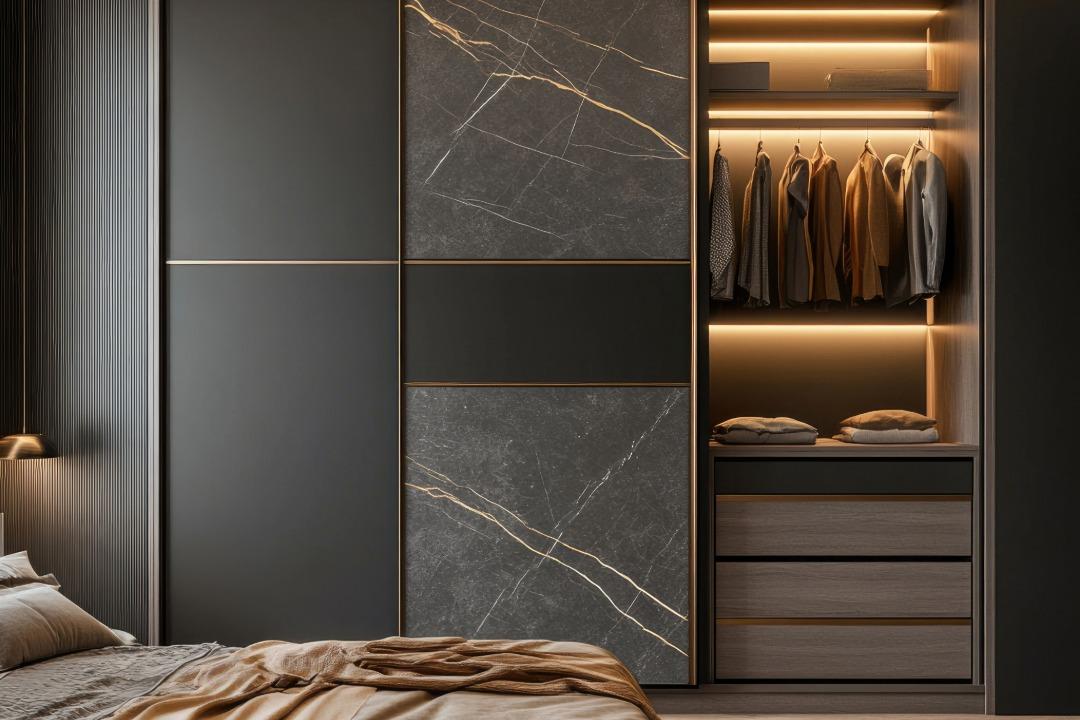
A sliding modular wardrobe combines the flexibility of modular storage with the space-saving benefits of sliding doors. Designed with customizable shelves, drawers, hanging sections, and compartments, it can be tailored to suit different bedroom layouts while maintaining a clean and contemporary appearance.
The considerations discussed in Sliding or Swing Wardrobe? Find the Best Fit for Your Space are useful when choosing the right wardrobe configuration. Sliding doors are particularly practical when the bedroom has limited clearance, as the panels move sideways instead of opening outward into the room.
Space-Saving Storage
A major advantage of a sliding modular wardrobe is its efficient use of floor space. Since the doors operate along tracks, there is no need to leave a large area in front of the wardrobe for door movement.
This makes the design suitable for compact bedrooms, apartments, and rooms where furniture is positioned close to the wardrobe.
Customizable Interior Layout
The modular structure allows the wardrobe interior to be planned around individual storage needs. Hanging rods can be provided for shirts, dresses, jackets, and trousers, while shelves can accommodate folded clothing.
Drawers, shoe compartments, accessory trays, and adjustable shelves can also be incorporated to improve organization.
Modern Sliding Doors
Sliding doors can give the wardrobe a streamlined appearance. Large panels create clean visual lines and can be finished with laminates, wood-inspired surfaces, glass, mirrors, or textured materials.
The choice of finish can be coordinated with the bed, flooring, walls, and other bedroom furniture.
Mirror and Glass Finishes
Mirrored doors can provide a convenient full-length reflection while contributing to a more open visual appearance. Glass panels can also be used when a contemporary or premium look is desired.
Different finishes can be combined across multiple sliding panels to create a distinctive design.
Efficient Vertical Storage
A sliding modular wardrobe can be designed to extend from floor to ceiling. This makes use of vertical space and provides additional room for items that are not needed every day.
Upper compartments can store luggage, blankets, seasonal clothing, and other belongings while keeping the main storage areas accessible.
Smooth Door Operation
The sliding mechanism is an important part of wardrobe performance. Quality tracks, rollers, and fittings can help the doors move smoothly and consistently.
Proper installation and regular track cleaning can further support reliable everyday operation.
Integrated Lighting
Lighting can make the wardrobe interior easier to use, especially in deep compartments. LED strips can be incorporated into shelves, hanging sections, or vertical areas.
Sensor-based lighting can automatically illuminate the interior when a door is opened, making it easier to locate clothing and accessories.
Organized Bedroom Environment
A well-designed wardrobe can reduce visible clutter by providing dedicated locations for different belongings. Frequently used clothing can be positioned in easily accessible sections, while less frequently used items can be stored in upper compartments.
This organized approach can contribute to a cleaner and more comfortable bedroom.
Durable Materials
The wardrobe should be constructed using materials suitable for regular daily use. Durable boards, quality finishes, strong hardware, and reliable sliding systems can contribute to long-term performance.
Material selection should also consider maintenance requirements and the overall bedroom design.
Conclusion
A sliding modular wardrobe offers an effective combination of flexible storage and space-efficient door operation. Its customizable interior can accommodate clothing, footwear, accessories, and household items, while sliding panels help preserve valuable floor space.
With suitable materials, reliable hardware, integrated lighting, and thoughtful space planning, a sliding modular wardrobe can provide a practical and stylish storage solution for contemporary bedrooms.