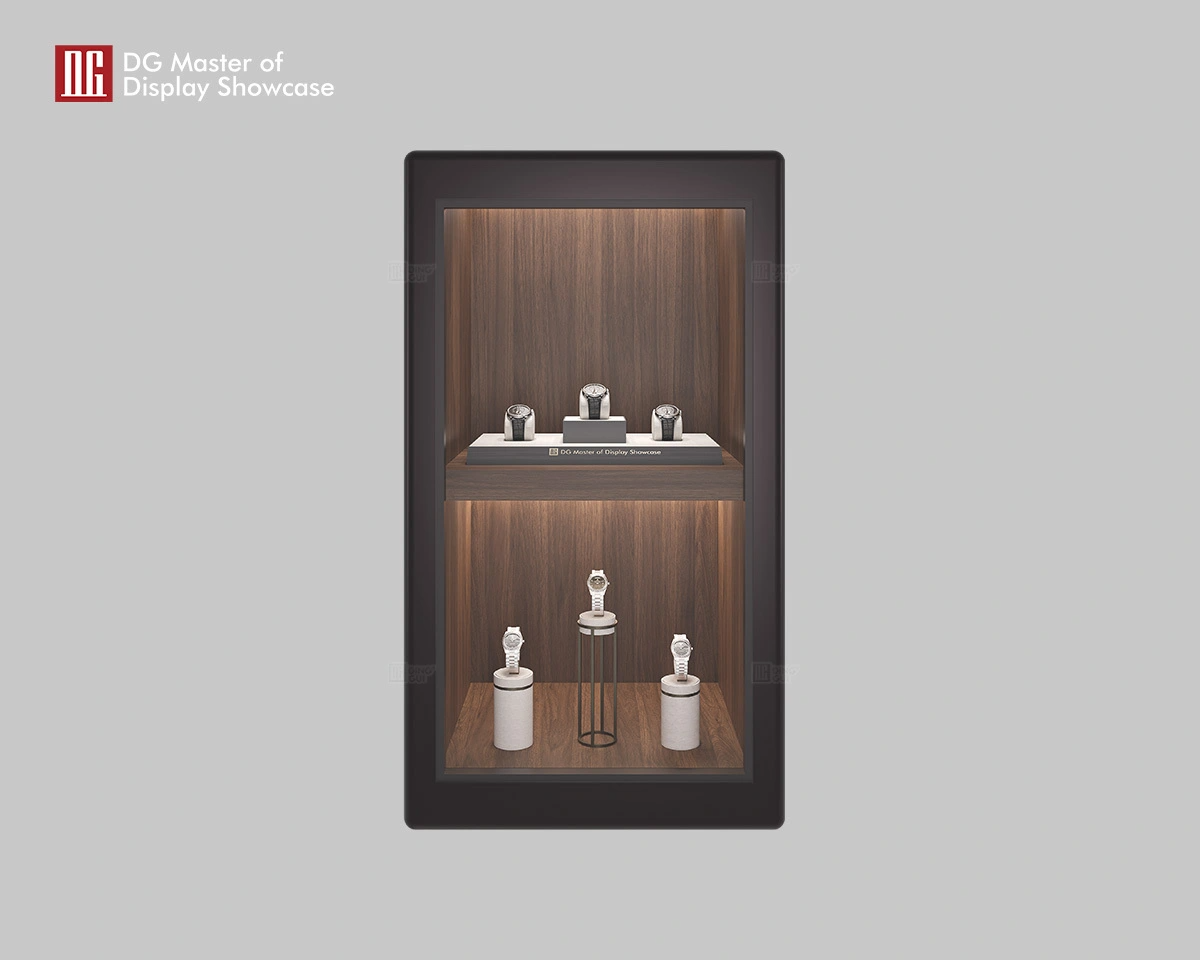
Two identical watch cases sitting side by side can produce completely different reactions from customers, and the deciding factor is almost always light. One case makes a watch look dull and flat, while the other makes the same watch appear rich, dimensional, and worth far more than its price tag. Lighting is the single most powerful tool in watch retail design, yet it is also the one most often handled carelessly. DG Display Showcase has spent years studying how light interacts with dials, metals, and glass, and the techniques below reflect what that experience has taught them about transforming an ordinary showcase into something genuinely compelling.
Why Lighting Deserves More Attention Than the Case Itself
Retailers often spend weeks choosing the perfect display case and then give lighting only a passing thought. This is backwards. A modest case with excellent lighting will outperform an expensive case with poor lighting every single time. Light determines what the eye notices first, how textures read, and whether a dial appears deep or washed out. It also sets the emotional tone of the entire display area. DG Display Showcase regularly advises clients to allocate a meaningful portion of their display budget specifically to lighting, because that is where the highest return on investment tends to appear.
The Foundation: Choosing the Right Color Temperature
Color temperature, measured in Kelvin, shapes how watch showcase materials appear. Warm light in the 2700 to 3200 Kelvin range brings out the depth of gold, bronze, and rose gold, giving them a luxurious glow. Neutral light around 4000 Kelvin offers a balanced look that works across mixed collections. Cool light near 5000 Kelvin or above sharpens the appearance of stainless steel, platinum, and titanium, making them look precise and technical. The mistake many stores make is using a single temperature throughout, when different collections would benefit from different treatments. Adjustable systems solve this problem elegantly.
Direction and Angle: Where the Light Actually Falls
The direction of light matters as much as its color. Light coming straight down from above tends to flatten a watch dial and hide the subtle textures that make it interesting. Angled light from above and slightly to the side creates gentle shadows that reveal depth, making indices, hands, and subdials stand out. Backlighting can be used sparingly to create a halo effect around a hero piece. DG Display Showcase frequently positions lights at roughly a thirty to forty-five degree angle, a range that consistently produces flattering results across a wide variety of watch designs.
Intensity and Contrast for Visual Hierarchy
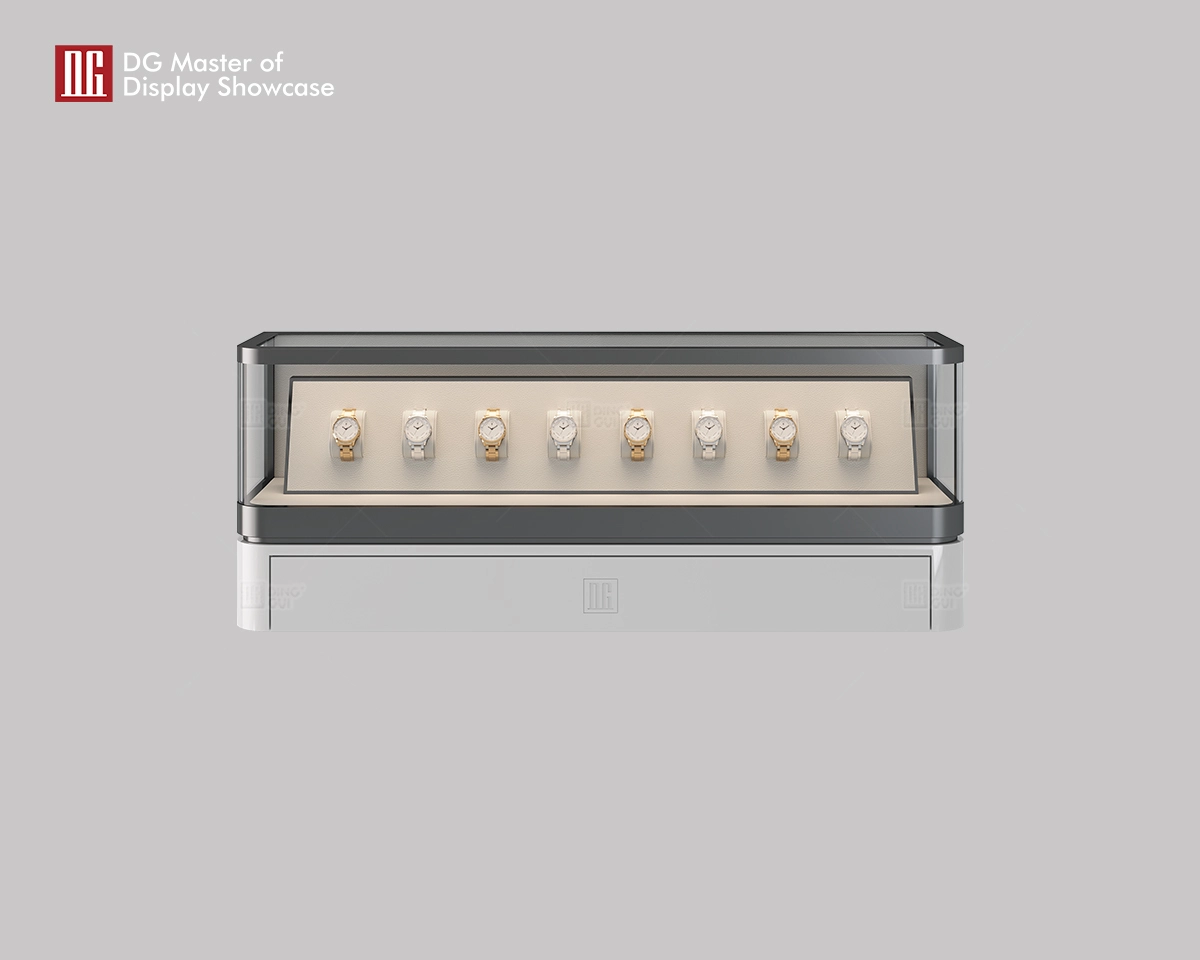
Not every watch in a case deserves the same amount of light. Using intensity to create hierarchy guides the customer's eye toward the pieces you most want them to notice. A slightly brighter spotlight on a featured watch, paired with softer ambient lighting for the surrounding pieces, creates a natural focal point without any signage. Contrast also adds drama. A brightly lit watch against a darker background feels more precious than the same watch sitting in evenly lit space. This technique is subtle but remarkably effective when applied with restraint.
Managing Glare and Reflections
Glass is essential to watch displays, but it also creates reflections that can ruin an otherwise perfect lighting setup. Overhead fixtures, windows, and even light-colored walls can all bounce unwanted images onto the glass surface. Anti-reflective coatings help considerably, but placement and angle do much of the work. Adjusting the position of light sources so they do not shine directly into the viewing angle reduces glare dramatically. DG Display Showcase tests lighting configurations with actual watches in place, since every dial finish reflects differently and what works for one piece may fail for another.
Heat, Energy, and Long-Term Practicality
Older lighting systems generated significant heat, which is dangerous for watches and uncomfortable for customers standing nearby. Modern LED systems run cool, consume far less electricity, and last for tens of thousands of hours. This makes them the obvious choice for any watch retailer, but not all LEDs are equal. Cheap options may flicker, shift color over time, or produce uneven output. DG Display Showcase specifies quality LED modules with consistent color rendering so that the display looks the same on day one thousand as it did on day one.
Adapting Lighting to Seasons and Collections
A lighting setup that never changes eventually becomes invisible. Retailers who treat lighting as adjustable rather than fixed gain a powerful tool for refreshing their store without buying new fixtures. Seasonal collections, limited editions, and promotional displays can all benefit from small lighting adjustments that shift the mood of the space. DG Display Showcase builds this flexibility into their designs through dimmable controls and swappable modules, giving retailers the ability to keep their presentation feeling current throughout the year with minimal effort and cost.