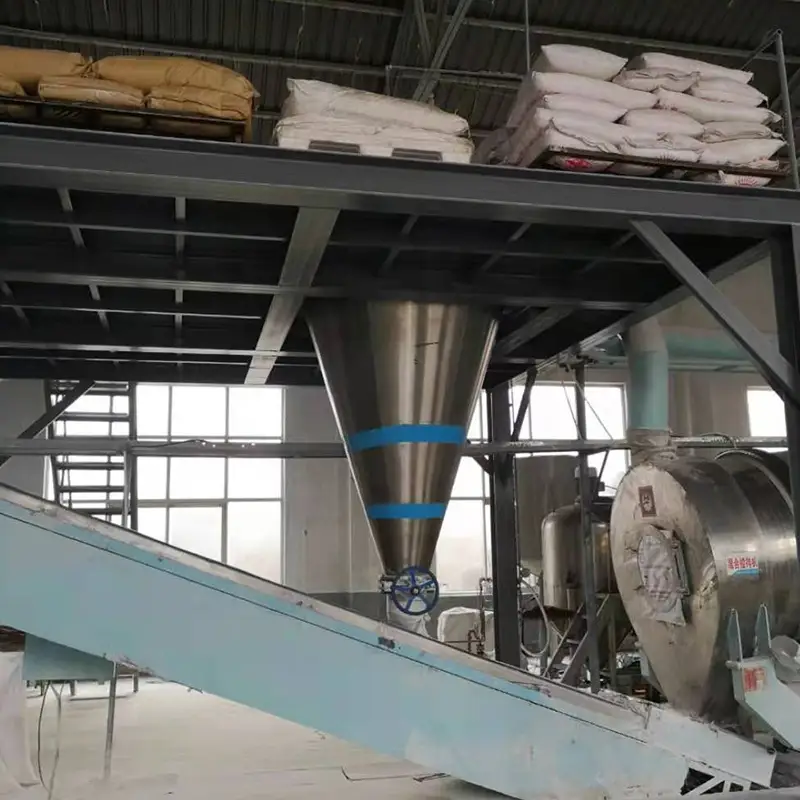
Few things illustrate industrial efficiency quite like watching raw chemicals transform into neatly packaged detergent powder ready for store shelves. The journey involves multiple stages, each requiring precise control and reliable equipment working in harmony. MeiBao has built its reputation on delivering complete production lines that handle this entire journey, from the first scoop of soda ash to the final sealed bag. Tracing the path that materials follow through a MeiBao line reveals why so many manufacturers trust this comprehensive approach to their production needs.
The Starting Point: Accepting and Storing Incoming Materials
Before any production can begin, raw materials must be received, inspected, and stored properly. Detergent manufacturing relies on ingredients such as sodium carbonate, zeolites, surfactants, polymers, and various additives, each with its own handling requirements. MeiBao's production lines integrate smoothly with silos, hoppers, and storage tanks that keep these materials organized and protected from moisture or contamination. Pneumatic conveying systems move powders from delivery trucks to storage without generating excessive dust, while liquid ingredients remain in temperature-controlled vessels. This initial infrastructure may seem mundane, but it sets the stage for everything that follows. Poor storage practices lead to clumping, degradation, and inconsistent batches, problems that no amount of downstream processing can fully correct.
Preparation and Pre-Blending of Dry Components
Once materials leave storage, they enter a preparation phase where dry components are combined in preliminary blends. MeiBao's equipment includes sieving stations that remove oversized particles and foreign objects before they can cause problems in later stages. Ribbon blenders or similar devices create homogeneous pre-mixes of powders that will eventually become the backbone of the detergent. This step ensures that minor ingredients, which might otherwise clump or settle unevenly, distribute themselves throughout the bulk material. Operators appreciate how these preparation stages reduce the workload on main processing equipment, allowing the entire line to run more smoothly and predictably.

The Heart of Production: Mixing and Agglomeration
The transformation from separate ingredients into unified detergent granules happens during mixing and agglomeration. MeiBao's lines use high-shear mixers that combine dry powders with liquid binders under carefully controlled conditions. As the liquids spray into the turbulent powder bed, particles begin sticking together, forming granules that grow to the desired size. Temperature, spray rate, and mixing speed all influence the final texture and performance of the product. The control system manages these variables continuously, ensuring that each batch achieves the proper density and dissolution characteristics. This stage represents the most technically demanding part of the process, and MeiBao's engineering expertise shines brightest here.
Drying: Removing Moisture While Preserving Quality
Agglomerated detergent powder production line emerges from the mixer with more moisture than the finished product should contain, making drying an essential step. MeiBao's production lines employ fluid bed dryers or rotary drying systems that circulate heated air through the material, evaporating excess water gently and evenly. The challenge lies in removing moisture without damaging heat-sensitive ingredients or causing the granules to fracture. Precise temperature control and residence time management prevent these problems, delivering powder that is dry enough for stable storage yet retains the structural integrity that consumers expect. Energy efficiency measures built into MeiBao's dryers also help manufacturers control operating costs, an increasingly important consideration in competitive markets.
Cooling, Screening, and Size Classification
Hot powder straight from the dryer cannot proceed directly to packaging; it must first cool to ambient temperature. MeiBao's lines incorporate cooling sections that bring the material down gradually, preventing condensation that could cause clumping during storage. After cooling, the powder passes through screening equipment that separates particles by size. Oversized granules may be ground down and recycled, while fines captured during screening often return to the agglomeration stage. This classification process ensures that only properly sized particles continue toward packaging, giving the finished product the uniform appearance and predictable performance that customers associate with quality brands.
Adding Fragrances and Finishing Touches
Many detergent products include fragrances, enzymes, colorants, or other specialty ingredients that cannot withstand the heat of drying. MeiBao's lines introduce these components after the main processing stages, using gentle blending equipment that distributes them evenly without damaging delicate granules. Liquid fragrances are typically sprayed onto the powder surface, while solid additives blend in through low-shear mixers. The timing and method of addition preserve the potency of these ingredients, ensuring that consumers experience the intended scent and cleaning performance. This finishing stage transforms basic detergent powder into a product with distinct market appeal.
Final Packaging and Dispatch
The last leg of the journey takes finished powder into packaging machinery that fills bags, boxes, or pouches with precise weights. MeiBao's lines include checkweighers, sealers, and labeling systems that prepare products for retail or bulk distribution. Metal detectors and other inspection devices provide a final quality check before goods leave the plant. From there, palletized products move to warehouses or directly onto trucks for shipment. When every stage of the line works as designed, manufacturers can rely on consistent output, efficient operations, and products that meet the expectations of both retailers and end consumers.