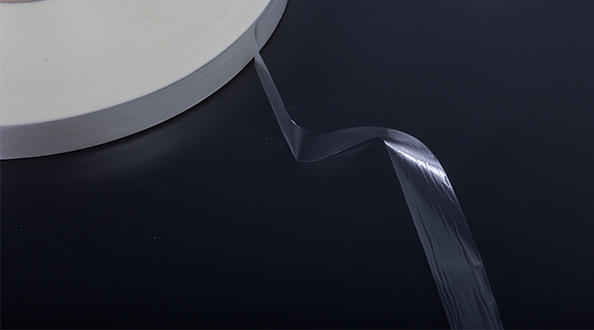
One of the most misunderstood aspects of water soluble film is the idea that it either dissolves or it does not. In reality, dissolution is a spectrum, and the speed at which a film breaks down can be engineered with remarkable precision. For industries that depend on this material, controlling that timing is often the difference between a product that works flawlessly and one that frustrates users. POLYVA has built a significant part of its reputation on this exact capability, offering clients the ability to specify not just whether their film dissolves, but precisely when and how. This article explores the science and craftsmanship behind that achievement.
Why Dissolution Timing Matters More Than Most Buyers Realize
At first glance, the ability to dissolve in pva water soluble film seems like a simple binary property. But consider the range of products that rely on this technology. A dishwasher pod needs to release its contents within minutes of the wash cycle beginning. An agricultural pouch may need to remain intact until it reaches moist soil, then dissolve steadily as the crop absorbs water. A surgical film used in medical settings might need to break down over several hours inside the body. Each of these scenarios demands a different dissolution profile. When a film dissolves too early or too late, the consequences range from minor inconvenience to complete product failure, which is why manufacturers place such emphasis on this single characteristic.
The Polymer Chemistry Behind Tunable Dissolution
Achieving custom dissolution begins with the chemistry of polyvinyl alcohol itself. PVA is produced through the hydrolysis of polyvinyl acetate, and the degree to which that hydrolysis is completed determines how readily the resulting polymer dissolves in water. Fully hydrolyzed PVA resists dissolution at lower temperatures, while partially hydrolyzed grades break down more readily. POLYVA's chemists select and blend different grades of PVA to establish a baseline dissolution behavior, then fine-tune it further through molecular weight adjustments. Higher molecular weight generally slows dissolution, while lower molecular weight accelerates it. This layered approach gives the company a wide spectrum of starting points from which to engineer specific outcomes.
Adjusting Film Thickness to Control Breakthrough Speed
Beyond chemistry, physical dimensions play an equally important role. Thicker films take longer to dissolve because water must penetrate further before the structure collapses. POLYVA produces films across a range of gauges, allowing clients to use thickness as a straightforward lever for adjusting dissolution time. A thin film measured in microns might vanish in seconds, while a heavier film could take several minutes under identical conditions. The company's casting and extrusion equipment maintains tight tolerances on thickness, ensuring that the dissolution rate remains consistent across the entire roll. This precision matters enormously when a client's packaging machinery is calibrated to handle a specific film gauge.
Temperature Sensitivity as a Design Feature
Water temperature dramatically influences how quickly any soluble film breaks down, and POLYVA treats this sensitivity as a design tool rather than a limitation. Some formulations are engineered to dissolve readily in cold water, making them suitable for applications where hot water is unavailable or undesirable. Others are designed to remain stable in cold conditions and only dissolve when water reaches a certain threshold. This temperature-responsive behavior allows clients to create products with built-in safeguards. For example, a film that resists dissolution in cool storage conditions but dissolves rapidly in warm wash water protects against premature failure during shipping and handling.

Balancing Dissolution With Mechanical Strength
There is an inherent tension between making a film dissolve quickly and making it strong enough to survive packaging, transport, and handling. Aggressive dissolution usually requires formulations that are less robust mechanically. POLYVA addresses this challenge by optimizing the entire film structure rather than focusing on a single variable. Additives, plasticizers, and processing conditions all contribute to the final balance. The company's development teams work with clients to identify the minimum strength required for their specific application, then push dissolution speed as far as possible within that constraint. This negotiation between competing properties is where genuine expertise becomes visible.
Testing Protocols That Verify Real-World Performance
Claims about dissolution rates mean nothing without rigorous verification. POLYVA tests its films using controlled laboratory methods that simulate the conditions clients expect in the field. Samples are immersed in water at specified temperatures and monitored until complete breakdown occurs. The company also tests dissolution behavior under varying pH levels, agitation intensities, and water hardness conditions, since these factors can shift performance meaningfully. Clients receive detailed data accompanying their orders, giving them confidence that the film will behave as promised when it reaches end users. This transparency has made POLYVA a preferred partner for brands with little tolerance for uncertainty.
Collaborating With Clients to Fine-Tune Every Specification
Custom dissolution is ultimately a collaborative process. POLYVA's technical staff engage directly with client engineers to understand the precise sequence of events their product will experience, from factory filling to consumer use. Based on that understanding, they recommend formulations, thicknesses, and additives that align with the desired timeline. Prototypes are produced, tested, and refined until the dissolution profile matches expectations exactly. This iterative approach ensures that no client receives a generic solution, and it explains why so many companies return to POLYVA when developing their next generation of water soluble products. The ability to control timing so precisely has become one of the company's defining strengths.