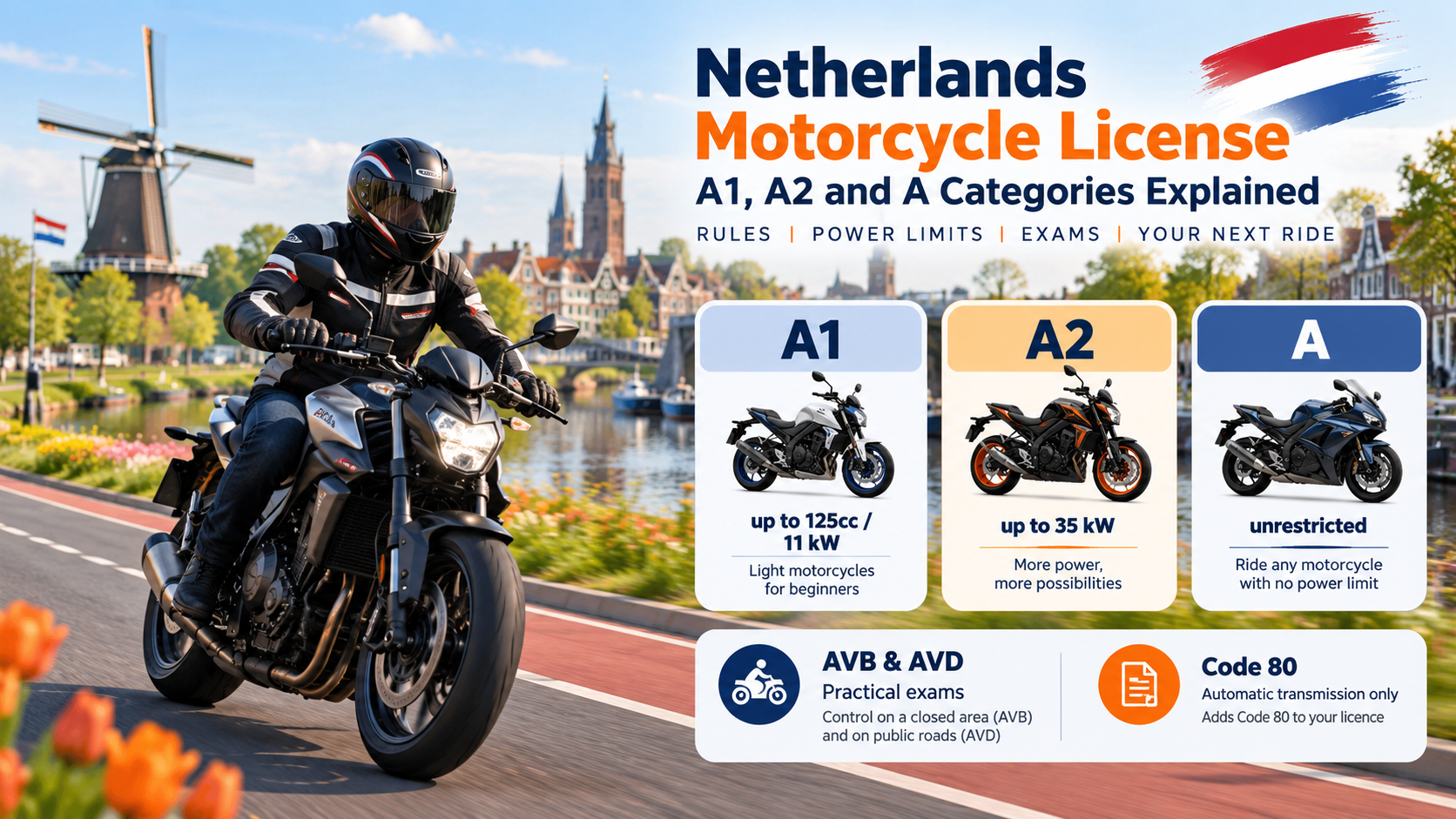
Getting a motorcycle licence in the Netherlands depends on more than simply passing a riding test. The Dutch system separates motorcycles into three main categories, A1, A2 and A, based largely on motorcycle power, rider age and previous experience.
For anyone researching a netherlands motorcycle license, understanding these categories early is important because the route you take can affect when you may start lessons, which motorcycle you can ride and whether you need to progress through another licence first.
A1 Is the Entry Point for Light Motorcycles
Category A1 is designed for lighter motorcycles. Under current Dutch rules, A1 covers motorcycles up to 125 cc with a maximum power of 11 kW. It can also apply to certain motorised three-wheelers up to 15 kW.
Learners may begin A1 motorcycle lessons and take the motorcycle theory exam from age 17. The minimum age for the practical examination is 18.
For younger riders, A1 is therefore the first full motorcycle category available.
This category is useful for people who mainly want a lightweight motorcycle for commuting or everyday riding rather than a higher-powered machine.
A2 Allows a More Powerful Motorcycle
A2 covers medium-powered motorcycles with a maximum power of 35 kW.
There are two common routes into A2.
A rider who already holds A1 can begin A2 lessons from age 19 and take the practical examination from age 20. If the person has held A1 for at least two years, progression can involve a combined practical examination rather than starting the whole process again.
Someone without A1 can also enter A2 directly. In that case, lessons and the practical exams can begin from age 20, while the motorcycle theory examination can be taken earlier.
This makes A2 a common choice for adults who want more performance than A1 allows but are not yet eligible for unrestricted Category A.
Category A Is for Heavy Motorcycles
Category A is the unrestricted motorcycle category. It covers motorcycles above the A2 power limit and has no general maximum power restriction.
The route to Category A depends heavily on age and previous motorcycle experience.
A rider who has held A2 for at least two years can take the Category A practical exam from age 22 and obtain an unrestricted A licence.
A beginner who wants direct access to unrestricted Category A generally needs to wait until age 24.
However, the Netherlands also has an important intermediate route from age 21 known as Category A with Code 80.
What Does Code 80 Mean?
Code 80 is one of the most commonly misunderstood parts of the netherlands motorcycle license system.
If you take the Category A examination at age 21 without having held A2 long enough, you can receive Category A with Code 80.
While Code 80 applies, you may ride:
- A1 motorcycles
- A2 motorcycles
- Certain heavy motorised three-wheelers
The restriction remains for two years, or until the applicable age condition is reached. After the Code 80 restriction ends, the rider can move to unrestricted Category A according to the official rules.
This route is useful for riders who do not want to complete the traditional A1-to-A2 progression but are still below the age for unrestricted direct access.
Do You Need a Theory Test for Every Category?
Not always.
The motorcycle licensing system allows some riders progressing through categories to reuse previous qualifications.
For example, someone moving from A1 to A2 may not need to take the motorcycle theory exam again. The existing A1 qualification can satisfy the theory requirement for that progression.
The same principle can apply when progressing from A2 to A under the appropriate route.
Beginners, however, generally need a valid motorcycle theory certificate before completing the required practical testing.
The motorcycle theory certificate has a limited validity period, so learners should avoid taking it too early if they are not ready to continue with practical training.
AVB and AVD: Two Practical Exams Learners Should Know
The Dutch motorcycle practical test is divided into two distinct parts.
The first is AVB, which focuses on vehicle control. Learners demonstrate that they can handle the motorcycle safely during specific manoeuvres and controlled exercises.
The second is AVD, which tests participation in real traffic. This stage looks at how the rider applies road rules, observation, positioning and safe decision-making in normal traffic conditions.
For A1 beginners, the AVB test must be completed before moving on to AVD. The same general two-part practical structure applies to riders entering A2 or A directly without a qualifying progression route.
That is why motorcycle preparation should include both low-speed vehicle control and extensive road riding.
Which Category Should You Choose?
The answer depends mainly on three things:
Your age, your previous motorcycle licence history and the motorcycle you plan to ride.
If you are 18 and want a light motorcycle, A1 is the natural route.
If you are 20 and want a motorcycle up to 35 kW, A2 may be more appropriate.
If your goal is unrestricted motorcycles, Category A is the final licence, but the age and experience rules determine whether you reach it through progressive access, Code 80 or direct access.
Choosing the correct category before paying for training can prevent unnecessary lessons or exams later.
A1, A2 and A Are Different Paths, Not Just Different Engine Sizes
The Dutch system is designed so that riders can gain experience gradually as motorcycle power increases.
A1 introduces lighter motorcycles, A2 allows medium-powered machines and Category A removes the power restriction. The system also gives experienced riders a faster progression route while maintaining age and experience requirements for more powerful motorcycles.
If you are planning to obtain a netherlands motorcycle license, check the category that matches your motorcycle and age before starting lessons. Also confirm the current CBR and government requirements for theory validity, health declarations, AVB, AVD and Code 80.
For more information about motorcycle categories, Dutch theory preparation, CBR testing and licence progression, visit the Netherlands Driving Licence Guide and use it alongside current official Dutch government and CBR information.