A productive farm depends on more than healthy seeds and favourable weather. Throughout the growing season, farmers must respond to insect attacks, weed competition, fungal diseases and changing soil conditions. Each challenge requires a different approach, and the effectiveness of an agricultural input depends on selecting the right formulation, applying it at the appropriate stage and following responsible farming practices.
For growers and agricultural professionals, understanding products such as Flubendiamide 20 WG, a narrow leaf weedicide, an adjuvant spray and an appropriate fungicide can make crop-management decisions more informed. Biological inputs and organic manure fertilizer also have distinct roles in maintaining soil health and supporting plant growth.
JU Agri Sciences Pvt. Ltd. serves Indian agriculture through a portfolio that includes insecticides, fungicides, herbicides, biological fertilizers, biological pesticides and plant nutrition products. Its approach reflects the need for crop-specific solutions rather than a single input strategy for every field.
Why Modern Farms Need Integrated Crop Protection
Indian farmers grow a wide range of crops, including rice, cotton, wheat, soybean, pulses, fruits and vegetables. Each crop faces different combinations of weeds, insects, diseases and nutritional challenges. Even within the same crop, pest pressure can vary with weather, planting time, irrigation and previous field management.
Integrated Pest Management offers a practical framework for addressing these challenges. It combines regular field monitoring, appropriate cultivation practices, biological measures and carefully selected pesticides when intervention is justified. This approach helps farmers avoid unnecessary applications while protecting yield potential.
The first step is accurate identification. Leaf damage caused by caterpillars, for example, requires a different response from yellowing caused by nutrient deficiency. Likewise, fungal leaf spots should not be treated as insect damage simply because plants appear weak.
An informed crop-management program begins with observation, followed by selection of an input registered for the crop and target problem.
Understanding Flubendiamide 20 WG for Insect Management
Flubendiamide 20 WG is an insecticide formulation containing flubendiamide as its active ingredient. Flubendiamide belongs to the diamide group of insecticides and acts on insect ryanodine receptors, disrupting calcium regulation in muscle cells. It is particularly associated with the management of certain caterpillar pests, although the approved crops and target insects depend on the specific product registration.
Caterpillars can damage leaves, flowers, pods and other plant tissues. In crops such as cotton and soybean, feeding damage may reduce the plant's ability to develop healthy foliage or produce marketable harvests. However, not every caterpillar species responds identically to every insecticide.
Why Pest Identification and Timing Matter
Farmers should inspect plants for larvae, feeding marks and other signs of infestation before choosing a treatment. Pest size and crop stage may influence the effectiveness of an insecticide, so delaying intervention until damage is extensive can make management more difficult.
The term Flubendiamide 20 WG should not be used as a substitute for checking the exact product label. Farmers must confirm the registered crop, target pest, dosage, application interval and pre-harvest restrictions before use. Repeated applications from the same insecticide group should be managed carefully to help reduce resistance risk.
A balanced strategy may also include field sanitation, crop monitoring and conservation of beneficial organisms. Chemical control is most useful when it addresses a confirmed problem within a wider crop-protection plan.
Choosing a Narrow Leaf Weedicide for the Right Crop
Weeds compete with crops for light, water, nutrients and growing space. In the early stages of crop development, intense weed competition can affect plant establishment and reduce the resources available for productive growth.
A narrow leaf weedicide is generally selected to manage grass-type weeds, but the appropriate product depends on the weed species and crop. Rice, wheat, soybean and other crops have different weed communities, and a herbicide registered for one crop may damage another.
Farmers should distinguish grass weeds from sedges and broadleaf weeds before choosing a treatment. Correct identification is particularly important when several weed types occur together.
Pre-Emergent and Post-Emergent Herbicides
Pre-emergent herbicides are applied before the target weeds emerge, according to the product's registered use and crop stage. Post-emergent herbicides are applied after weeds have emerged and are actively growing, where the product label permits.
A post emergent herbicide must be selected according to the target weed, crop tolerance, weed growth stage and environmental conditions. Applying a herbicide too late, using an unsuitable product or spraying during unfavourable weather may reduce performance or increase crop-injury risk.
JU Agri Sciences offers herbicide solutions for agricultural weed management, including products for rice cultivation. Farmers can explore its JU-MIX product information to understand the product's stated uses and verify whether it fits their specific weed-management requirements.
Antifungal Powder for Plants: Why the Disease Must Be Identified First
Fungal diseases can affect leaves, stems, roots, flowers and fruits. Symptoms may include spots, discolouration, rotting, powdery growth or premature leaf drop. Because different diseases can produce similar visible symptoms, identifying the likely cause is essential before selecting a treatment.
The search term antifungal powder for plants can refer to different fungicide formulations, including wettable powders and other products designed for dilution or application according to their labels. The formulation alone does not establish which disease it can control.
A contact fungicide generally acts on treated plant surfaces, while a systemic fungicide is absorbed and moves within plant tissues to varying degrees, depending on the active ingredient. Some products combine different modes of action. These categories have distinct purposes and cannot be considered interchangeable.
Apply Fungicides According to the Target Disease
For example, a fungicide registered for powdery mildew may not be the correct choice for rice blast or sheath blight. The crop, disease, active ingredient and approved application timing must match.
Farmers should monitor weather conditions and crop symptoms, use disease-resistant varieties where suitable and maintain recommended plant spacing and nutrient management. Fungicides should be applied according to registered instructions, with attention to resistance management and pre-harvest intervals.
Adjuvant Spray and the Importance of Application Quality
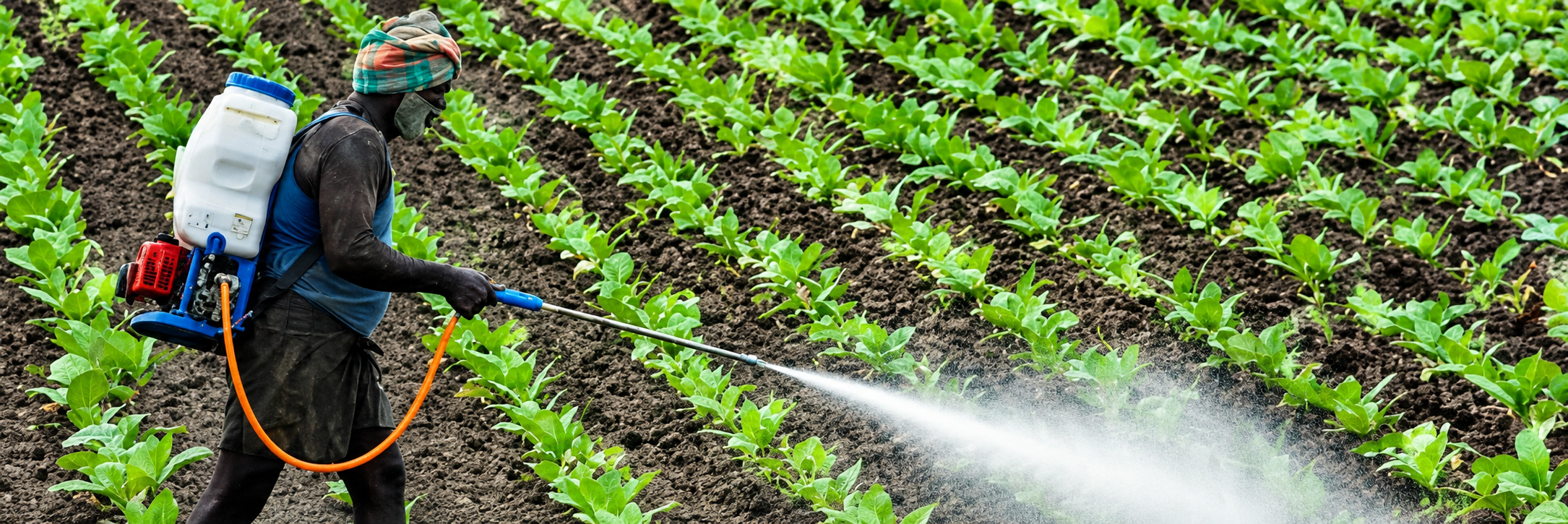
Even when farmers choose a suitable pesticide, poor application can reduce the amount of product reaching the target. Inadequate coverage, incorrect nozzle selection, unsuitable spray pressure and poorly calibrated equipment can all affect field performance.
An adjuvant spray involves using an additional product designed to modify certain spray characteristics when compatible with the pesticide and permitted by the label. Depending on the formulation, an adjuvant may improve wetting, spreading or retention on plant surfaces.
However, an adjuvant is not automatically necessary for every pesticide application. Some formulations already contain components that support their application performance, while an incompatible additive can cause crop injury, mixing problems or reduced effectiveness.
Calibrate Equipment Before Spraying
Farmers should check the sprayer, nozzles, water volume and walking speed before treatment. Weather also matters: strong winds can increase spray drift, while unsuitable temperatures or rainfall may affect application results.
An agrochemical spreader or other adjuvant should only be used when its compatibility and purpose are clear. Increasing the quantity of pesticide or adding an unapproved product is not a reliable substitute for correct equipment calibration and label compliance.
Organic Manure Fertilizer and Long-Term Soil Health
Crop protection addresses immediate threats, but soil management influences productivity across multiple seasons. Organic manure fertilizer can contribute organic matter to the soil and support its physical properties. Depending on its composition and maturity, it may also supply plant nutrients and contribute to biological activity.
Its value depends on the source material, nutrient content, quality and application rate. Organic manure does not necessarily provide all nutrients in the quantities required by a particular crop, so it should not automatically replace soil testing or a balanced fertilization program.
Combine Organic Inputs With Balanced Nutrition
Soil testing can help farmers identify nutrient deficiencies and determine whether additional nitrogen, phosphorus, potassium or micronutrients are required. Organic matter management, appropriate irrigation and reduced soil disturbance where suitable can further support a healthier root environment.
JU Agri Sciences offers plant nutrition and biological product categories alongside conventional crop protection. Farmers interested in organic soil inputs can explore FULL DOSE organic manure fertilizer information and verify the product's composition, crop suitability and application instructions before use.
How Bio Pesticides Manufacturers Support Integrated Farming
Biological crop protection is expanding the range of tools available to farmers. Bio pesticides manufacturers develop products that may use beneficial microorganisms or biologically derived substances to manage specific pests or diseases. Their intended use differs according to the active ingredient and formulation.
Biological products can complement conventional crop protection when selected for the correct target and applied under suitable conditions. For example, a microbial product intended for certain soil-borne pathogens should not be assumed to control every insect pest or foliar disease.
Farmers should follow storage and handling instructions carefully because some biological formulations are sensitive to environmental conditions. Compatibility with chemical pesticides should also be verified before products are mixed or applied close together.
Integrated approaches work best when biological and chemical products are selected for complementary purposes rather than used indiscriminately. Field monitoring, suitable crop rotation, sanitation and balanced nutrition remain important parts of this strategy.
What to Look for in an Agrochemical Company in India
Choosing an agrochemical company in India involves more than comparing product names or promotional claims. Farmers, dealers and agricultural professionals should consider product quality, manufacturing expertise, technical documentation, supply reliability and access to crop-specific guidance.
A broad agricultural portfolio can be valuable because farming challenges differ across regions. Rice growers may need herbicides and insecticides for particular weeds and pests, while cotton growers may require carefully selected insecticides and disease-management products. Other farmers may need plant nutrition or biological solutions.
JU Agri Sciences reports more than two decades of experience in Indian agriculture, a portfolio of over 130 agricultural products and a network of more than 5,500 trade partners and 25,000 retailers. Its stated portfolio includes insecticides, fungicides, herbicides, biological fertilizers, biological pesticides and bio-stimulants. These company-reported details illustrate its range, while individual products should still be evaluated according to their labels and suitability for the intended use.
Pest Control Chemical Manufacturers and Responsible Use
Reliable pest control chemical manufacturers should provide clear information about product composition, approved crops, target pests, dosage, safety precautions and resistance-management considerations. This information helps users make better decisions and reduces the risk of misuse.
Farmers should purchase agricultural inputs through legitimate supply channels, check packaging and product details, use appropriate protective equipment and store pesticides securely. Empty containers must be handled and disposed of according to local requirements and label instructions.
Responsible use also means avoiding unnecessary applications and protecting pollinators, beneficial insects, water sources and other non-target organisms. When a pest or disease diagnosis is uncertain, advice from a qualified agronomist or local agricultural extension professional can prevent avoidable treatments.
Conclusion: Match Every Input to the Crop's Actual Need
Effective crop management requires different solutions for different problems. Flubendiamide 20 WG may be relevant to certain registered caterpillar pests, while a narrow leaf weedicide targets specific grass weeds when approved for the crop. A post emergent herbicide, antifungal powder for plants and adjuvant spray each serve distinct purposes and require careful selection.
At the same time, organic manure fertilizer and biological products can complement chemical crop protection within a broader approach to soil health and sustainable farming. The key is to avoid treating any single product as a universal answer.
JU Agri Sciences brings together crop protection, biological inputs and plant nutrition solutions for Indian agriculture. Farmers, dealers and crop advisors can explore the company's official product resources and seek qualified guidance to identify suitable inputs, confirm approved uses and apply them responsibly.
Frequently Asked Questions
What is Flubendiamide 20 WG used for?
Flubendiamide 20 WG is an insecticide formulation associated with the control of certain caterpillar pests. The approved crops, target insects and dosage must be confirmed from the exact product's current registered label.
How should farmers choose a narrow leaf weedicide?
Farmers should identify the grass weed, crop and growth stage, then select a herbicide registered for that crop and target. Label directions and local agronomic guidance should determine the application timing.
Is every antifungal powder suitable for all plant diseases?
No. Fungicides differ in active ingredient, mode of action and registered target diseases. The product must match the crop and diagnosed disease, and it should be used according to its label.
Why is an adjuvant spray used with some pesticides?
A compatible adjuvant may improve spray wetting, spreading or retention where recommended. It should not be added automatically, because compatibility depends on the pesticide formulation and application instructions.
What are the benefits of organic manure fertilizer?
Organic manure can add organic matter, contribute nutrients and support soil physical properties. Its benefits depend on quality, composition, application rate and the existing condition of the soil.
What should farmers look for in pest control chemical manufacturers?
Farmers should look for clear product labels, reliable quality, legitimate supply, technical information and responsible-use guidance. Product selection must be based on the crop, target pest or disease and registered application requirements.