Rise, fall, and sway are the three pillars of modern standard dancing, and each one places particular demands on the feet. Rise lifts the dancer onto the balls of the feet, fall returns weight to the heels with control, and sway arcs the body through turns and promenades. Suphini designs its standard modern dance shoes around these three actions, treating them not as abstract concepts but as physical forces the footwear must accommodate. This article explains how the brand's design choices respond to each element and what dancers should look for when selecting shoes for modern standard work.
The Mechanics of Rise and What Shoes Must Do
Rise happens when a dancer elevates through the feet, typically onto the balls, and it requires a shoe that flexes smoothly at the forefoot while supporting the ankle above. If the sole is too stiff, the foot cannot articulate and the rise feels labored; if the upper is too loose, the foot slides forward and the dancer loses control at the top of the movement. Suphini addresses rise through calibrated forefoot flexibility and a snug instep fit that keeps the foot anchored as the heel lifts. The sole thickness is kept modest so the dancer can feel the floor through the ball of the foot, which is where balance during rise actually lives.

Supporting the Controlled Descent of Fall
Fall is the counterpart to rise, the controlled lowering of weight back through the foot as a step completes. It sounds simple, but fall demands a shoe that supports the heel and ankle without jarring the body on each landing. Suphini reinforces the heel counter and shapes the heel seat so the foot settles securely as weight returns. The suede sole plays a role here too, since a sole with consistent glide prevents the foot from catching and interrupting the smooth descent. Dancers often describe a well-designed shoe as making fall feel cushioned, not because there is heavy padding but because the shoe absorbs the transition without fighting the foot's natural mechanics.
Designing for Sway Through Turns and Promenades
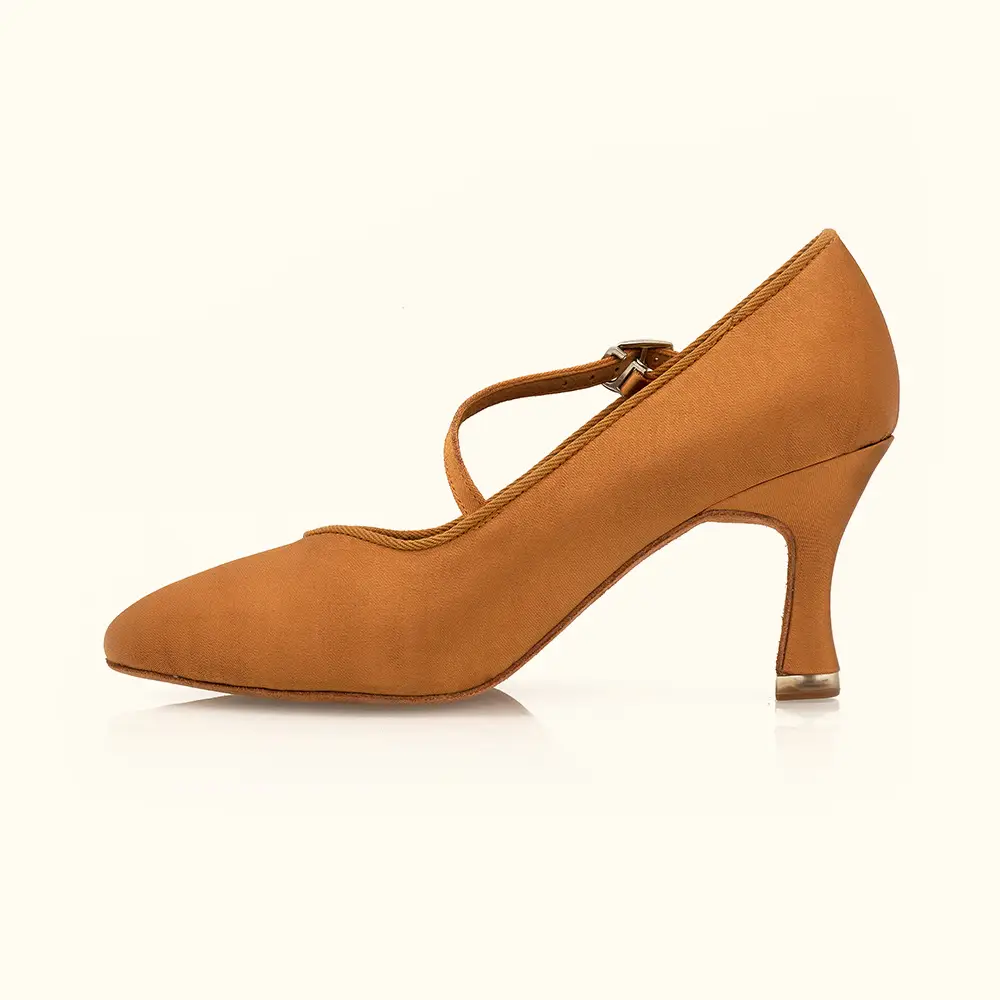
Sway carries the body through arcing movements, and it depends on a stable base that lets the dancer commit weight confidently to one side. Shoes that wobble or slip undermine sway because the dancer instinctively holds back. Suphini's standard modern models incorporate flare heels that widen slightly at the base, improving lateral stability during promenades and turning figures. The upper holds the midfoot firmly so the foot does not roll inside the shoe as the body sways. Strap configurations, whether Mary Jane or X-strap, contribute to this security by anchoring the instep throughout the arc of movement.
The Heel's Role in Modern Standard Technique
Heel design influences all three pillars at once, and Suphini treats it as a central design decision rather than an afterthought. The heel is positioned slightly forward to encourage the forward weight that modern standard technique requires, and its height options let dancers choose the elevation that suits their level. A moderate heel supports developing dancers through rise and fall, while a taller competition heel creates the elongated line that sway and promenade figures showcase. The flare profile, present across much of the range, balances elegance with the stability modern standard dancing demands. Choosing heel height wisely is one of the most consequential decisions a modern dancer makes.
Materials That Move With the Body's Rhythm
Modern standard dance shoes is continuous, and the shoe's materials must accommodate constant motion. Suphini selects leathers and satins that flex repeatedly without cracking, and linings that manage moisture through long practice sessions. The upper must be supple enough to follow the foot through rise and fall yet structured enough to support sway without collapsing. Suede soles are chosen for consistent glide, since a sole that changes character as it wears would disrupt the rhythm of rise, fall, and sway. Materials, in this sense, are not cosmetic choices but functional ones that determine whether the shoe keeps pace with the dance.
Fit Considerations for Modern Standard Dancers
Fit affects how well a shoe delivers on its design promises, and Suphini's guidance emphasizes the details that matter for modern standard work. The instep should feel secure without pressure, since a loose instep allows the foot to slide during rise and a tight one restricts the flex needed for fall. The heel should stay in place when the dancer rises onto the balls of the feet, and the toe box should leave just enough room for the toes to settle without pressing. Trying shoes late in the day and wearing usual dance tights keeps measurements accurate. When fit is right, the shoe becomes an extension of the dancer's movement rather than an obstacle.
Bringing Rise, Fall, and Sway Together
No single feature makes a modern standard shoe successful; it is the integration of flexibility, support, heel design, and fit that allows rise, fall, and sway to flow into one another. Suphini's approach reflects this understanding, shaping each component with the others in mind. Dancers evaluating shoes should test all three actions during a trial, rising onto the balls, settling back through the heel, and swaying through a turn to feel how the shoe responds. A pair that handles all three without complaint is one that will serve through lessons, practice, and competition, letting the dancer focus on the music rather than the footwear.