Starting a laboratory study without reading the certificate of analysis first is a bit like cooking a new recipe without checking what is in the fridge. Everything may turn out fine, but any surprises arrive at the worst possible moment. The certificate contains information that directly affects experimental planning, from the peptide's purity and identity to how much usable material a vial actually holds. Molequa supplies batch-specific certificates with its peptide CoA checker, and this article explains how to interpret one before your study begins, so that decisions about quantities, controls, and protocols rest on documented facts rather than assumptions.
Why Interpretation Should Precede Planning
The point of reading a certificate before planning is that analytical data can change your design. A purity figure below expectation might prompt adjustments to controls or replication strategy. A peptide content value lower than the nominal quantity might affect how you calculate concentrations. Identity data confirms that the compound matches the literature you are basing your protocol on. Researchers who read the certificate after designing the study sometimes discover that their assumptions were slightly off, forcing revisions that could have been avoided. Molequa's batch-specific documentation makes it possible to review this information before the first pipette is touched.

Confirming the Batch Matches Your Plans
The first step is verifying that the certificate describes the material you will actually use. Check the batch number against your order, and confirm the peptide name, sequence, and quantity align with your intended purchase. Certificates are batch-specific for a reason: a document from a different production run tells you nothing reliable about the material in your hands. Molequa's certificates carry this identifying information at the top, making the comparison straightforward. If you have already received the peptide, match the batch number on the vial against the certificate before proceeding with any planning.
Reading Purity Data in Context
Purity is the figure most researchers check first, and it deserves attention, but only alongside the chromatogram that produced it. The stated percentage represents the main peak's share of total detected signal, so examine the profile: a clean, sharp main peak with minimal surrounding peaks supports the figure, while a cluttered chromatogram invites questions. Retention time offers another reference point. For planning purposes, purity above ninety-eight percent is generally suitable for most research applications, but the specific requirement depends on your protocol's sensitivity. Molequa includes the chromatographic data so this judgment can be made with evidence in view.
Understanding Peptide Content for Calculations
Peptide content is the figure most often overlooked and most consequential for planning. It describes the proportion of the vial's mass that is actual peptide rather than counterions, salts, or residual moisture. If content is lower than expected, the usable material falls short of the label quantity, which affects how you calculate concentrations and how many experiments a vial will support. Molequa reports content separately from purity, and researchers should consult both before finalising protocols. Confusing purity with content leads to errors that surface later as inconsistencies, often after valuable reagents have been consumed.
Verifying Identity Against Your Reference Peptide
Identity confirmation through mass spectrometry ensures the compound matches its label. Compare the observed molecular weight against the theoretical value for your peptide sequence; the two should align within normal instrument tolerance. This check matters for planning because your protocol likely draws on published studies using a specific peptide, and a substitution would invalidate comparisons. Molequa's certificates include MS data for this verification. Taking a moment to confirm identity before beginning a study protects the validity of every result that follows.
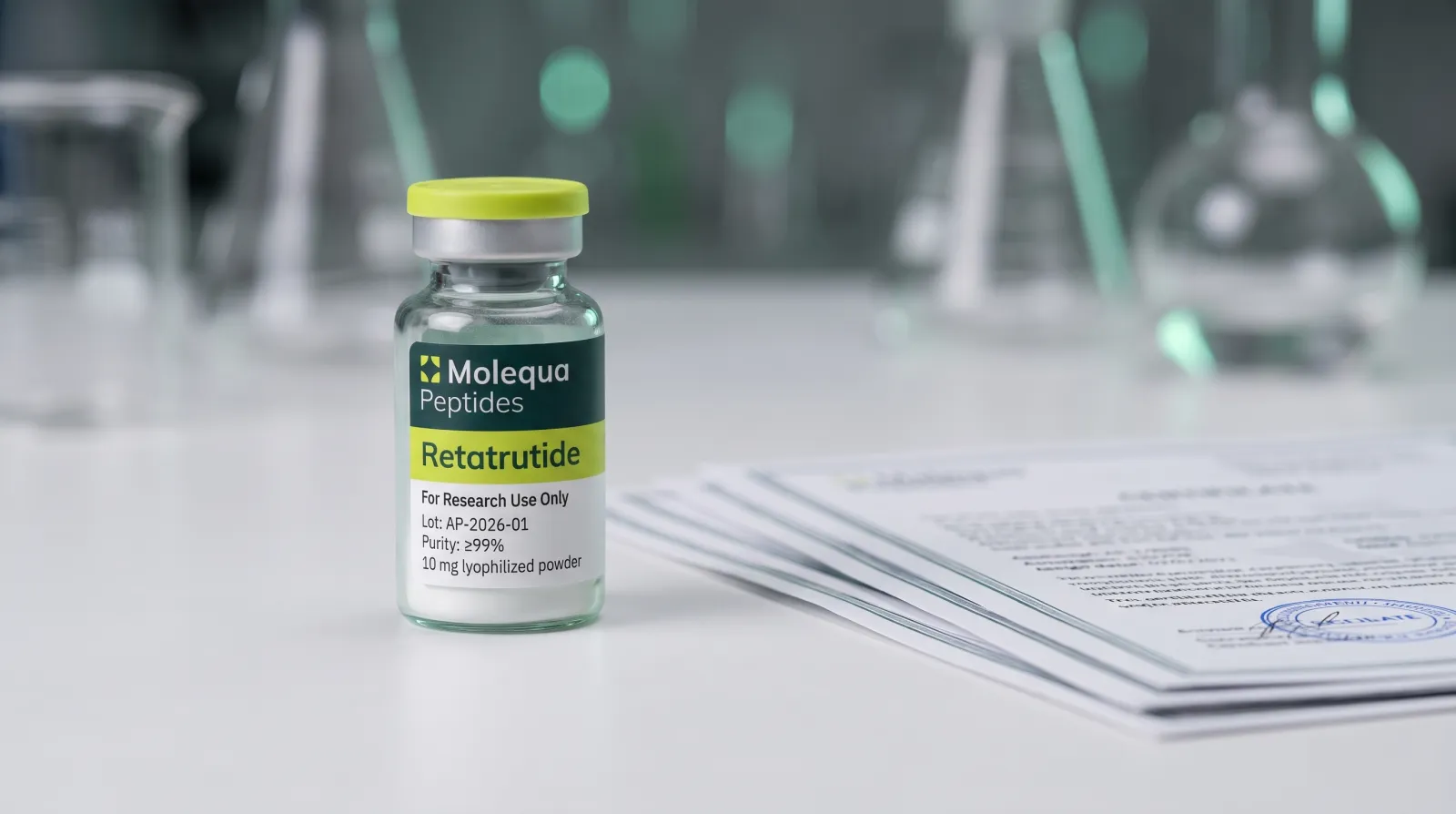
Checking Storage and Handling Before Day One
The certificate often indicates storage conditions, and planning should account for them. Confirm that your laboratory can provide the required temperature, light protection, and humidity control before the peptide arrives. Molequa's product data and handling guidance supplement the certificate with practical recommendations. Researchers should also consider how long the material will be stored and whether aliquoting is appropriate. These logistical decisions are easier to make in advance than to improvise once a study is underway.
Documenting the Certificate in Your Study Records
Finally, file the certificate with your study documentation. Note the batch number, purity, content, and testing date in your laboratory records, so the material used can be traced if questions arise later. Molequa's per-batch documentation supports this practice. When results are written up, referencing the certificate strengthens the methods section and provides evidence that starting materials met defined specifications. Documentation prepared at the start saves considerable effort when the study concludes.