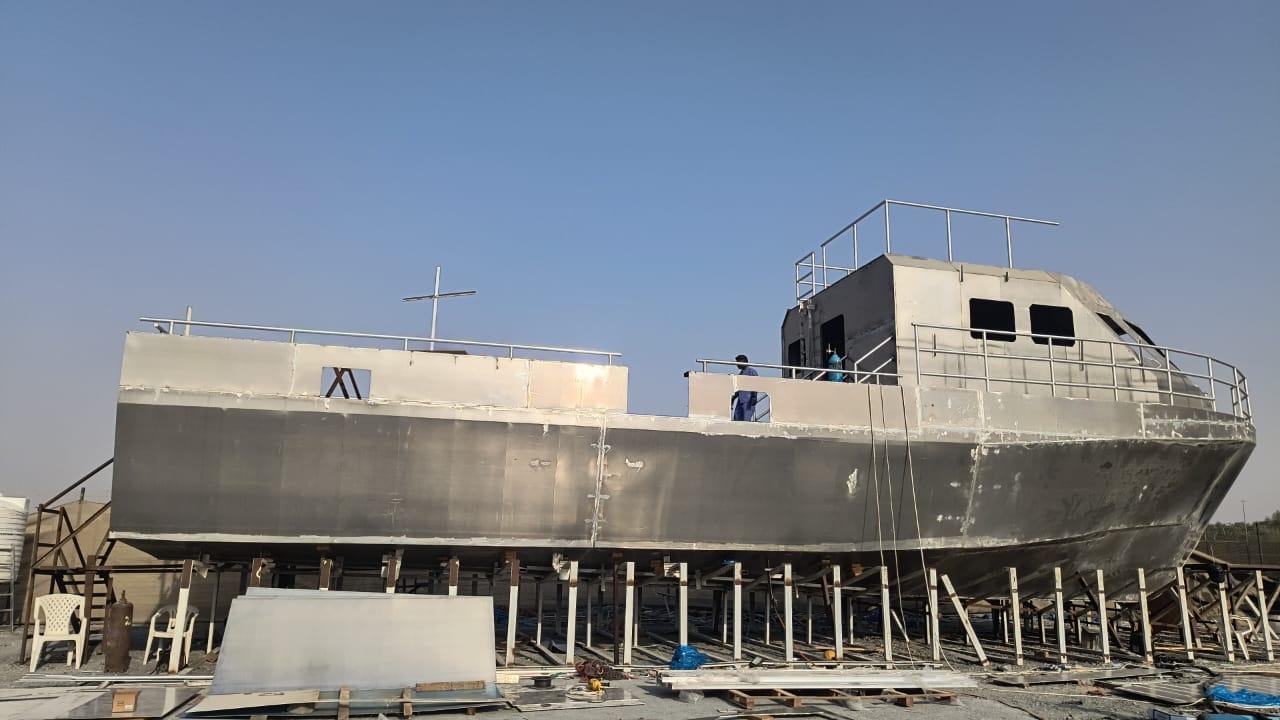
Aluminium boats are widely used in commercial transportation, fishing, offshore operations, passenger services, and industrial activities. Their lightweight structure, corrosion resistance, and excellent strength make them a suitable choice for modern marine applications. Today, aluminium boats manufacturers are adopting advanced fabrication technologies to improve vessel durability, safety, and operational efficiency.
Modern boat construction involves several important processes, including material selection, precision cutting, welding, structural assembly, surface treatment, and quality inspection. These methods help create reliable vessels capable of performing in challenging marine environments. VU Marine focuses on high-quality shipbuilding and marine solutions through modern engineering practices and professional expertise.
1. Selecting High-Quality Aluminium Materials
Material selection is the foundation of durable aluminium boat construction. Marine-grade aluminium alloys are commonly preferred because they provide a good balance of strength, lightweight properties, and corrosion resistance.
The 5000 and 6000 series aluminium alloys are frequently used in marine applications. The 5083 alloy is particularly popular because of its excellent resistance to seawater corrosion and suitable mechanical properties. Other alloys, such as 5086 and 6061, are also selected according to specific structural requirements.
Aluminium has a density of approximately 2,700 kg/m³, while ordinary steel has a density of around 7,850 kg/m³. This means aluminium weighs approximately one-third as much as steel for an equal volume.
Lower vessel weight can improve fuel efficiency, increase payload capacity, and support better overall performance. Selecting the correct aluminium grade also helps ensure that the vessel can withstand continuous exposure to seawater and changing weather conditions.
2. Advanced CNC Cutting Technology
Precision cutting is an essential stage in modern boat fabrication. Accurate cutting ensures that aluminium plates and structural components fit properly during assembly.
Computer Numerical Control (CNC) machines have transformed metal fabrication by providing accurate and consistent cutting results. These machines follow digital engineering designs to produce components according to specific measurements.
Common cutting technologies include:
-
CNC plasma cutting
-
Waterjet cutting
-
Laser cutting
-
Computer-controlled plate processing
These methods reduce material wastage and improve production accuracy. They also allow complex hull shapes and structural components to be manufactured with greater precision.
Modern aluminium boat builders use advanced cutting and fabrication equipment to maintain consistent production standards. Accurate components make assembly easier and help reduce unnecessary adjustments during construction.
3. Modern Welding Methods for Stronger Structures
Welding plays a major role in aluminium boat construction because it connects different structural components and creates a strong vessel framework.
Two commonly used aluminium welding methods are MIG and TIG welding.
MIG Welding: Gas Metal Arc Welding (GMAW), commonly called MIG welding, is widely used for joining aluminium plates and structural sections. It offers good productivity and is suitable for several commercial fabrication applications.
TIG Welding: Gas Tungsten Arc Welding (GTAW), commonly known as TIG welding, provides greater control and precision. It is particularly useful for thinner materials and detailed welding applications.
Proper welding requires suitable filler materials, correct heat input, clean surfaces, and accurate joint preparation. Since aluminium transfers heat quickly, welders must carefully control the process to prevent distortion and welding defects.
High-quality welding improves structural strength and helps vessels withstand vibration, mechanical stress, and demanding marine conditions.
4. Precision Bending and Hull Forming
Hull design directly affects the stability, speed, and performance of an aluminium boat. Modern fabrication facilities use hydraulic bending machines and specialised forming equipment to shape aluminium plates according to engineering drawings.
The hull must be designed according to the vessel's intended purpose, operating environment, load capacity, and propulsion requirements.
Accurate hull forming provides several benefits:
-
Improves structural strength.
-
Supports better hydrodynamic performance.
-
Helps distribute water pressure.
-
Reduces unnecessary structural stress.
-
Improves vessel stability and handling.
A properly designed hull can reduce water resistance and support better fuel efficiency. These advantages are particularly important for commercial boats that operate for extended periods.
5. Growing Demand for Marine Vessel Construction in UAE
The UAE has developed an important maritime industry supported by commercial ports, offshore activities, marine transportation, and industrial operations. Demand for reliable vessels continues to create opportunities for modern boat construction and marine engineering.
A boats manufacturer in UAE needs to consider several factors while developing vessels for regional marine conditions. These include high temperatures, saltwater exposure, heavy operational loads, and demanding working environments.
Aluminium boats are suitable for different applications, including fishing, passenger transportation, patrol activities, offshore support, and commercial operations.
Manufacturing requirements may differ depending on vessel size, operating conditions, and customer specifications. Proper material selection, advanced fabrication methods, and quality inspection help ensure that boats perform reliably throughout their operational life.
6. Advanced Structural Assembly Techniques
After cutting, bending, and preparing aluminium components, the next stage is structural assembly.
During this process, different hull sections, frames, bulkheads, stringers, and support structures are carefully positioned and joined together.
Modern assembly techniques use engineering drawings, alignment tools, measuring equipment, and specialised fixtures. These systems help maintain accurate dimensions and prevent structural misalignment.
Internal frames and support sections improve the strength of the vessel and help distribute operational loads. Their arrangement depends on the boat's size, design, and intended application.
A well-assembled structure can provide better resistance to vibration, mechanical stress, and continuous movement through water.
7. Corrosion Protection and Surface Treatment
Although aluminium naturally develops a protective oxide layer, marine environments can still create corrosion challenges. Continuous exposure to saltwater, moisture, and other environmental conditions makes surface protection essential.
Modern surface treatment methods include:
-
Proper cleaning and surface preparation.
-
Application of suitable marine-grade primers.
-
Protective marine coating systems.
-
Electrical isolation between dissimilar metals.
-
Regular inspection of underwater structures.
Galvanic corrosion is an important concern in aluminium boat construction. It can occur when aluminium comes into electrical contact with another metal in the presence of seawater.
Using compatible marine fittings, insulating materials, and appropriate protective coatings helps reduce this risk.
Regular maintenance and inspection also help identify early signs of damage and protect the vessel's structure over time.
8. Quality Inspection and Testing
Quality control is necessary throughout the manufacturing process. Every structural component must meet the required engineering specifications before the vessel enters service.
A professional boat building company follows appropriate inspection procedures to identify fabrication defects and maintain construction quality.
Important inspection methods include:
Visual Inspection: Checks surface conditions, welding quality, alignment, and visible defects.
Non-Destructive Testing: Methods such as dye penetrant testing help identify surface-breaking defects without damaging the material.
Dimensional Inspection: Confirms that the vessel matches approved engineering drawings.
Leak Testing: Helps identify possible leakage in hull sections and relevant compartments.
Sea Trials: Evaluate handling, stability, propulsion, manoeuvrability, and overall vessel performance.
These procedures help ensure that completed vessels meet their intended design requirements and applicable marine standards.
9. Benefits of Modern Aluminium Boat Fabrication
Modern fabrication technologies have made aluminium boats suitable for several commercial and industrial applications.
Some important advantages include:
-
Lightweight Construction: Aluminium reduces vessel weight and can improve fuel efficiency.
-
Corrosion Resistance: Marine-grade aluminium provides good resistance to seawater exposure.
-
Long-Term Durability: Proper welding and fabrication improve structural reliability.
-
Design Flexibility: Aluminium can be shaped into different hull designs.
-
Lower Maintenance Requirements: Suitable coatings and regular inspections help control maintenance needs.
-
Operational Efficiency: Lightweight structures can support improved vessel performance.
These benefits make aluminium construction a practical option for fishing boats, passenger vessels, patrol boats, workboats, and specialised marine vessels.
10. Future Trends in Aluminium Boat Manufacturing
The future of aluminium boat construction will be influenced by automation, digital engineering, improved fabrication equipment, and sustainable manufacturing practices.
Computer-Aided Design (CAD) software allows engineers to prepare accurate vessel designs before production begins. Three-dimensional modelling also helps identify potential structural problems at an early stage.
Automated cutting systems and advanced welding technologies are improving manufacturing consistency while reducing unnecessary material wastage.
Electric and hybrid propulsion systems are also gaining attention in the marine sector. Lightweight aluminium construction can complement these technologies by reducing the weight that propulsion systems need to move.
Aluminium recycling is another important advantage. Recycling aluminium generally requires substantially less energy than producing primary aluminium, making responsible material management an important part of sustainable manufacturing.
Conclusion
Modern fabrication methods have improved the strength, reliability, and durability of aluminium boats. From selecting marine-grade materials and precision CNC cutting to advanced welding, hull forming, and corrosion protection, every manufacturing stage contributes to vessel performance.
Aluminium offers several advantages, including lightweight construction, corrosion resistance, design flexibility, and operational efficiency. However, achieving these benefits requires proper engineering, skilled workmanship, quality inspection, and regular maintenance.
As maritime technology continues to develop, aluminium boats will remain an important part of commercial and industrial marine operations. VU Marine focuses on quality engineering and dependable marine solutions to support the development of durable vessels designed for demanding operating conditions.