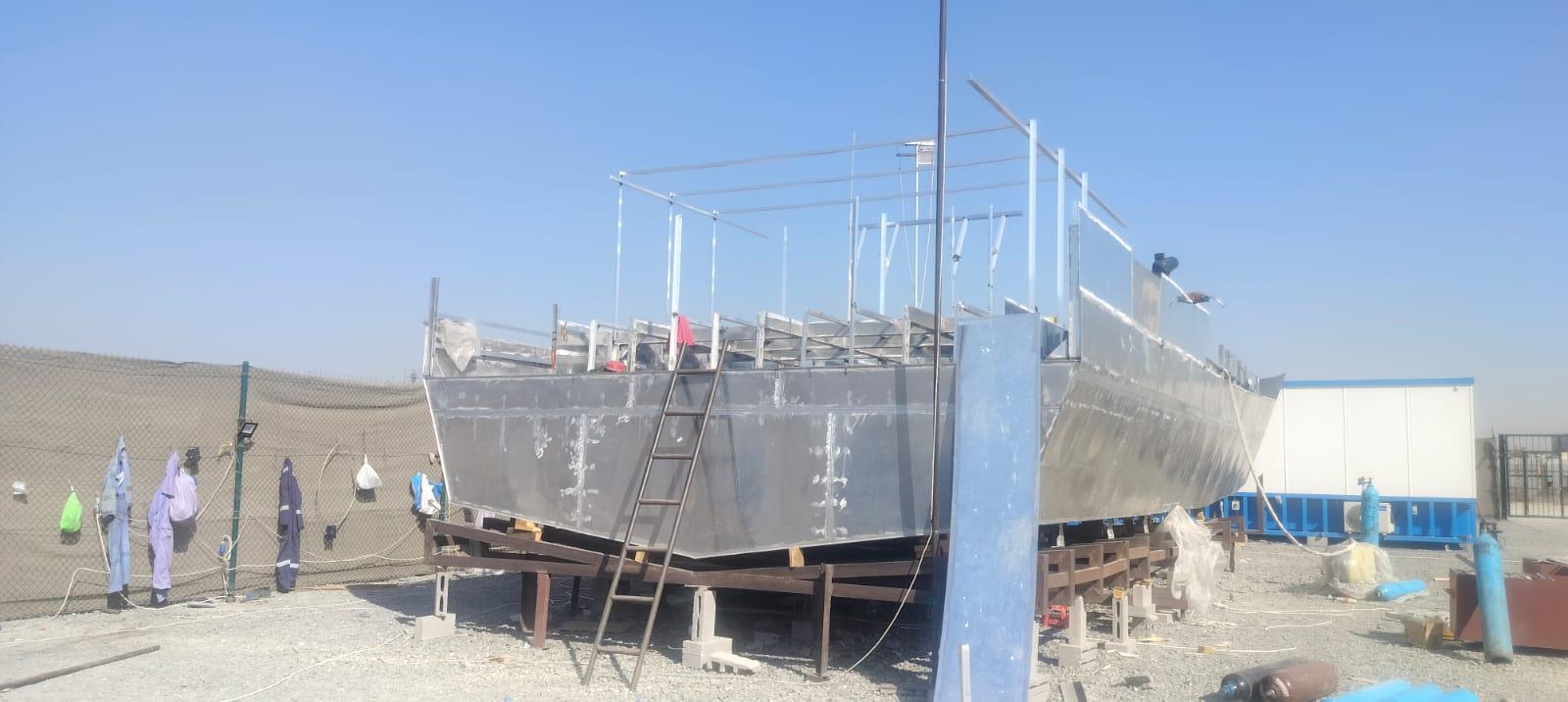
Tugboats play an important role in modern maritime operations by assisting large vessels, supporting harbour movements, and performing demanding offshore activities. Since these vessels regularly operate in seawater, they must be designed to withstand corrosion, moisture, changing temperatures, and continuous mechanical stress. Experienced aluminum tug builders focus on developing strong, lightweight, and corrosion-resistant vessels that can deliver reliable performance over many years.
Aluminium has become a popular material in marine engineering because of its low weight, natural corrosion resistance, and excellent strength-to-weight ratio. With suitable alloy selection, proper fabrication, and protective design methods, aluminium tugboats can offer long-term durability while maintaining operational efficiency.
Why Corrosion Resistance Is Important in Tugboat Construction
Tugboats operate in challenging environments where their hulls, decks, propulsion systems, and other structural components are frequently exposed to saltwater. Saltwater contains chloride ions that can damage metal surfaces and contribute to corrosion. Over time, corrosion may weaken structural components, increase maintenance requirements, and affect vessel safety.
Aluminium naturally develops a thin oxide layer when exposed to oxygen. This layer acts as a protective barrier and helps prevent further corrosion under suitable environmental conditions. However, seawater exposure can damage this protective layer in certain areas, making proper material selection and engineering essential.
According to marine corrosion research, aluminium alloys can show very low uniform corrosion rates under certain controlled seawater conditions. However, localised corrosion, including pitting and galvanic corrosion, can still occur if the material is not properly selected or protected.
This is why modern tugboat construction focuses on corrosion-resistant materials, effective drainage systems, and carefully designed connections.
Choosing the Right Aluminium Alloy for Marine Applications
Material selection is one of the most important stages of tugboat manufacturing. Different aluminium alloys offer different levels of strength, flexibility, weldability, and corrosion resistance.
The 5000 and 6000 series aluminium alloys are commonly used in marine construction. The 5000 series contains magnesium as its primary alloying element and is particularly suitable for seawater environments because of its corrosion resistance. The 6000 series contains magnesium and silicon, offering useful mechanical properties and fabrication advantages.
Aluminium has a density of approximately 2.7 g/cm³, compared with approximately 7.85 g/cm³ for ordinary steel. This means aluminium weighs roughly one-third as much as steel for an equal volume of material.
The lower weight allows naval architects to develop vessels with improved weight distribution and potentially better fuel efficiency. However, structural thickness and strength must be calculated according to the vessel's intended operating conditions.
Selecting the correct alloy helps improve hull durability, reduce unnecessary structural weight, and support long-term marine performance.
Advanced Hull Designs for Better Corrosion Protection
Hull design directly influences how well a tugboat performs in demanding marine conditions. A properly designed hull must withstand waves, impact forces, towing loads, and continuous exposure to seawater.
Modern construction techniques focus on creating smooth hull surfaces, strong structural connections, and designs that reduce areas where saltwater can accumulate.
Poorly designed joints, enclosed spaces, and water-trapping areas can increase the possibility of localised corrosion. Therefore, engineers consider drainage, ventilation, accessibility, and surface protection during the design process.
A well-engineered aluminium hull also helps maintain structural stability during towing and manoeuvring operations. Reinforced sections around towing equipment, propulsion systems, and deck machinery provide additional support in areas exposed to high loads.
For maritime projects in the Middle East, a tug builder in UAE must also consider high temperatures, salty coastal conditions, and demanding port operations while developing suitable vessel designs. These environmental factors make proper material selection and corrosion protection especially important.
Preventing Galvanic Corrosion in Aluminium Tugboats
One of the most important challenges in aluminium vessel construction is galvanic corrosion. This type of corrosion can occur when two different metals come into electrical contact in the presence of an electrolyte such as seawater.
For example, aluminium hull structures may come into contact with stainless steel, bronze, or other metals used in marine equipment. If these connections are not properly designed, the aluminium can corrode faster around the contact area.
Modern aluminium tug manufacturers use several engineering methods to reduce this risk.
These include:
-
Installing insulating materials between dissimilar metals.
-
Using suitable marine-grade fasteners.
-
Applying compatible protective coatings.
-
Designing electrical isolation at vulnerable connections.
-
Installing correctly selected cathodic protection systems.
-
Inspecting underwater fittings and metal connections regularly.
Sacrificial anodes are particularly important in many marine applications. These components gradually corrode to help protect the vessel's underwater aluminium structure and other connected components.
The selection, positioning, and replacement of anodes must be based on the vessel's design, propulsion arrangement, and operating environment.
Modern Welding and Fabrication Techniques
Welding quality plays a major role in the durability of aluminium tugboats. Poor welding practices can create weak joints, structural defects, and areas where corrosion may develop.
Modern aluminium fabrication uses controlled welding processes, including MIG and TIG welding, depending on the material thickness, component design, and manufacturing requirements.
Before welding, aluminium surfaces must be properly cleaned to remove contaminants and oxide buildup. Accurate preparation helps achieve stronger joints and reduces the possibility of defects.
Advanced fabrication methods also include computer-aided design, precision cutting, dimensional inspection, and quality-control procedures. These technologies help manufacturers maintain accurate structural measurements and consistent construction quality.
For tugboats operating in busy ports and offshore environments, strong welds are particularly important around towing foundations, hull connections, engine supports, and deck equipment.
Importance of Protective Coatings and Surface Treatment
Although aluminium naturally provides corrosion resistance, additional surface protection can improve durability in specific operating conditions.
Marine-grade coatings are used to protect selected structural areas against environmental exposure, abrasion, and chemical contamination. Surface preparation is essential before applying any coating because poor preparation can affect adhesion and long-term performance.
Special attention is also required when selecting underwater coatings. Products containing incompatible metallic substances, particularly copper-based antifouling materials, can create corrosion problems for aluminium hulls.
A suitable coating system should be selected according to the vessel's alloy, operating environment, and maintenance requirements.
Regular inspection of coated surfaces helps identify scratches, coating damage, and early signs of corrosion before they develop into more serious problems.
Improving Tugboat Efficiency Through Lightweight Construction
Lightweight construction offers several advantages for commercial marine operations. Since aluminium is significantly lighter than steel, it can help reduce the overall structural weight of a vessel.
A lower vessel weight can provide opportunities for improved payload capacity, better acceleration, and reduced propulsion energy requirements, depending on hull design and operating conditions.
For tugboats, efficiency is important because these vessels frequently perform repeated manoeuvring operations and work under varying load conditions.
Modern construction projects focus on combining efficient hull structures, reliable propulsion systems, and advanced engineering solutions to meet different commercial and industrial requirements.
VU Marine focuses on marine engineering and vessel construction solutions designed to support demanding maritime applications. Careful material selection, fabrication quality, and attention to operational requirements are important considerations when developing reliable marine vessels.
Regular Maintenance for Long-Term Marine Performance
Even well-designed aluminium tugboats require regular maintenance. Corrosion resistance does not mean that a vessel is completely protected from environmental damage.
A planned maintenance programme should include inspections of the hull, welds, underwater fittings, sacrificial anodes, coatings, and propulsion components.
Cleaning the vessel regularly helps remove salt deposits and other contaminants. Drainage areas should remain clear so that water does not collect in enclosed spaces or structural sections.
Inspectors should also examine connections between dissimilar metals because these locations can become vulnerable to galvanic corrosion.
Maintenance schedules should be based on operating hours, environmental exposure, manufacturer recommendations, and applicable marine safety requirements.
Early detection of small defects can prevent more expensive repairs and help maintain the vessel's structural reliability.
The Future of Corrosion-Resistant Tugboat Construction
The marine industry continues to develop more efficient and durable vessel designs. Improvements in aluminium fabrication, digital engineering, welding technology, and corrosion-monitoring systems are creating new opportunities for tugboat construction.
Modern design approaches increasingly consider the entire service life of a vessel rather than focusing only on its initial construction. This includes material efficiency, maintenance accessibility, energy consumption, and environmental performance.
Sustainable construction is also becoming more important. Aluminium is a recyclable material, and its use can support resource-efficient manufacturing when suitable recycling and production practices are followed.
As maritime activities expand, the demand for dependable tugboats is expected to remain important across ports, offshore facilities, and commercial shipping operations. An experienced tugs building company considers these changing requirements while developing vessels for different marine applications.
Conclusion
Corrosion-resistant design is essential for building durable tugboats capable of performing reliably in challenging marine environments. The combination of marine-grade aluminium alloys, advanced hull engineering, quality welding, galvanic corrosion prevention, and regular maintenance helps improve vessel durability and operational performance.
With continuous improvements in marine engineering and construction technology, aluminium tugboats can provide an effective solution for modern maritime operations. VU Marine supports the development of marine solutions where quality construction, engineering precision, and long-term vessel reliability remain important priorities.