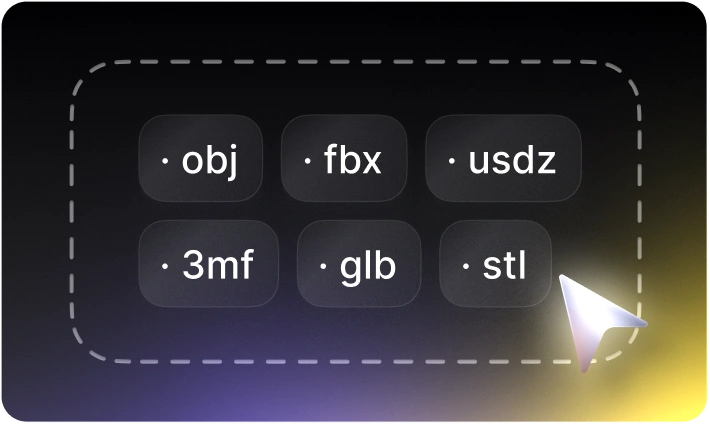
The digital landscape is undergoing a profound transformation as the bridge between 2D artistry and 3D modeling becomes shorter and more efficient. Traditionally, translating a flat concept—be it a character sketch, a product photograph, or an architectural drawing—into a functional 3D model required dozens of hours of manual labor. However, with the advent of sophisticated AI-driven geometry synthesis, the journey "from pixels to polygons" has evolved from a grueling manual process into a streamlined, high-speed workflow. This technology is not just about automation; it is about democratizing the ability to create high-quality, production-ready assets.
The Evolution of Image-to-3D Technology
For decades, 3D modeling followed a rigid path: artists would take 2D reference images and place them on planes in software like Maya or Blender, manually tracing silhouettes and extruding geometry. While effective, this "poly-by-poly" method is time-consuming and requires a high level of technical expertise.
Modern 2D to 3D conversion tools utilize Large Reconstruction Models (LRMs) and neural radiance fields to interpret the spatial data hidden within a single image. By analyzing lighting, shadows, and perspective, the AI can infer the "hidden" side of an object, generating a full 360-degree mesh where previously there was only a flat plane. This leap represents a fundamental shift in how we perceive digital content creation.
Understanding the Mesh Generation Process
The transformation starts with an image upload. Once a 2D file is processed, the AI performs a "volumetric inference." It doesn’t just stretch the image; it calculates the depth and topology required to make the object structurally sound. The result is a polygonal mesh—a collection of vertices, edges, and faces that define the shape of the object in 3D space.
For a mesh to be considered "production-ready," it must go beyond looking good in a preview window. It needs to have clean topology—meaning the polygons are arranged in a way that allows for smooth deformation and efficient rendering. Modern AI tools are increasingly focused on outputting "quad-dominant" meshes, which are the gold standard for professional animators and game developers.
The Role of Automated Texturing and UV Mapping
A 3D model is incomplete without its "skin." One of the most complex aspects of 3D modeling is UV mapping—the process of flattening a 3D surface so a 2D texture can be wrapped around it without distortion.
Automated 2D-to-3D tools now handle this step instantaneously. The AI projects the original colors from the 2D image onto the newly created 3D surface while generating "PBR" (Physically Based Rendering) maps. These maps include data for roughness, metallicity, and normals, ensuring that when the model is placed in a game engine like Unreal Engine or Unity, it reacts realistically to light and environmental conditions.
Enhancing Workflows for Game Devs and Designers
The primary benefit of generating 3D meshes from images is the massive reduction in "crunch" time. In the pre-production phase of game development, artists often need to see how a character looks in a 3D environment before committing to weeks of modeling.
By using image-to-3D tools, a concept artist can turn a morning sketch into a functional 3D prototype by lunchtime. This allows for rapid iteration. If the proportions don’t work in 3D, the artist can simply tweak the 2D sketch and regenerate the model, rather than rebuilding a high-poly mesh from scratch.
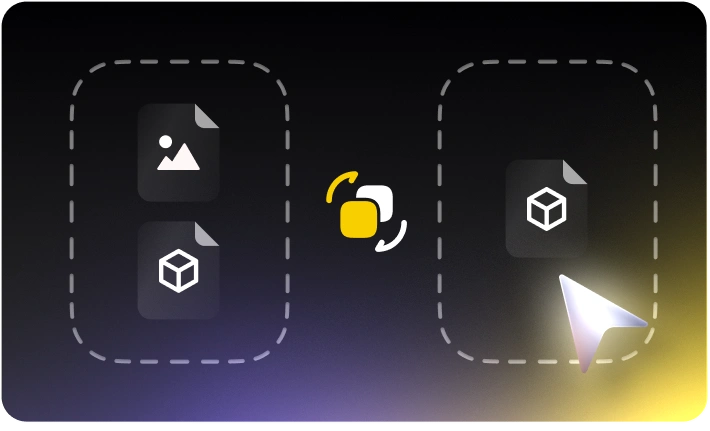
Rigging and Animation Readiness
The "production-ready" label implies that the model can be put into motion. Some of the most advanced conversion platforms now include auto-rigging features. Rigging is the process of adding a digital skeleton to a mesh so it can be animated.
When an AI understands that it is looking at a humanoid character, it can automatically place joints at the knees, elbows, and spine. This means that within minutes of uploading a 2D character design, a developer can have a model that is not only 3D but is also capable of running, jumping, or dancing within a digital world.
Overcoming Current Limitations
While the technology is revolutionary, it is not without challenges. Converting a single image into a 3D model involves a degree of "hallucination"—the AI must guess what the back of the object looks like. For highly complex or asymmetrical objects, this can sometimes lead to artifacts or blurred textures on the non-visible sides.
However, the industry is moving toward "multi-view" synthesis, where the AI generates several invisible angles of the object first to ensure the final 3D mesh is consistent from every direction. As these models continue to train on larger datasets, the precision of these "guesses" is reaching near-photorealistic levels.
The Future of the 3D Content Pipeline
The ability to generate production-ready 3D meshes from 2D images is a cornerstone of the next generation of the internet. From creating custom avatars for the metaverse to generating endless variations of furniture for e-commerce, the applications are limitless.
As we move forward, the barrier between an idea and a tangible 3D asset will continue to dissolve. By mastering these automated tools, creators can focus less on the technical minutiae of vertex manipulation and more on the creative vision of their projects. The journey from pixels to polygons is no longer a leap of faith; it is a calculated, efficient, and accessible reality.