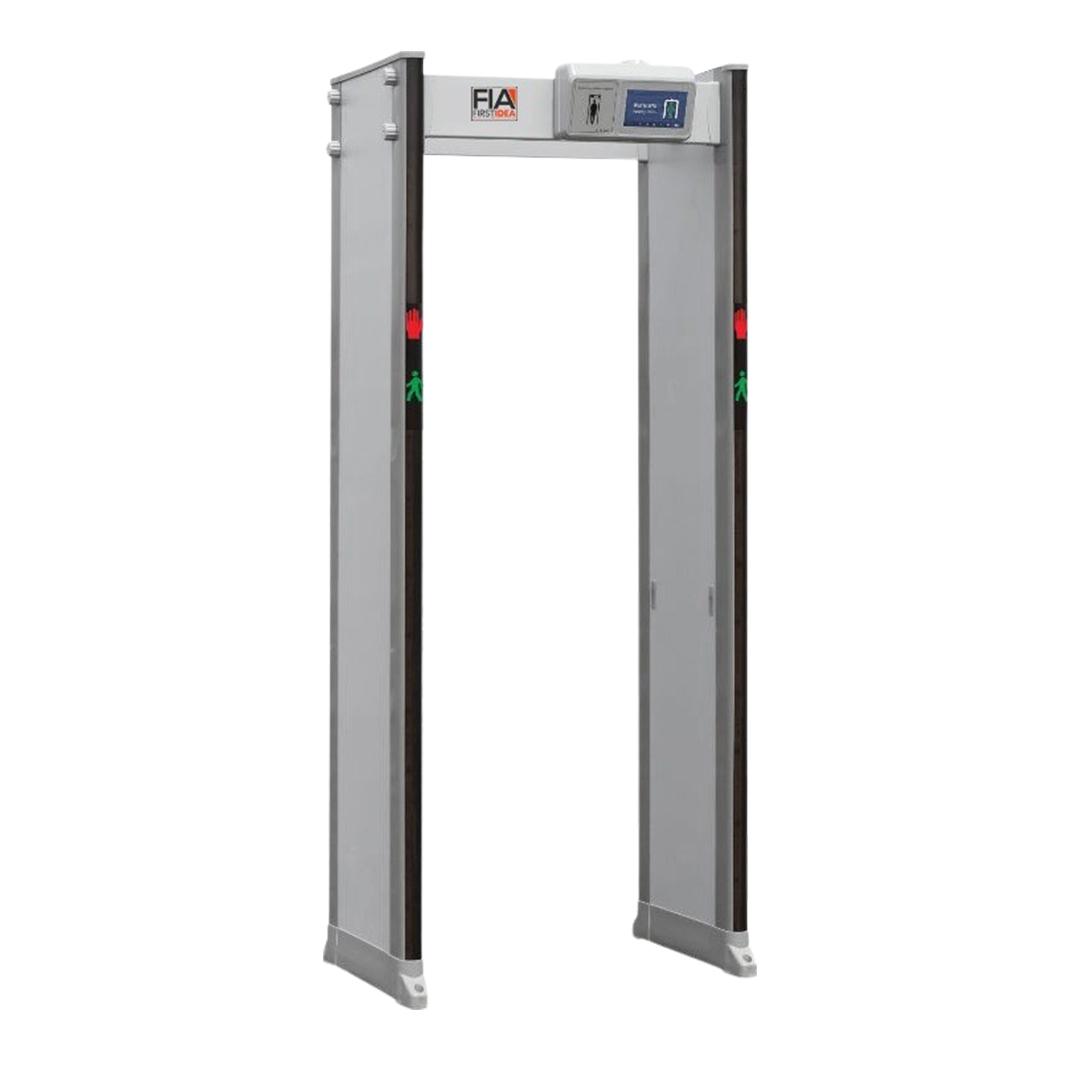
Most people have walked through a Door Frame Metal Detector (DFMD) without thinking twice about it — at an airport gate, a courthouse entrance, a stadium turnstile, or the lobby of a corporate building. It's one of those pieces of security equipment that works quietly in the background, yet it's often the single most important checkpoint standing between a public space and a potential threat.
If you're responsible for procuring security equipment for your organization, it helps to understand how a DFMD actually works, what separates a good unit from a mediocre one, and why the manufacturer behind it — such as FIA (First Idea Automation) — matters as much as the specs sheet.
Defining the Door Frame Metal Detector
A DFMD, also referred to as a walk-through metal detector, is a fixed archway installed at a building or venue entrance to screen everyone who walks through it. Unlike a Hand-Held Metal Detector (HHMD), which needs a security guard to actively scan each visitor, a DFMD does its job automatically and continuously, without slowing the flow of people at the door.
The purpose is simple: catch concealed metal objects — knives, firearms, tools, or other prohibited items — before someone crosses into a controlled area. It does this without any physical contact and with minimal disruption to foot traffic, which is exactly why it has become the default screening method for high-volume venues.
How a DFMD Detects Metal
The underlying science is electromagnetic induction. The archway continuously generates a low-level electromagnetic field. When a person carrying metal walks through that field, the object disturbs it and creates a secondary electromagnetic signal that the unit's sensors pick up instantly. That triggers an alarm — both audio and visual — and in most modern units, also indicates roughly where on the body the metal is located.
Beyond basic detection, contemporary DFMDs can typically also:
- Tell the difference between ferrous metals (like iron and steel) and non-ferrous ones
- Ignore commonly carried harmless items — belt buckles, coins, spectacles — to keep false alarms low
- Keep a log of footfall and alarm events for compliance and audit purposes
- Link up with CCTV and access-control systems so security operates as one integrated network
The Different Categories of DFMD
Choosing the right DFMD comes down to two variables: how much foot traffic you handle, and how precisely you need to locate a threat.
Single-Zone Units These flag metal detected anywhere in the frame but don't identify a specific location on the body. They work fine for lower-risk environments — small offices, retail outlets, gated residential complexes — where a general alert is enough.
Multi-Zone Units By splitting the frame into multiple vertical detection zones (typically 6 to 18 or more), these units can tell security staff approximately where the object is — near the head, chest, waist, or ankle. This precision is why airports, government facilities, and large public events rely on multi-zone systems as the standard.
Digital/Advanced Units These are built around microprocessor control, offering adjustable sensitivity per zone, sharper distinction between benign and dangerous objects, and weatherproof housings suited to outdoor deployment. A growing number also come with remote configuration and IoT-based monitoring, sending live status and alert data to a central dashboard — a real advantage for organizations screening across multiple locations.
What to Evaluate Before Purchasing a DFMD
A DFMD is a multi-year investment in your security posture, not a one-off purchase. Before committing to a supplier, work through these considerations:
Zone count — More zones improve location accuracy but come at a higher price. Match the specification to your actual risk level rather than defaulting to the top-tier option.
Sensitivity and discrimination — The unit should reliably pick up small metallic threats while filtering out routine carried items. Ask for the adjustable sensitivity range and any independent testing data the supplier can share.
Environmental durability — For outdoor placements — event entrances, stadium gates, open-air venues — confirm the unit has an appropriately IP-rated, weatherproof enclosure built to handle dust, moisture, and temperature swings.
Standards compliance — Ask for documented proof that the unit meets recognized security screening standards. Hesitation or vagueness here is a warning sign.
Handling high footfall — Busy locations need a DFMD engineered for continuous, fast screening that won't create a bottleneck at the entrance.
Warranty and support — Ongoing calibration, servicing, and access to spare parts matter just as much as the initial purchase, given how long these units stay in service.
True cost of ownership — Don't just compare quoted prices. Request an itemized breakdown covering the unit itself, installation, warranty coverage, and any annual maintenance contract, so you can compare like-for-like long-term costs.
Should You Also Have an HHMD?
A frequent question from procurement teams is whether a DFMD alone is enough. In nearly all professional security setups, it isn't meant to be the only layer. DFMDs and HHMDs are complementary: the DFMD manages primary screening at the entrance, while the HHMD is used for follow-up checks whenever the DFMD alarms, or for supplementary screening in lower-traffic areas. Running both together remains the accepted best practice for thorough access control.
Why the Manufacturer Matters: A Look at FIA's DFMD Range
The long-term reliability of a DFMD comes down largely to who built it. FIA (First Idea Automation) manufactures door frame metal detector systems engineered for consistent, accurate performance in commercial, industrial, and government settings.
FIA designs its DFMD units with local operating conditions in mind — power fluctuations, dust, humidity, and sustained heavy foot traffic — so they're built to hold up in real deployment conditions rather than just in a lab. The range spans from simpler single-zone models for standard screening requirements to advanced multi-zone systems intended for environments where pinpointing the exact location of a threat is essential.
FIA also prioritizes adjustable sensitivity settings, dependable electromagnetic detection accuracy, and continued after-sales support — the factors that ultimately decide whether a DFMD keeps performing well years after installation, not just when it's first switched on.
Visit for more information: https://www.fiaind.com/products/door-frame-metal-detector/
Final Word
A Door Frame Metal Detector is now standard equipment for any organization serious about controlling entry to its premises. But quality varies significantly across the market, and not every unit is built to the same standard. Before buying, look closely at zone configuration, sensitivity, build quality, certification, and after-sales support — and insist on documentation rather than relying on sales pitches alone.
For organizations looking for a dependable, field-tested DFMD, FIA's door frame metal detector range is worth adding to your shortlist.
Learn more about FIA's Door Frame Metal Detector systems at fiaind.com.