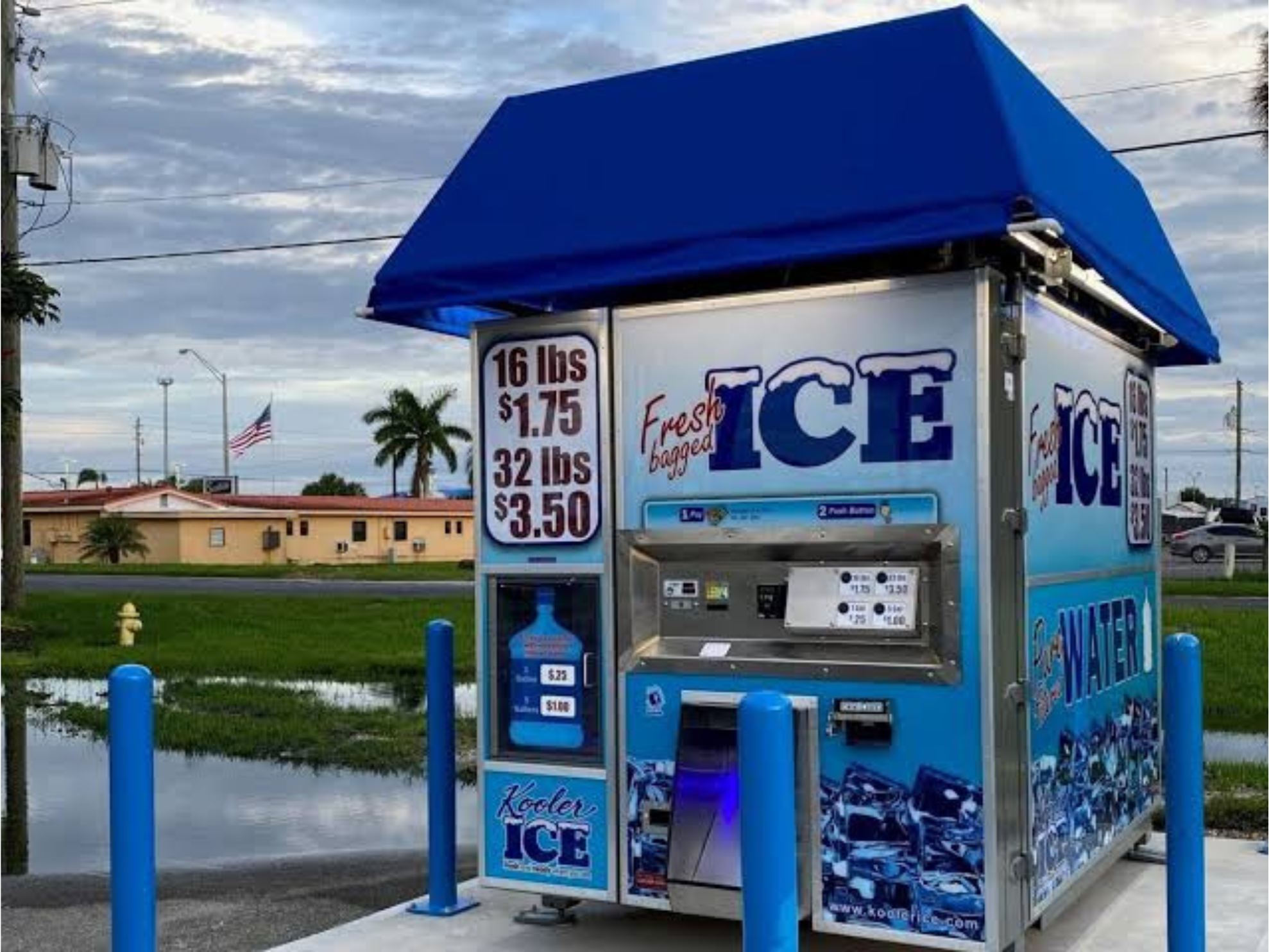
A busy holiday weekend arrives, temperatures climb, and customers begin filling coolers for camping trips, fishing excursions, backyard events, and long days on the water.
Then the ice chest empties.
The next supplier delivery is hours away. Employees are fielding complaints, customers are leaving without buying anything, and the business is losing more than a few ice sales. It is also losing the snacks, drinks, fuel, and outdoor supplies those customers might have purchased during the same visit.
That familiar problem is forcing more business owners to compare traditional deliveries with ice vending services. Both options can provide a steady source of ice, but they create very different costs, responsibilities, customer experiences, and growth opportunities.
For businesses seeking greater control, dependable availability, and a product customers can access on demand, an ice vending machine may offer the stronger long-term model.
Key Takeaways That Cut Through the Cold Debate
- Traditional suppliers offer simplicity but leave businesses dependent on delivery schedules.
- Ice vending machines produce ice on-site and can reduce handling, storage, and restocking pressures.
- The better option depends on location, demand, utilities, maintenance support, and long-term goals.
- Businesses should compare total operating impact, not merely upfront cost.
Why Does Traditional Ice Delivery Feel Deceptively Easy?
Traditional ice supply follows a familiar process. A distributor manufactures and bags the ice, transports it to the business, and places it inside a freezer or outdoor storage chest.
For a business with modest and predictable demand, this approach can work reasonably well. There is no need to purchase production equipment, connect a machine to a water line, or manage filtration components.
The convenience, however, comes with dependency.
A retailer cannot produce additional bags when inventory runs low. It must estimate demand, place orders, receive deliveries, and maintain enough freezer capacity to bridge the time between shipments. Sudden heat, holidays, tournaments, storms, festivals, and boating weekends can quickly disrupt those estimates.
Traditional supply also creates several operational touchpoints:
- Deliveries must arrive on schedule.
- Bags must be counted and stocked.
- Freezer space must remain available.
- Damaged or melted bags must be addressed.
- Employees may need to unlock chests or help customers.
- Inventory must be checked before peak periods.
Each task looks small on its own. Together, they can quietly consume time and limit control.
How Do Ice Vending Services Change the Supply Chain?
Ice vending services replace much of the delivery chain with on-site production. The machine connects to a water source, filters that water, freezes it, and dispenses ice directly to the customer.
Instead of purchasing finished bags from a supplier, the business becomes the point of production.
That distinction is the heart of the comparison.
On-site production can reduce dependence on trucking schedules, manual stocking, freezer deliveries, and packaged inventory. Customers can often purchase ice directly from the kiosk at any hour the site remains accessible.
Modern ice machine services may also include remote monitoring, payment technology, maintenance planning, water filtration, and performance tracking. These features give operators clearer visibility into sales, machine status, and supply conditions.
However, automation does not mean neglect. A successful machine still requires sanitation, preventive maintenance, filter replacement, utility access, and responsive technical support.
The Hidden Costs Sitting Inside Every Ice Bag
The wholesale price of bagged ice is only one part of its real business cost.
A traditional supplier must manufacture, package, store, transport, and deliver the product. The retailer must then receive it, maintain cold storage, manage inventory, and absorb losses caused by damaged packaging, melting, refreezing, or stock shortages.
An ice vending machine has its own expenses, including:
- Equipment purchase or financing
- Site preparation
- Water and electricity
- Filtration and replacement components
- Cleaning and routine maintenance
- Payment-processing fees
- Repairs and service support
The difference is where the money goes.
Traditional supply creates an ongoing product and logistics expense. A vending model requires a larger initial commitment but may give the operator more control over production and margins over time.
That is why a proper comparison should examine total cost of ownership, not simply the price of a machine versus the price of one delivered bag.
A Smarter Cost Comparison for Serious Operators
| Business Factor | Traditional Ice Supplier | Ice Vending Machine |
| Upfront investment | Generally lower | Generally higher |
| Supply control | Dependent on deliveries | Produced on-site |
| Inventory handling | Regular receiving and stocking | Limited packaged inventory |
| Peak-demand response | Restricted by stock and delivery timing | Supported by production capacity |
| Labor involvement | Counting, stocking, unlocking, monitoring | Cleaning, inspection, maintenance |
| Customer availability | Depends on store and chest access | Can support round-the-clock access |
| Product handling | Multiple supply-chain touchpoints | Primarily dispensed to the customer |
| Growth potential | Mostly tied to retail markup | Potential independent revenue stream |
The table does not automatically make one model the winner. It shows that each model shifts risk and responsibility to a different place.
What Does the FDA Say About Packaged Ice?
Ice is not merely a convenience product. The U.S. Food and Drug Administration treats packaged ice as food and requires manufacturers under its jurisdiction to produce, hold, and transport it under sanitary conditions.
The FDA also reports that the average American buys four bags of packaged ice per year, with 80% purchased between Memorial Day and Labor Day. That seasonal concentration shows why summer availability can matter so much to retailers, campgrounds, marinas, event sites, and travel corridors.
This seasonal pattern creates a clear operational question: can a business maintain enough inventory when demand is highest?
For a traditional supplier model, the answer depends heavily on forecasting, freezer capacity, and delivery reliability. With ice vending services, it depends more on machine capacity, water supply, uptime, and maintenance readiness.
Why Can Less Handling Strengthen Customer Trust?
Packaged ice may pass through manufacturing, loading, transportation, delivery, storage, and retail handling before the customer picks it up.
That does not mean bagged ice is inherently unsafe. Properly managed suppliers and retailers follow sanitation procedures designed to protect it.
Still, every additional stage introduces another process that must be managed correctly.
The Centers for Disease Control and Prevention notes that microorganisms in ice can come from the water used to make it or from transfer through hands. It recommends minimizing direct contact and states that dispensing machines are preferable to ice bins requiring scoops in certain healthcare settings.
For a commercial vending location, the practical lesson is straightforward: equipment design, filtration, cleaning, and reduced manual handling can support a more controlled process.
A multi-stage filtration system, including reverse osmosis filtration, may also improve clarity and consistency when it is properly installed and maintained. Filtration quality should never be treated as a permanent feature that runs without attention. Filters, lines, dispensing areas, and internal components still require scheduled care.
Convenience Wins When Customers Are Already Moving
People buying ice are frequently on their way somewhere else.
They may be heading to a campsite, marina, construction site, family gathering, sports tournament, tailgate, or outdoor event. They are not looking for a complicated shopping experience. They want to stop, load the cooler, and keep moving.
A well-positioned commercial ice vending machine can meet that behavior directly.
Customers may be able to:
- Drive up without entering a store.
- Choose the desired quantity.
- Pay at the machine.
- Fill a bag or suitable container.
- Return to the road within minutes.
This is particularly valuable when nearby stores are closed, crowded, or sold out.
Traditional bagged ice can still be convenient when it is readily stocked near a store entrance. But locked outdoor chests, checkout queues, limited operating hours, and low inventory can weaken that advantage.
Where Do Traditional Ice Suppliers Still Make More Sense?
Ice vending is not automatically suitable for every location.
Traditional suppliers may remain the better choice when a business has low or irregular demand, lacks a reliable water connection, cannot support the electrical load, or does not have space for a properly positioned kiosk.
Bagged supply may also be practical when:
- The site cannot accommodate equipment installation.
- Local permitting creates significant barriers.
- Management does not want maintenance responsibility.
- Ice is a minor add-on rather than a meaningful sales category.
- A dependable supplier already provides excellent service.
- The business may relocate or close in the near term.
A poor vending location will not become profitable merely because the technology is impressive. Traffic, visibility, access, demand, competition, and service support still determine whether the investment makes sense.
When Does an Ice Vending Machine Become the Better Bet?
An ice vending machine becomes more compelling when demand is frequent, seasonal surges are strong, and customers value fast access.
Promising locations may include:
- Campgrounds and recreational areas
- Marinas and boat-launch routes
- Convenience stores and fuel stations
- RV parks and travel centers
- Outdoor event venues
- Grocery parking areas
- Construction and industrial corridors
- Communities with limited late-night ice access
The strongest site is not always the place with the largest general crowd. It is the place where the right customers repeatedly need ice.
A marina route on a warm Saturday morning may outperform a busier location where few visitors carry coolers. Texas vending services, for example, can be particularly relevant in communities shaped by hot weather, outdoor recreation, long driving distances, and year-round commercial activity.
Use the COLD Test Before Choosing a System
Businesses can evaluate a potential site with a simple four-part framework:
C — Customer demand: Who needs ice nearby, how often, and in what quantities?
O — Operational readiness: Does the site have suitable water, drainage, electricity, access, lighting, and security?
L — Location strength: Can drivers see the kiosk, enter safely, complete the purchase, and leave without friction?
D — Dependable support: Who handles cleaning, preventive maintenance, filter changes, repairs, and unexpected downtime?
A machine can solve delivery dependence only when the machine itself is dependable.
This is where the quality of ice machine services matters. Equipment, installation, monitoring, sanitation procedures, replacement parts, and technical response should be evaluated as one operating system rather than separate purchases.
Do This, Not That, Before Signing Any Deal
Do this: Estimate peak-day demand, not only average weekly sales.
Not that: Assume last month’s bagged-ice purchases reveal the full opportunity.
Do this: Verify utility, drainage, permitting, and access requirements before choosing equipment.
Not that: Buy a machine first and search for a suitable site afterward.
Do this: Ask exactly who provides maintenance and how quickly support responds.
Not that: Treat remote monitoring as a substitute for physical inspection.
Do this: Build cleaning and filtration work into the operating calendar.
Not that: Wait for taste, appearance, or dispensing problems to reveal neglect.
Peter Drucker famously said, “Efficiency is doing things right; effectiveness is doing the right things.”
That distinction matters here. A business can manage delivered bags efficiently and still be using the wrong supply model for its location. It can also install an advanced kiosk where customer demand is too weak to support it.
The goal is not automation for its own sake. The goal is the right system for the site.
The Final Verdict Is About Control, Not Ice
Traditional suppliers can remain a sensible option for businesses with modest demand, limited infrastructure, or little interest in managing equipment.
For locations with consistent traffic, strong outdoor demand, and room to build a long-term revenue stream, ice vending services often present the more powerful model. On-site production can improve availability, reduce supply-chain dependence, limit inventory handling, and give the operator greater control over the customer experience.
The winning choice depends on demand, location, equipment quality, sanitation discipline, and reliable service. Businesses that evaluate those factors carefully can move beyond simply selling ice and begin building a dependable destination for customers who need it quickly with Double T Holdings.
FAQ
What Makes a Good Commercial Ice Vending Site?
A good site combines visible traffic, easy vehicle access, dependable utilities, strong local demand, lighting, security, and room for safe customer movement.
What Are the Best Practices for Ice Vending?
Follow manufacturer cleaning procedures, replace filters as scheduled, inspect the dispensing area, monitor performance, document maintenance, and respond quickly to alerts.
How Do Businesses Choose the Best Ice System?
Compare demand, upfront cost, operating expenses, utilities, production capacity, service coverage, customer access, and expected ownership period.
When Should a Business Hire Ice Machine Services?
Professional help is valuable during site planning, installation, utility coordination, preventive maintenance, sanitation work, troubleshooting, and major repairs.
What Trends Are Shaping Commercial Ice Vending?
Operators increasingly prioritize cashless payment, remote monitoring, efficient filtration, easier maintenance, self-service access, and better performance visibility.