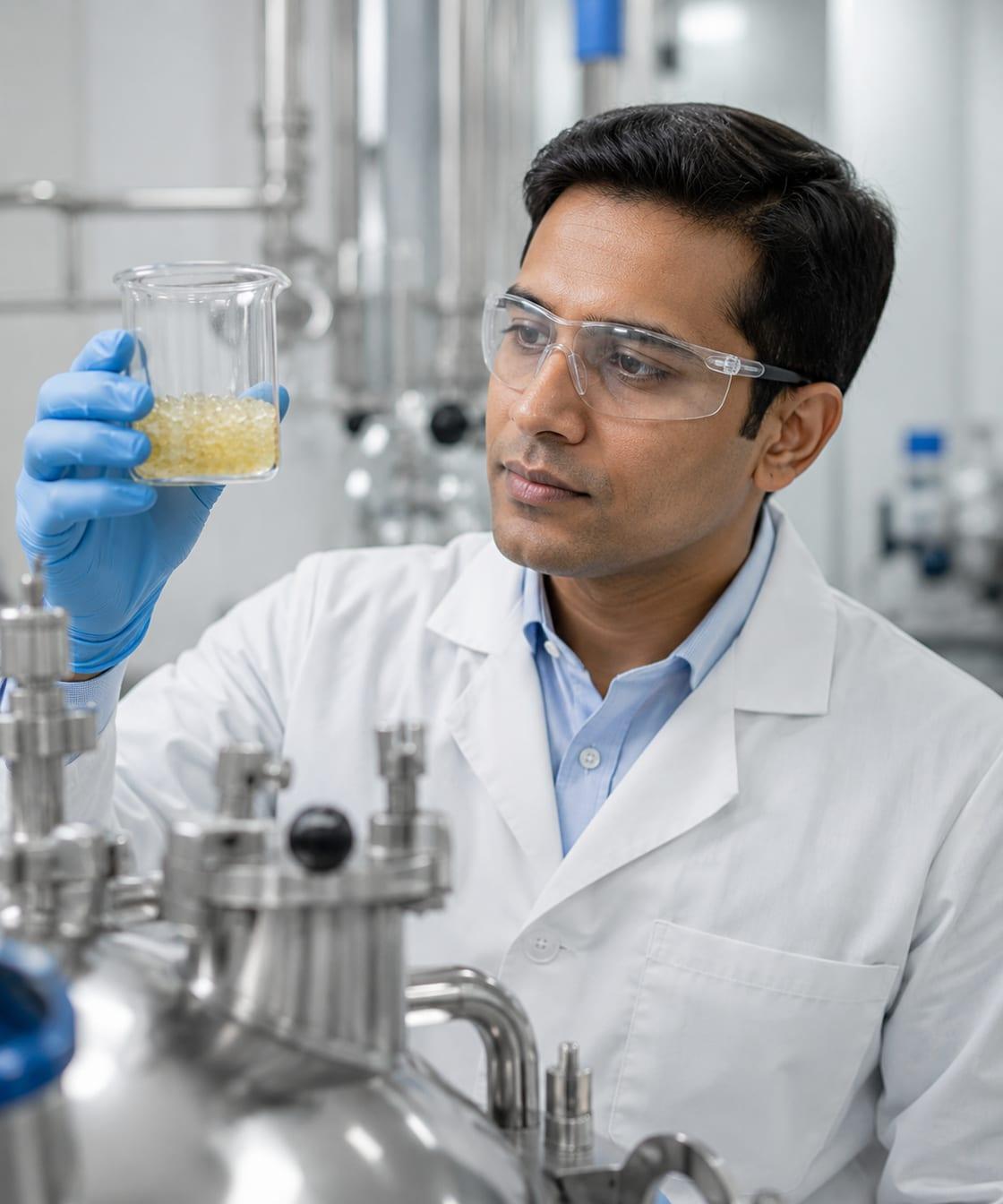
Anion exchange resin is an important water treatment media used to remove negatively charged ions from water. It is widely used in demineralization, deionization, industrial water purification, and specialized treatment systems. By exchanging unwanted anions with ions held on the resin, anion exchange systems can help produce higher-quality water for industrial and commercial applications.
What Is Anion Exchange Resin?
Anion exchange resin is a synthetic resin designed to remove negatively charged ions from water. Common anions include chloride, sulfate, bicarbonate, nitrate, and silica-related species.
The resin contains positively charged functional groups that attract and exchange negatively charged ions in the water. Depending on the resin type and treatment objective, it can be selected for different water chemistry and operating conditions.
How Does Anion Exchange Resin Work?
During the ion exchange process, water passes through a bed of anion exchange resin. Negatively charged ions in the water are attracted to the resin and exchanged for ions already associated with the resin.
For example, in many demineralization systems, the resin operates in the hydroxide form. Anions are exchanged for hydroxide ions, which can then combine with hydrogen ions released by a cation exchange resin to form water.
Over time, the available exchange sites become occupied by contaminants. The resin then needs to be regenerated to restore its treatment capacity.
Types of Anion Exchange Resin
There are two major categories of anion exchange resin.
Strong Base Anion Resin
Strong base anion resin can operate across a broad pH range and is commonly used for demineralization and deionization. It can remove strong-acid anions and, depending on the resin design and operating conditions, weak-acid anions such as bicarbonate and silica.
Strong base resins are commonly divided into Type I and Type II varieties, which have different chemical characteristics and operating properties.
Weak Base Anion Resin
Weak base anion resin is commonly used for removing strong-acid anions, particularly in systems where organic matter and strong acids need to be addressed. It can provide useful capacity and may help reduce the chemical requirements for downstream strong-base treatment.
The appropriate type depends on feed-water chemistry, treatment goals, and system design.
Applications of Anion Exchange Resin
Anion exchange resin is used across many water treatment applications, including:
1. Demineralization
Anion resin works together with cation exchange resin to remove dissolved ionic contaminants and produce demineralized water for industrial processes.
2. Deionized Water Production
Ion exchange systems can reduce dissolved ions to produce high-purity water required for manufacturing, laboratories, and other applications.
3. Silica Removal
Certain strong base anion resins can be used in systems designed to reduce silica, which can be particularly important for applications involving high-pressure steam and sensitive equipment.
4. Nitrate Removal
Specialized anion exchange resins can selectively remove nitrate from water. The resin selected should match the water chemistry and required treatment performance.
5. Industrial Water Treatment
Anion exchange technology is used in industries such as power generation, chemical processing, pharmaceuticals, electronics, and general manufacturing.
How Is Anion Exchange Resin Regenerated?
When an anion resin becomes exhausted, it can no longer effectively exchange contaminants. Regeneration restores the resin's ion exchange capacity.
Strong base anion resins are commonly regenerated using a sodium hydroxide solution. During regeneration, the regenerant passes through the resin bed and replaces the accumulated anions with hydroxide ions.
The regeneration process generally includes:
- Service operation
- Backwashing
- Chemical regeneration
- Slow rinsing
- Fast rinsing
- Return to service
Actual operating procedures depend on the resin specification and equipment design.
How to Choose the Right Anion Exchange Resin
Selecting the correct resin requires more than simply choosing between strong base and weak base resin. Important factors include:
- Feed-water composition
- Target ions to be removed
- Water flow rate
- Required treatment capacity
- Operating temperature
- pH conditions
- Regeneration method
- Desired water quality
- Resin bed and equipment design
A proper water analysis can help determine which resin type and operating conditions are suitable for the application.
How Long Does Anion Exchange Resin Last?
Resin service life depends on water quality, operating conditions, regeneration practices, mechanical handling, and contamination. Fouling from organic matter, iron, suspended solids, or other contaminants can reduce performance.
Regular monitoring of treated-water quality, pressure drop, regeneration performance, and operating capacity can help identify when maintenance or resin replacement is needed.
Anion Exchange Resin vs. Cation Exchange Resin
The main difference is the type of ions each resin removes. Cation exchange resin targets positively charged ions such as calcium, magnesium, and sodium, while anion exchange resin targets negatively charged ions such as chloride, sulfate, and nitrate.
In many demineralization systems, both resins are used together to remove a broad range of dissolved ions.
Conclusion
Anion exchange resin is a versatile solution for removing unwanted negatively charged ions from water. Strong base and weak base resins serve different treatment purposes, while specialized resins can be selected for applications such as nitrate or silica removal.
Choosing the right resin requires consideration of feed-water chemistry, treatment objectives, flow conditions, regeneration requirements, and desired water quality. With the appropriate resin and properly designed system, ion exchange can provide reliable water treatment performance for a wide range of industrial applications.