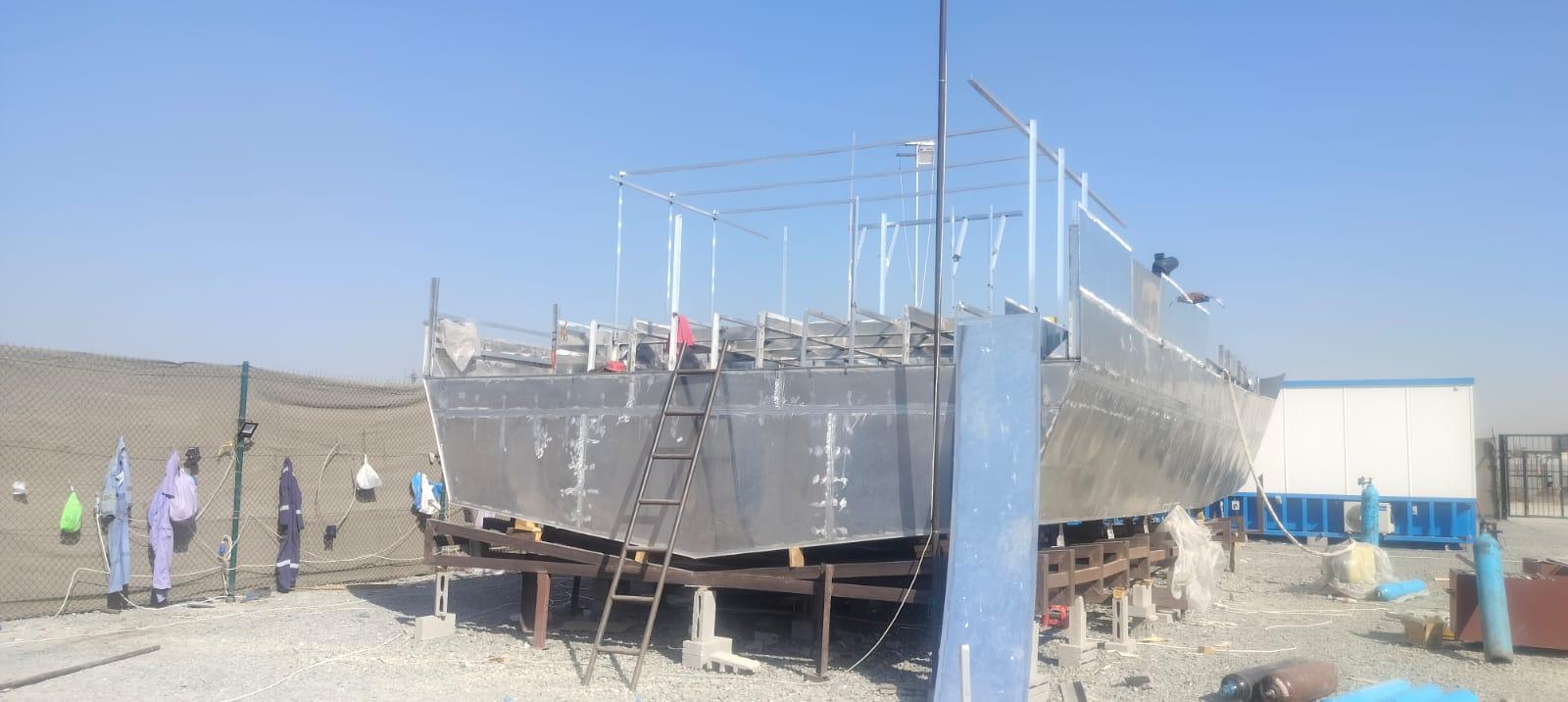
Tugboats are essential vessels in the maritime industry because they support large ships during port entry, departure, towing, and maneuvering operations. They are also widely used in offshore activities, harbor assistance, and industrial transportation. Building a dependable tugboat requires suitable materials, accurate engineering, advanced manufacturing processes, and reliable onboard equipment. Modern aluminum tug builders are increasingly focusing on construction techniques that improve vessel strength, reduce unnecessary weight, and deliver consistent performance in challenging marine environments.
Aluminum has become an important material for certain types of marine vessels because of its lightweight nature, corrosion resistance, and ease of fabrication. These characteristics make it suitable for tugboat designs where weight management and operational flexibility are important. VU Marine recognizes the value of modern shipbuilding practices and engineering quality in developing solutions for different maritime requirements.
1. Advantages of Aluminum for Tugboat Manufacturing
The selection of construction material directly influences a vessel's strength, weight, maintenance needs, and operational efficiency. Steel remains a common choice for many commercial vessels, but aluminum offers several benefits for applications where lightweight construction is preferred.
The density of aluminum is approximately 2,700 kg/m³, whereas ordinary steel has a density of around 7,850 kg/m³. This means aluminum has approximately one-third the density of steel. Although the actual weight of a completed vessel depends on its design and structural specifications, this difference creates opportunities for reducing overall structural weight.
A lighter hull can offer advantages such as improved payload flexibility and reduced draft in appropriately engineered vessels. Aluminum also forms a natural oxide layer that helps protect its surface against corrosion. This is particularly useful in marine environments where vessels are regularly exposed to seawater.
However, choosing aluminum alone does not guarantee durability. The correct alloy, plate thickness, welding quality, and maintenance procedures must all be considered during construction.
2. Importance of Modern Vessel Design
The construction of a tugboat begins with a detailed understanding of its operational purpose. Engineers must determine the vessel's expected towing capacity, working speed, stability requirements, machinery arrangement, and operating environment.
Modern computer-aided design (CAD) software allows engineers to prepare accurate technical drawings and three-dimensional vessel models. These models make it easier to examine the arrangement of structural components, identify design conflicts, and improve the use of available space.
Computational fluid dynamics (CFD) is another useful engineering technology. It helps designers study water movement around the hull and evaluate resistance under different operating conditions. This information can support improvements in hull geometry and hydrodynamic performance.
Structural calculations are equally important because tugboats experience considerable pressure and mechanical loads during towing and pushing activities. Properly designed frames, bulkheads, decks, and towing foundations help maintain structural integrity during demanding operations.
VU Marine understands the importance of combining practical vessel requirements with modern engineering methods to achieve dependable marine construction.
3. Material Preparation and Fabrication Processes
High-quality fabrication begins with the inspection and preparation of construction materials. Marine-grade aluminum plates and profiles must meet the required technical specifications, including alloy composition, thickness, and mechanical properties.
Before manufacturing, materials should be checked for surface damage, contamination, and dimensional accuracy. Proper storage is also necessary to protect aluminum components from contact with unsuitable materials.
Modern cutting machines help manufacturers produce accurate structural parts according to approved engineering drawings. Computer-controlled cutting improves consistency and reduces errors during fabrication. It can also help limit material wastage and unnecessary rework.
After cutting, individual components are positioned and assembled to form the vessel's main structure. This process may involve installing frames, bulkheads, bottom sections, side panels, and deck plates.
Accurate measurements and proper alignment are essential throughout assembly. Even small inaccuracies can create difficulties during later stages of construction. A controlled fabrication process therefore contributes significantly to the quality of the finished tugboat.
4. Improved Welding Technology for Aluminum Structures
Welding quality has a direct impact on the strength and reliability of an aluminum vessel. Since aluminum reacts differently to heat than steel, specialized welding procedures and trained personnel are required.
Metal inert gas welding, commonly known as MIG welding or gas metal arc welding (GMAW), is frequently used for aluminum fabrication. TIG welding, also called gas tungsten arc welding (GTAW), is another method that provides precise control for suitable joints and applications.
The welding technique must be selected according to the aluminum alloy, material thickness, joint arrangement, and approved welding procedure. Correct heat control is necessary to reduce distortion and maintain the required mechanical properties.
Surface preparation is equally important. Dirt, oil, moisture, and oxide contamination should be removed before welding because they can contribute to defects.
Once welding is completed, inspection procedures help confirm joint quality. Visual inspections, dimensional measurements, and suitable nondestructive testing methods can be used to identify possible imperfections.
These checks help ensure that the vessel's structure is prepared to withstand the loads experienced during regular marine operations.
5. Engineering Expertise in Tugboat Production
Successful tugboat manufacturing involves much more than joining aluminum plates. It requires coordination between designers, fabricators, welding specialists, electrical technicians, and marine engineers.
Experienced aluminium tug manufacturers consider the complete operating requirements before deciding on the vessel's final configuration. These requirements may include towing performance, maneuverability, crew facilities, machinery capacity, fuel storage, and onboard safety equipment.
The engine room layout must provide sufficient space for equipment installation, inspection, and future servicing. Electrical systems, ventilation arrangements, cooling equipment, and fuel lines should also be positioned according to approved technical requirements.
Good manufacturing practices help ensure that all major systems work together effectively. They also reduce the possibility of installation problems and costly modifications after construction.
A well-planned tugboat should not only perform efficiently when new but should also remain practical to operate and maintain throughout its working life.
6. Selecting Suitable Propulsion and Machinery
Propulsion technology is a major factor in determining a tugboat's operating capabilities. The appropriate arrangement depends on vessel dimensions, required pulling force, maneuverability, and the type of marine activities involved.
Conventional propeller systems are used in many vessel designs, while azimuthing propulsion units may be selected where greater maneuverability is necessary. Engine capacity and propulsion equipment must be carefully matched to the vessel's operational profile.
Modern machinery-monitoring systems can provide information about engine temperature, fuel consumption, operating hours, and equipment condition. These systems help operators identify unusual performance patterns and organize maintenance activities.
Reducing hull weight may contribute to better efficiency in certain designs, but actual fuel savings depend on several factors. Hull resistance, vessel speed, engine performance, loading conditions, and operating practices all influence energy consumption.
Therefore, an effective tugboat design requires proper integration of the hull, engines, propulsion equipment, and control systems.
7. Construction Considerations for Marine Operations in the UAE
The UAE has an important maritime sector supported by commercial ports, offshore facilities, coastal transportation, and industrial marine activities. Tugboats operating in these environments must be designed according to their intended duties and local operating conditions.
A professional tug builder in UAE must consider factors such as seawater exposure, high ambient temperatures, equipment cooling, hull protection, and operational safety. These conditions can influence material selection, machinery arrangements, ventilation, and maintenance planning.
Tugboats used for port assistance may require excellent maneuverability and suitable towing arrangements. Offshore support vessels may have additional requirements related to equipment capacity, endurance, and operating conditions.
Construction and testing must also follow the applicable regulatory framework. Depending on the vessel's size, classification, flag, and intended service, relevant maritime regulations and classification requirements may apply.
Testing can include propulsion checks, steering trials, electrical inspections, navigation equipment verification, and bollard-pull measurements where required. These activities help confirm whether the vessel meets its approved design and operational specifications.
8. Corrosion Management and Quality Assurance
Although aluminum offers good corrosion resistance, proper protection remains necessary throughout a vessel's service life. Galvanic corrosion can develop when aluminum comes into electrical contact with dissimilar metals in seawater.
To reduce this risk, manufacturers use suitable insulating arrangements, compatible fasteners, and protective systems where necessary. Correct drainage and ventilation also help prevent moisture from collecting in enclosed spaces.
Quality assurance should be maintained at every stage of production. This includes material verification, dimensional inspection, welding examination, machinery installation checks, and final testing.
A reliable tugs building company must also maintain accurate construction documentation and inspection records. These records provide useful information for future maintenance, repairs, and technical assessments.
Regular hull inspections and timely maintenance help identify early signs of corrosion, structural damage, or equipment wear. Taking preventive action can reduce unexpected repair requirements and support long-term vessel reliability.
9. Sustainable Construction and Vessel Maintenance
Environmental responsibility is becoming an important consideration in the marine manufacturing industry. Efficient production planning, accurate cutting, and responsible material handling can reduce unnecessary waste during construction.
Aluminum is recyclable, and recovering this material at the end of a vessel's working life can support resource conservation. However, the environmental benefits depend on proper collection, separation, and recycling processes.
Long-term maintenance is another important part of sustainable vessel operation. Regular inspection of hull plates, weld joints, propulsion equipment, electrical systems, and towing arrangements helps maintain safe operating conditions.
Preventive maintenance can also reduce equipment failures and extend the useful life of important vessel components. Operators should maintain service records and follow recommended inspection schedules.
VU Marine recognizes the importance of quality engineering and responsible marine practices in supporting commercial and industrial maritime activities.
10. Future Developments in Tugboat Manufacturing
The future of tugboat construction will continue to involve improvements in digital design, fabrication equipment, material technology, and onboard monitoring systems.
Advanced engineering software can help designers evaluate vessel performance before manufacturing begins. Automated cutting and improved welding equipment can support production accuracy, while digital monitoring can help operators make informed maintenance decisions.
Energy-efficient propulsion technologies and improved hull configurations may also contribute to better operating performance. However, every new development must be assessed according to safety, structural strength, maintenance requirements, and actual operating conditions.
Combining technological improvements with experienced engineering and careful quality management will remain essential for producing reliable marine vessels.
Conclusion
Modern aluminum tugboat construction depends on a combination of suitable materials, accurate engineering, advanced fabrication, reliable welding, and effective quality control. Aluminum offers a significant weight advantage over ordinary steel by volume, while its corrosion-resistant properties make it useful for selected marine applications.
However, a durable tugboat requires much more than lightweight construction. Its structural design, propulsion system, manufacturing quality, corrosion protection, and maintenance arrangements must work together.
By applying modern construction methods and following appropriate technical standards, the maritime industry can develop tugboats that provide dependable service in ports, offshore locations, and demanding towing operations. A strong focus on safety, efficiency, and long-term performance will continue to shape the future of marine vessel manufacturing.