A certificate of analysis is often reduced to a single number in the buyer's mind, usually the purity percentage. That habit leaves valuable information unread. Modern certificates report several distinct analytical results, each answering a different question about the material. HPLC tells you how clean the sample is, mass spectrometry tells you whether it is the right molecule, and endotoxin testing tells you whether bacterial contamination is present. Molequa's certificates bring these results together, and understanding what each one reveals helps research peptides judge a batch on its full merits rather than a single figure.
Why One Number Cannot Describe a Peptide
Purity, identity, and contamination are separate properties, and a sample can perform well on one measure while failing another. A peptide might be ninety-nine percent pure by HPLC yet prove to be the wrong sequence entirely, or match its expected mass while carrying bacterial endotoxins from the production process. Treating the purity percentage as a complete summary ignores these possibilities. Molequa's certificates present multiple analytical results precisely because no single measurement captures quality in full. Reading them together gives a rounded picture that no isolated figure can provide.
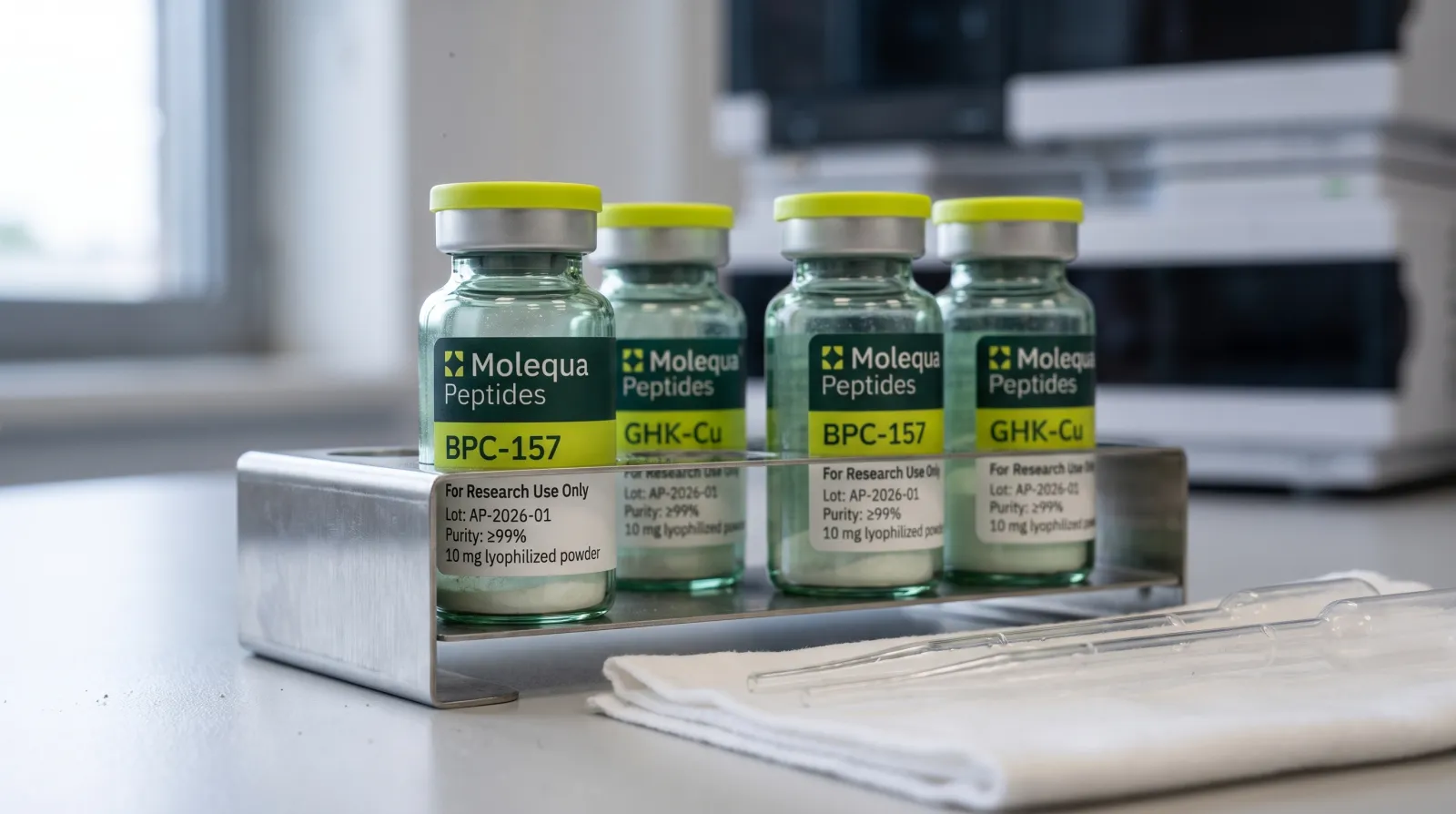
HPLC Purity: Measuring How Clean the Sample Is
High-performance liquid chromatography separates a dissolved sample into its components as it passes through a column, with each substance emerging at a characteristic time. The resulting chromatogram shows the target peptide as the main peak, with impurities appearing as smaller peaks around it. The purity percentage reflects the main peak's share of the total detected signal. When reviewing a Molequa certificate, examine the chromatogram alongside the figure: a clean, sharp main peak with minimal surrounding signal supports the claim, while a cluttered profile invites questions. HPLC answers the question of how much of the sample is the intended substance, but nothing more than that.
MS Identity: Confirming the Molecule Is What It Claims
Mass spectrometry addresses the question HPLC cannot: is this the right compound? The instrument ionizes the sample and measures mass-to-charge ratios, producing a spectrum from which molecular weight can be derived. Comparing that observed weight against the theoretical value calculated from the peptide's sequence confirms identity. Small deviations within instrument tolerance are normal, while larger discrepancies suggest a problem. Molequa's certificates include mass spectrometry data so buyers can perform this comparison themselves. Identity confirmation is arguably the most important check on the document, because a mislabeled peptide undermines an experiment regardless of how pure it is.
Endotoxin Results: The Contamination Question
Endotoxin testing examines a different kind of risk altogether. Endotoxins are bacterial cell wall components that can contaminate peptide preparations and interfere with biological experiments, particularly those involving cell culture or immune assays. A peptide can be chemically pure and correctly identified yet still carry endotoxin levels that render it unsuitable for sensitive work. Where endotoxin results appear on a Molequa certificate, they report the measured contamination level against relevant thresholds. Researchers whose protocols are sensitive to endotoxins should check this figure specifically rather than assuming purity data covers it.
Reading the Three Results Together
The analytical results gain meaning when read as a set. HPLC establishes that the sample is largely one substance. MS establishes that this substance is the correct peptide. Endotoxin testing establishes that bacterial contamination is within acceptable limits for the intended application. A batch passing all three provides a level of assurance that no single test delivers. A batch failing any one deserves scrutiny, even if the others look excellent. Molequa's certificates present these results together, allowing buyers to assess the complete analytical picture rather than selecting the most flattering figure and ignoring the rest.
Matching Results to Your Specific Application
Different research applications demand different standards. A peptide destined for cell culture work may require endotoxin data that would be irrelevant for a purely chemical study. A protocol sensitive to trace impurities may demand higher HPLC purity than another. Reading a certificate well means asking which results matter for your particular use, then checking whether the batch meets those requirements. Molequa's documentation provides the necessary data; the judgment about suitability rests with the researcher. This matching exercise is where analytical literacy translates into better experimental decisions.
Why Complete Reporting Serves Researchers Best
Certificates that report only purity leave buyers guessing about identity and contamination. Complete reporting, covering HPLC, MS, and endotoxin results where relevant, respects the researcher's need to make informed choices. Molequa's approach reflects this principle, presenting analytical data as a package rather than a headline. Researchers who learn to read all three results, and to weigh them against their own requirements, extract far more from each certificate than those who check a percentage and move on. In a market where documentation varies widely, complete reporting is a meaningful marker of a serious supplier.