Why Angle Conversion Matters
Angles are measured in degrees for everyday intuitive reference and in radians for mathematical and scientific calculations — with the two units serving different purposes that make both essential in their respective contexts. A reliable degrees to radians converter bridges this gap instantly — converting between the degree measurements that geometric intuition uses and the radian measurements that trigonometry, calculus, and engineering mathematics require.
The Mathematics of Degrees and Radians
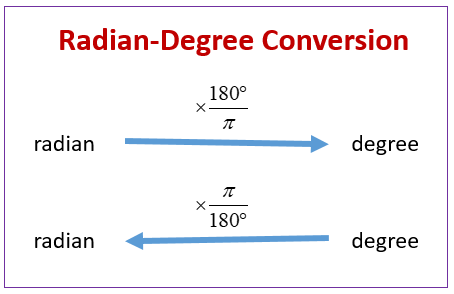
The radian is defined as the angle subtended at the center of a circle by an arc equal in length to the circle's radius. A full circle subtends an arc of 2π radii — meaning that a full 360-degree rotation equals exactly 2π radians. This fundamental relationship gives the conversion formula: radians equal degrees multiplied by π divided by 180, or equivalently degrees equal radians multiplied by 180 divided by π. The number π — approximately 3.14159 — is the mathematical constant that connects the degree and radian systems through this geometric relationship.
Common Angle Conversions
A small set of common angles appears frequently enough in mathematics and engineering to be worth memorizing as degree-radian pairs. Zero degrees equals zero radians. Thirty degrees equals π/6 radians. Forty-five degrees equals π/4 radians. Sixty degrees equals π/3 radians. Ninety degrees equals π/2 radians. One hundred eighty degrees equals π radians. And three hundred sixty degrees equals 2π radians. These reference pairs provide checkpoints for verifying conversion accuracy and building the intuitive sense of both measurement systems.
Trigonometry and Radian Measurement
Trigonometric functions — sine, cosine, and tangent — are most naturally expressed and computed with angle inputs in radians rather than degrees. The elegant derivative relationships that make calculus tractable — the derivative of sin(x) being cos(x) — hold true only when x is measured in radians. Using degrees introduces the factor of π/180 into these derivatives, complicating expressions that are clean in radian form. Scientific calculators and programming languages therefore default to radian mode for trigonometric calculations.
Physics and Engineering Applications
Physics and engineering extensively use radians for angle measurement — with angular velocity expressed in radians per second, rotational mechanics formulas using radians, and electromagnetic wave phase expressed in radians. A motor rotating at 3000 revolutions per minute rotates at approximately 314 radians per second — the conversion that connects the intuitive RPM measurement to the radian-per-second unit that torque, power, and angular momentum calculations require.
Navigation and Bearing
Navigation uses degrees for compass bearings and heading specification — making degrees the natural unit for navigational angle measurement. However, the trigonometric calculations that dead reckoning navigation involves — calculating position from bearing and distance — require conversion to radians for the mathematical calculations before converting results back to degrees for interpretation. GPS systems and navigation software handle these conversions internally, but understanding the relationship between the two systems illuminates how navigational mathematics works.
Programming and Computer Graphics
Programming and computer graphics require radian awareness because most programming languages implement trigonometric functions expecting radian inputs. A programmer calculating the rotation angle for a graphical element must convert the intuitive degree angle to radians before passing it to the sin or cos function — or use a degrees-based wrapper function if available. Understanding this radian requirement prevents the subtle bugs that arise from passing degree values to radian-expecting functions.